How Red Sea Shipping Detours Reshaped Global Trade
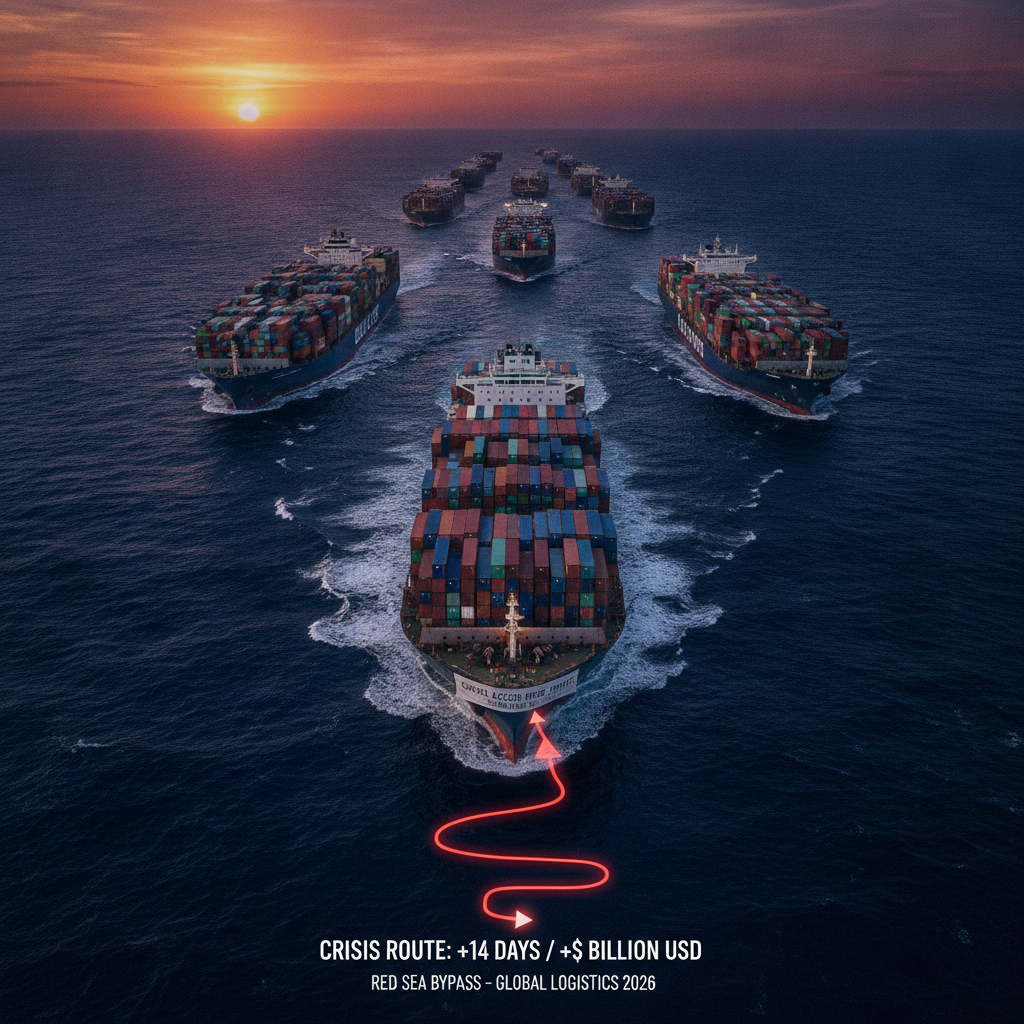
What began as an emergency response to regional conflicts has fundamentally restructured maritime logistics. By mid-2026, Red Sea Shipping Detours around the Cape of Good Hope evolved from temporary contingency plans to the structural baseline for major carriers like Maersk and MSC. With Suez Canal traffic remaining approximately 60% below pre-crisis volumes, the global shipping industry has accepted these longer transit routes as the absolute new normal.
Financial Impacts of Red Sea Shipping Detours
The strategic pivot away from the Suez Canal has triggered massive ripple effects across international supply chains, lengthening Asia-Europe voyages by 10 to 14 days. This prolonged transit absorbs roughly 6% of global fleet capacity, generating severe equipment shortages. Key industry statistics highlight the staggering financial toll:
- Added operational expenses reach $1 to $3 million per diverted vessel.
- Global supply chain costs have inflated by an estimated $15 to $20 billion annually.
- War-risk insurance premiums for ships attempting standard transit hover between 0.5% and 0.7% of hull value.
Forecasting the Future of Red Sea Shipping Detours
Despite intermittent ceasefires and localized de-escalations, a complete abandonment of Red Sea Shipping Detours remains fraught with uncertainty. Analysts warn that forwarders who treat Cape routing as the default are outperforming those hoping for a swift resolution. While some limited vessel transits may resume, industry consensus dictates that these extensive maritime diversions will continue to dictate global freight rates and transit times through at least 2027.
References
FEWS NET – Israel-Iran Conflict
Suaid Global – Red Sea Shipping Crisis 2026
The Cooperative blog – Red Sea Shipping Disruption 2026
ISDO – Analysis of maritime geopolitics on early 2026
ING Think – A Red Sea return would be a game changer