The global supply chain sector faces severe disruptions as escalating Panama Canal Restrictions reshape trans-Pacific trade flows in 2026.
How Panama Canal Restrictions Impact Capacity
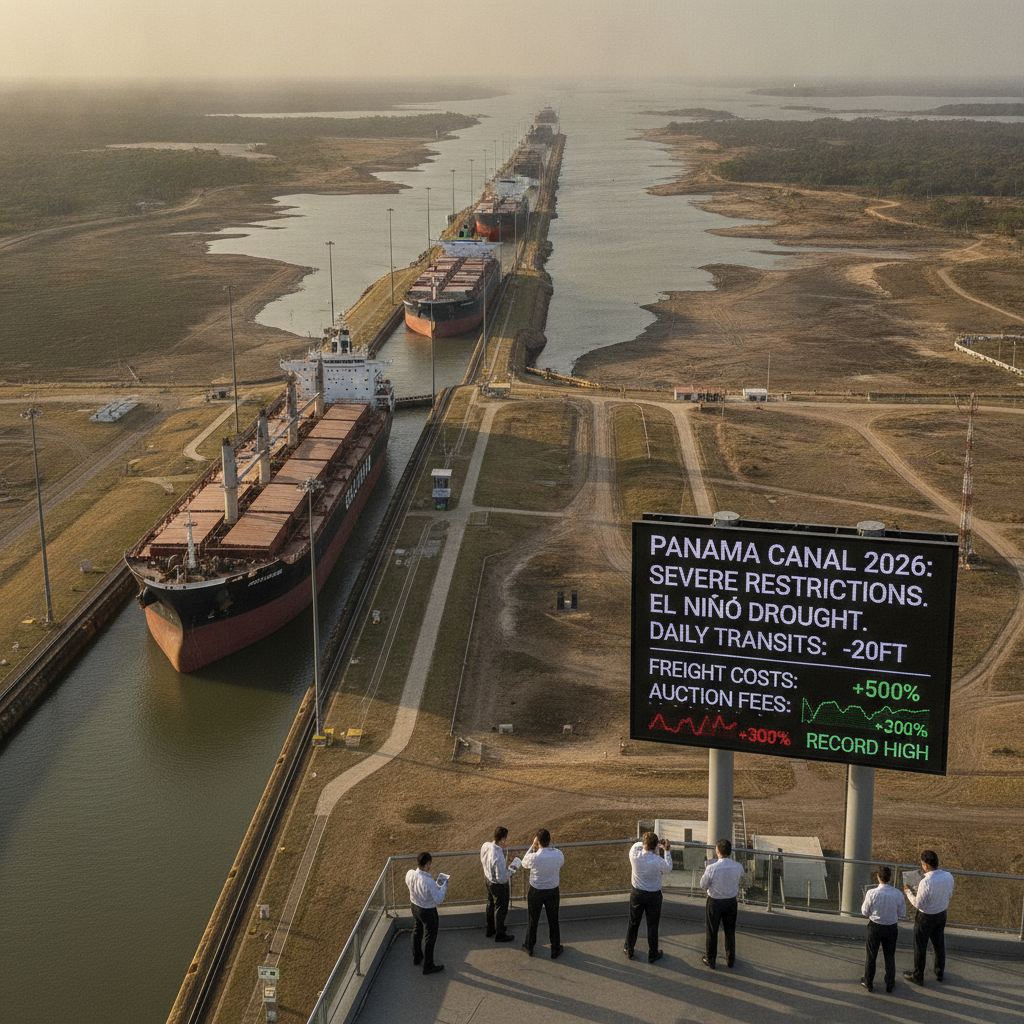
Driven by an intensifying El Niño, May through August 2026 watershed rainfall fell 34% below historical averages. Consequently, the Panama Canal Authority is capping daily vessel transits at 34 starting September 4, and 32 by September 15. Furthermore, maximum authorized drafts for Neopanamax locks are progressively reducing to 48.0 feet in early September and 47.5 feet by October.
Supply Chain Costs Surge
For shipping experts, the immediate reality is skyrocketing costs and reduced vessel payloads. Lower drafts force heavy container ships to reduce loads before transiting, effectively removing total capacity from the market. Desperate shippers are bidding for priority slots, with one vessel recently paying a record $5.3 million at auction just to cross the waterway.
- Shanghai to Los Angeles spot rates have surged to $6,802 per 40-foot container as freight rapidly reroutes to the US West Coast.
- Ocean carriers are introducing low-water surcharges of $150 per TEU to offset operational inefficiencies.
Navigating Panama Canal Restrictions in 2026
Logistics managers must proactively rethink routing strategies. The convergence of transit caps, draft limitations, and auction fees means reliance on US East Coast ports carries high volatility. Experts should leverage intermodal transport via West Coast gateways to mitigate landed cost explosions.
References
Metro Shipping (Aug 2026) – Panama Canal constraints add pressure; gCaptain (Aug 2026) – Capacity Squeeze Looms; OceanCrew (Aug 2026) – West Coast Rate Surge; Inchcape (Aug 2026) – Temporary Transit Modifications; Global News (Aug 2026) – Canal will cap daily transits; AFP (Aug 2026) – Ship Pays Record Amount; Supply Chain Brain (Aug 2026) – Canal to Limit Vessel Traffic.