Navigating the 2026 Supply Chain Reality
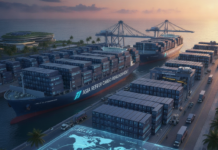
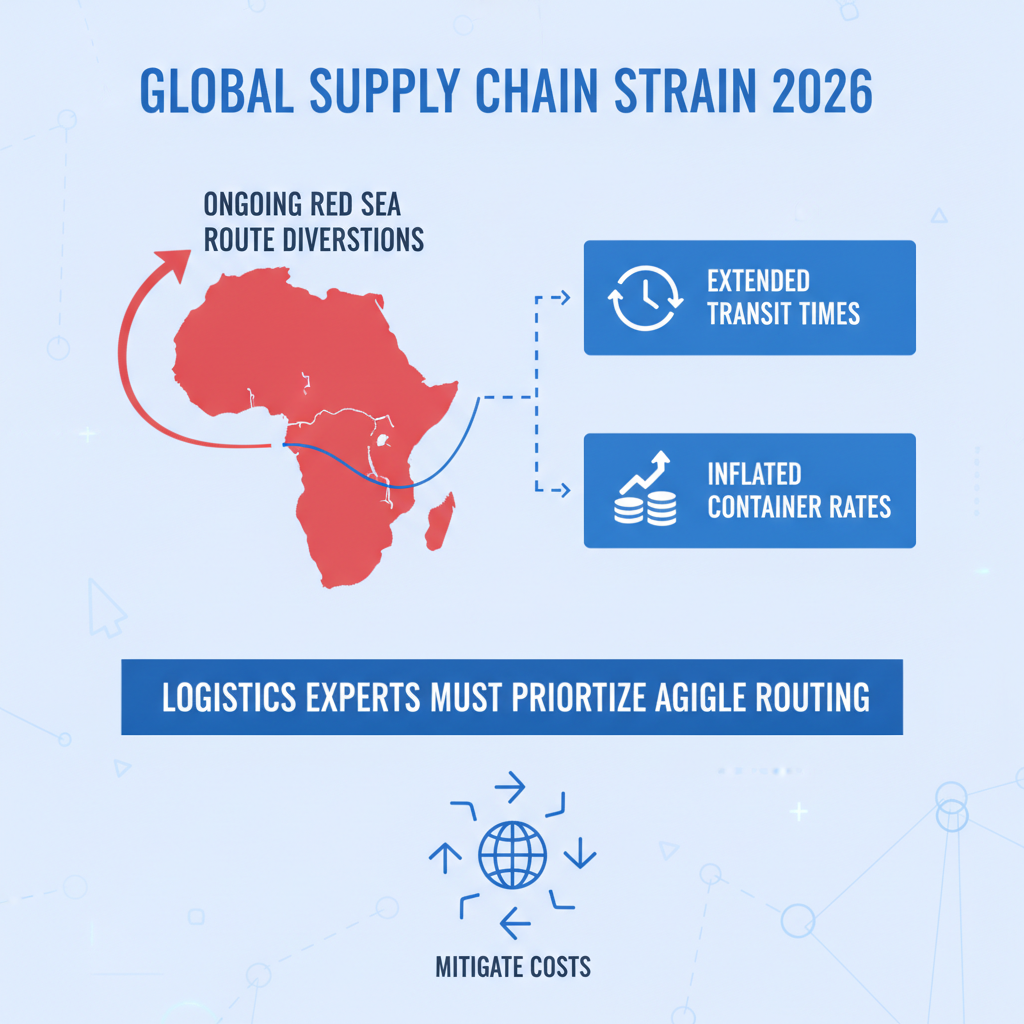
The persistence of Red Sea Route Diversions has fundamentally altered global shipping dynamics. Moving into 2026, what began as a temporary geopolitical disruption has evolved into a structural challenge for maritime logistics experts [1]. Carrier alliances are rapidly restructuring service networks as vessels continue to bypass the Suez Canal in favor of the Cape of Good Hope, absorbing effective vessel capacity and driving operational costs upward.
Impact of Red Sea Route Diversions on Rates
Logistics professionals are currently managing elevated costs across major trade lanes. Recent market analyses indicate that Asia-Europe and Transpacific routes maintain a $1,500 to $2,500 per FEU premium compared to pre-disruption baselines [1]. Furthermore, these routing shifts have added 10 to 15 days to typical shipping lead times, heavily straining inventory cycles [2]. According to maritime assessments, these diversions have increased global vessel ton-miles by nearly 6% year-over-year [3].
Strategies for Red Sea Route Diversions
To mitigate the prolonged supply chain effects, logistics managers must pivot from reactive scrambling to proactive optimization. Key strategic adjustments for 2026 include:
- Negotiating ocean contracts with built-in destination port flexibility.
- Leveraging nearshoring and multi-sourcing to reduce reliance on critical choke points.
- Utilizing AI-driven predictive analytics to anticipate localized port congestion.
Operating in this volatile environment requires industry leaders to carefully balance agility with cost control to preserve margins.
References
[1] Import Intelligence: 2026 Freight Market Outlook (2026).
[2] YCP Renoir: How to Build a Resilient Supply Chain (2025).
[3] JCtrans / UNCTAD: 2025 Review of Maritime Transport (2026).