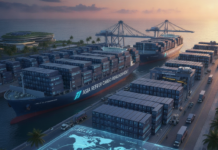


How the International Land-Sea Trade Corridor Reshapes Logistics
The International Land-Sea Trade Corridor is rapidly transforming supply chains between inland regions, the ASEAN bloc, and global markets. As multimodal infrastructure and financial integrations deepen, logistics experts are witnessing a structural shift in Eurasian trade routes.
Unprecedented Growth in the International Land-Sea Trade Corridor
In 2025, the International Land-Sea Trade Corridor rail-sea intermodal service achieved a historic milestone, handling a record 1.425 million TEUs, representing a staggering 47.6% year-on-year increase. By early 2026, the corridor’s network had expanded to connect 555 ports across 127 countries and regions, firmly establishing it as a primary maritime gateway. The first half of 2026 alone saw regional trade value via the corridor surge to 517.23 billion yuan (approximately $76.38 billion), driven heavily by exports of new energy vehicles, electronics, and agricultural goods.
Infrastructure Catalysts Accelerating the International Land-Sea Trade Corridor
Two major catalysts are currently accelerating the International Land-Sea Trade Corridor’s capabilities. First, the highly anticipated Pinglu Canal, slated for trial navigation in September 2026, will seamlessly integrate inland waterway networks with the Beibu Gulf. This canal will drastically reduce transit times and lower costs for bulk commodities. Second, the introduction of 21 targeted financial support measures is designed to optimize supply-chain financing and cross-border trade settlement. For shipping professionals, this corridor has evolved into a cost-efficient multimodal artery essential for global trade.
References
HKTDC Research: New International Land-Sea Trade Corridor (2026).
China Briefing: Implications for Businesses (2026).
Global Times: Corridor handles over 500b yuan foreign trade in H1 (2026).
Xinhua: Cargo volume hits record high (2026).
China Briefing: New Land-Sea Trade Corridor (2026).