
How Layered Sourcing Resilience is Redefining Global Logistics
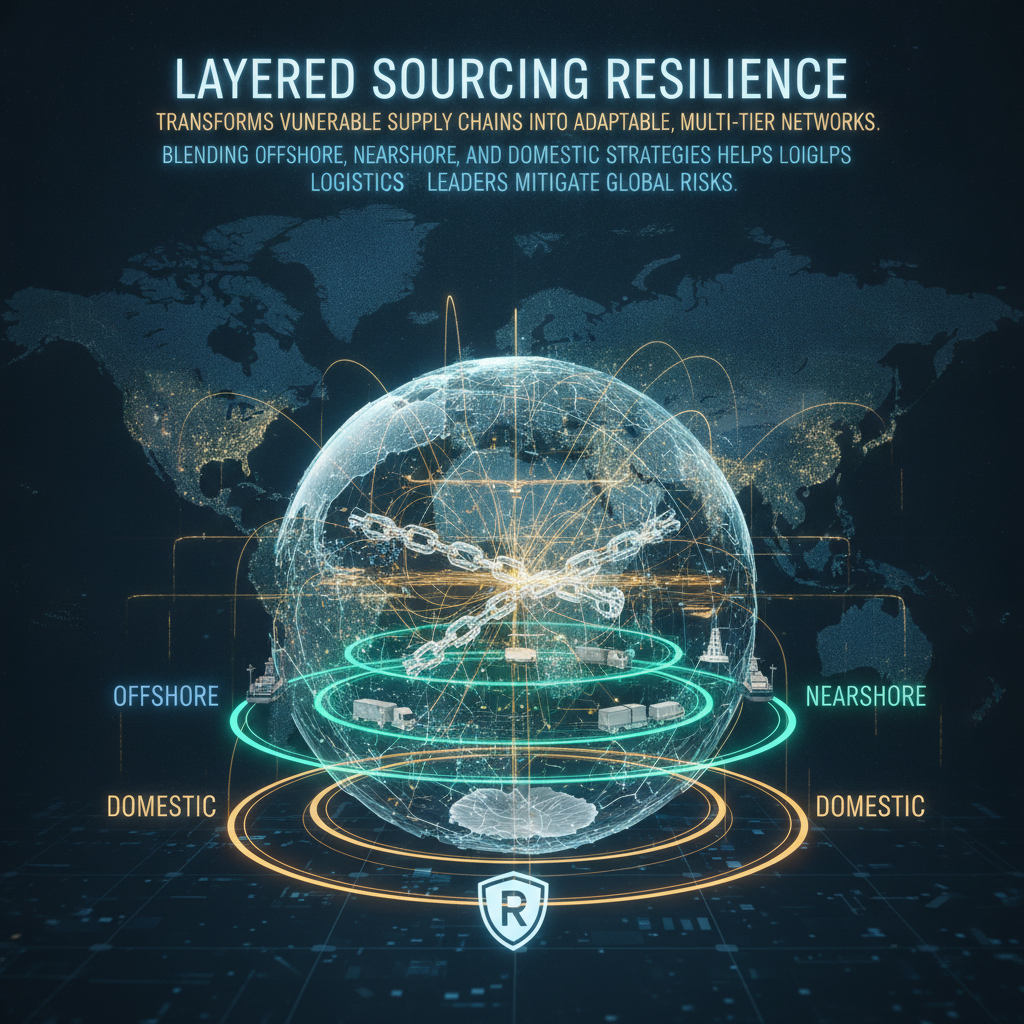
As geopolitical pressures, rising tariffs, and persistent bottlenecks reshape global trade, logistics leaders are fundamentally reengineering network design. The era of single-source dependency is giving way to a more sophisticated paradigm: Layered Sourcing Resilience. This strategy shifts from reactive emergency procurement toward structurally embedded adaptability, seamlessly blending domestic, nearshore, and diversified offshore manufacturing to mitigate risk.
Transitioning to Layered Sourcing Resilience
Unlike traditional “China-plus-one” workarounds, true Layered Sourcing Resilience orchestrates multiple geographic tiers simultaneously. Recent industry data highlights the urgency of this transition. According to a late 2025 WSI and TrendCandy study, 93% of supply chain organizations are actively prioritizing diversification within Asia and replacing single-country reliance with comprehensive layered sourcing models. Forward-thinking organizations are discovering that these multi-tiered strategies yield tangible operational benefits. A World Economic Forum report noted that companies with streamlined supplier frameworks recovered from supply disruptions up to 30% faster than those with rigid multi-intermediary structures.
Core Pillars of Layered Sourcing Resilience
Implementing this layered architecture requires advanced logistics capabilities and a granular understanding of cross-border trade constraints. The most resilient supply chains in 2026 focus on three distinct areas:
- Strategic Decoupling: Maintaining baseline production volume offshore while utilizing responsive nearshore facilities for highly volatile product categories.
- Multi-Modal Fluidity: Securing alternative transport modes, such as sea-air hybrid routing, to instantly bypass localized logistics blockages.
- Technological Visibility: Deploying artificial intelligence to monitor multi-tier regulatory nuances, rules of origin certifications, and supplier financial health.
The Future of Supply Chain Adaptability
Building Layered Sourcing Resilience is no longer an isolated procurement function. It is a vital corporate strategy requiring deep integration between treasury, trade finance, and logistics operations. By embedding resilience directly into the network upstream, enterprises can absorb macroeconomic shocks without sacrificing profitability.
References
Kase / TrendCandy: Retail Supply Chains Brace for a Redefined 2026.
Manovia / World Economic Forum: Why Simplifying Sourcing Is Now a Competitive Advantage.
SCI.AI: Asia’s Supply Chain Ascendancy.
Enhancing Supply Chain Resilience: Strategies & Technologies for Modern Businesses.
OTR Insights: Building Supply Chain Resilience Without Destroying Your Margins.