
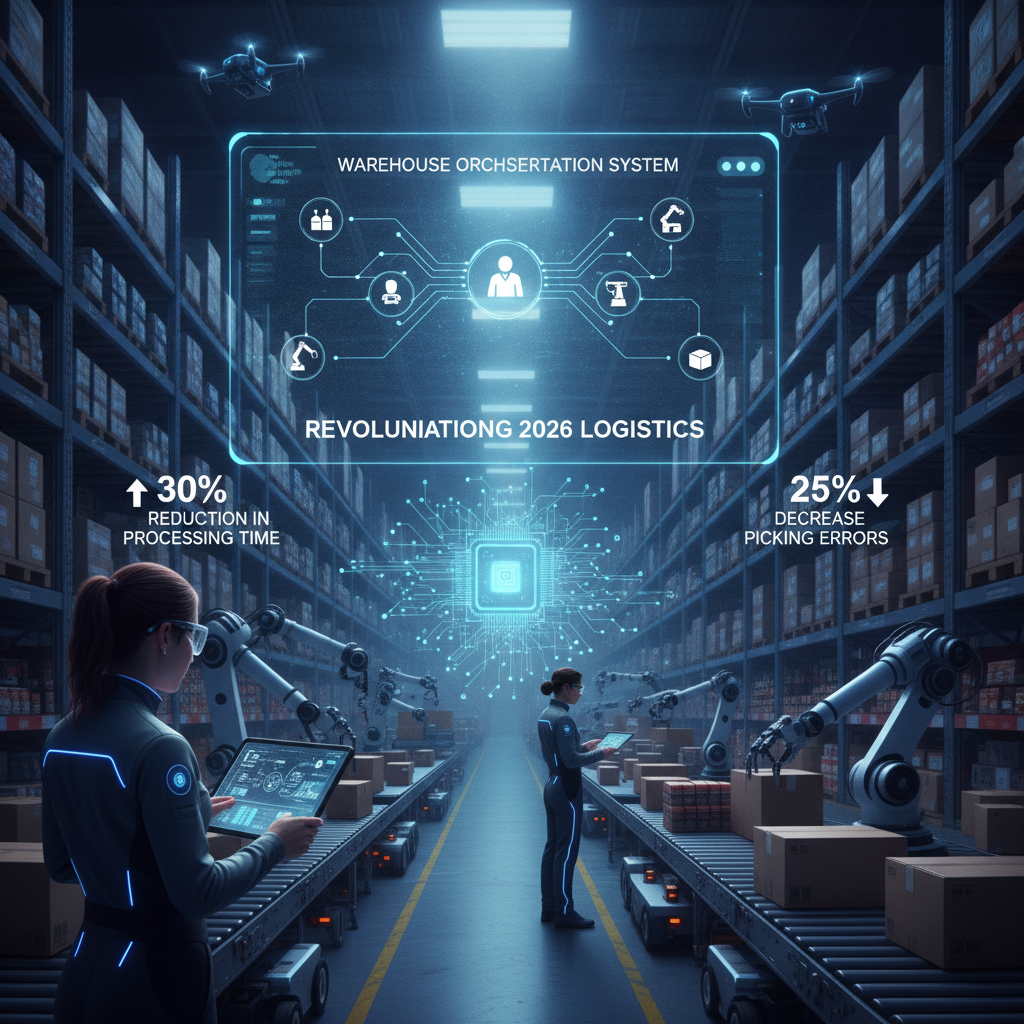
In the rapidly evolving logistics sector, Warehouse Orchestration Systems have emerged as the critical intelligence layer for modern distribution facilities. Unlike traditional warehouse management platforms, these advanced solutions dynamically coordinate multi-vendor robotics, autonomous mobile robots (AMRs), and human associates in real time. According to Stratistics MRC, the global Warehouse Orchestration Systems market is valued at $4.6 billion in 2026 and is projected to reach $15.6 billion by 2034, representing a staggering 16.4% compound annual growth rate.
The urgency to adopt intelligent orchestration is primarily driven by e-commerce order complexity and the relentless demand for same-day delivery. Industry data reveals that modern Warehouse Orchestration Systems outperform legacy manual inventory coordination by reducing order-processing time by almost 30% and lowering picking errors by nearly 25%. Furthermore, these platforms can now handle 5 to 10 times higher variability in task creation rates compared to previous generations, requiring highly sophisticated AI integration for demand forecasting.
As logistics experts transition to multi-node fulfillment models, the demand for edge AI visibility and predictive automation has skyrocketed. Key drivers fueling this widespread adoption include:
- Seamless integration of autonomous mobile robots and human workflows through real-time task allocation.
- Advanced agentic AI that adjusts operational terms and predictive routes dynamically.
- Modular plug-and-play frameworks that accelerate robotics deployment up to 12 times faster than custom integrations.
References
Inbound Logistics: Supply Chain Predictions: Roadmap to 2030 (2026). Industry Trends & Strategic Outlook: Logistics Services Market (2026). Stratistics MRC: Warehouse Orchestration Systems Market Forecasts to 2034 (2026). Market Intelo: AGV Orchestration AI Market Research Report (2026).