
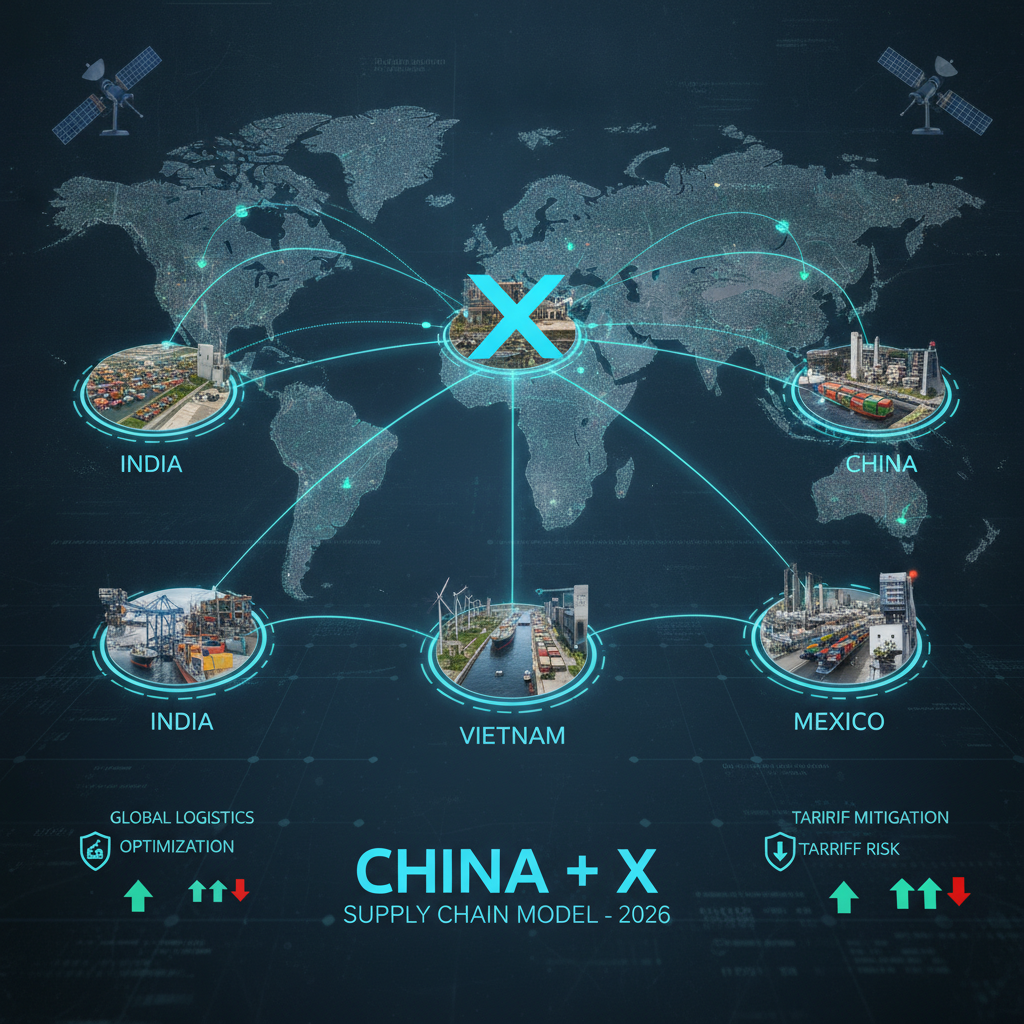
The China Plus One Supply Chain is no longer just a conceptual trend; in 2026, it is an operational necessity. Driven by steep tariff escalations and rising labor costs, organizations are rapidly abandoning single-node networks. Industry data reveals that 72% of supply chain professionals consider tariff volatility the top threat to their 2026 profit margins. Consequently, businesses are evolving their China Plus One Supply Chain into a ‘China Plus X’ model, adding multiple regional hubs to mitigate localized risks and optimize Total Landed Cost.
Global manufacturing redistribution highlights three critical destinations for procurement:
- India: Emerging as an electronics powerhouse, India recorded $19.04 billion in manufacturing FDI in FY 2024-2025 and captured roughly 25% of global iPhone production by 2025.
- Vietnam: As the primary Southeast Asian hub for electronics and textiles, Vietnam helped the broader ASEAN region secure a record $225 billion in FDI in 2024.
- Mexico: Heavily favored by the automotive and medical device sectors, Mexico serves as the premier nearshoring base for fast U.S. market access.
Adopting a China Plus One Supply Chain introduces highly fragmented logistical complexities. Shifting production requires rigorous rules-of-origin reviews and new digital visibility tools to monitor multi-node inventory seamlessly. Success in 2026 demands strategic partnerships with localized forwarders to secure inbound freight capacity and navigate new customs environments.
References
DHL: The China Plus One Strategy 2026
FedEx: Diversifying Supply Chains
China Briefing: 2026 Supply-Chain Implications
ISM: 2026 Supply Chain Trends
IMARC: China+1 Strategy in India
Dimerco: Logistics Challenges
International Supply Chains: 2025 Insights
DocShipper: Vietnam vs India vs Mexico
NUS Research: Southeast Asia Manufacturing