
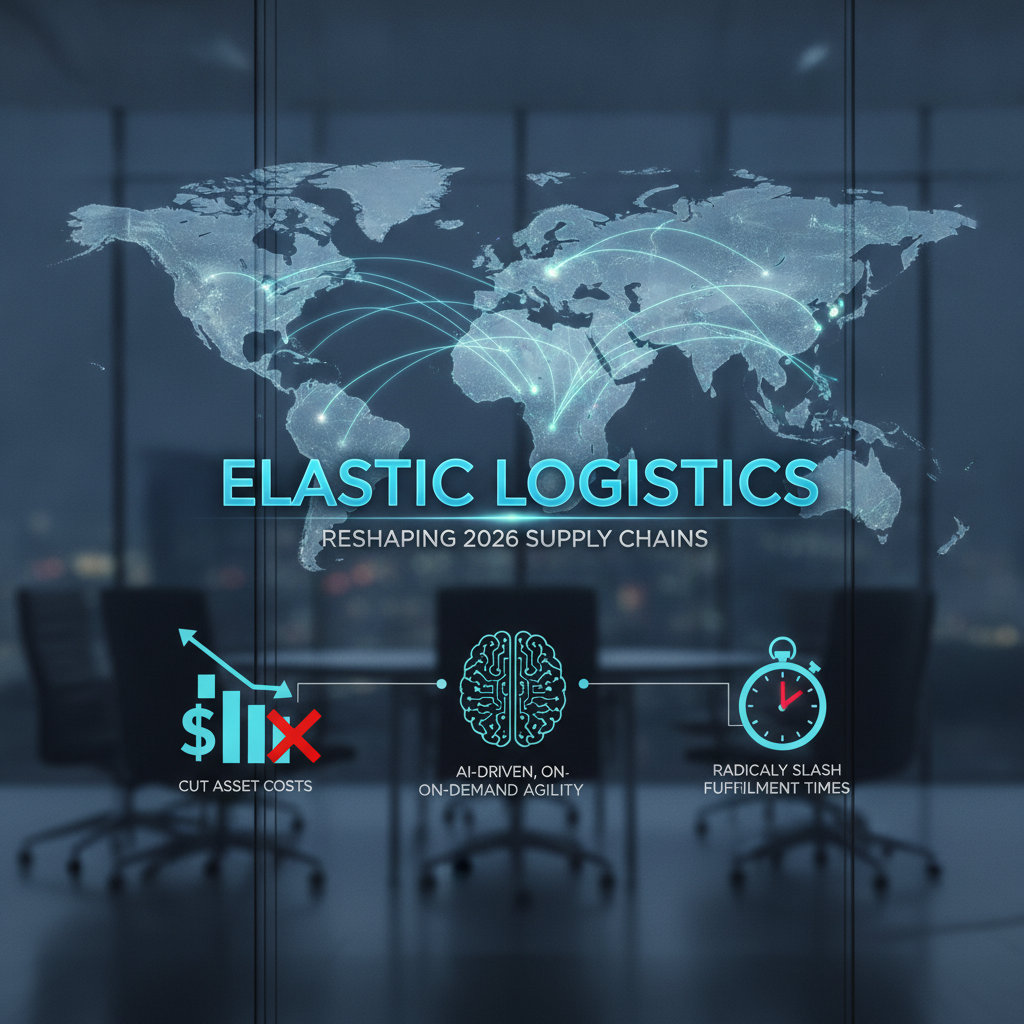
The global shipping landscape is undergoing a profound structural shift. As supply chains face increasingly unpredictable disruptions, traditional rigid frameworks are rapidly becoming obsolete. In 2026, Elastic Logistics has emerged as an operational essential for industry experts aiming to maintain resilience without sacrificing cost-efficiency. This dynamic model empowers businesses to swiftly scale their physical infrastructure and operations up or down in direct response to real-time market demand.
Recent industry data highlights the massive financial impact of adopting flexible supply chain models. The global logistics market is aggressively projected to reach USD 16.8 trillion by 2032. Notably, companies implementing Elastic Logistics report a reduction of over 30% in order fulfillment times alongside a 25% increase in revenue growth during their first year of adoption. This remarkable agility is powered by autonomous artificial intelligence systems that execute routine decisions, such as real-time shipment rerouting and automatic inventory adjustments, without requiring human intervention.
Moving beyond experimental pilots, AI co-pilots and digital orchestration are now deeply embedded into everyday logistics planning. By shifting from fixed proprietary infrastructure to on-demand warehouses and shared carrier networks, organizations successfully eliminate the hidden overhead costs associated with idle assets. For modern supply chain leaders, Elastic Logistics is no longer a mere operational trend; it is the definitive strategy for navigating geopolitical volatility and securing sustainable profitability in an unpredictable global market.
References
MBE Franchise. What is Elastic Logistics and how it’s redefining business scaling in 2026. DHL ID. 5 Logistics Trends Reshaping Asia in 2026. ISCN Academy. From 2025 to 2026 – Supply Chains in a World That Refuses to Stabilise. MBE Franchise. What is Elastic Logistics and how it’s redefining business scaling in 2026.