
The era of hyper-extended, single-source global networks is rapidly giving way to a more localized reality. For modern logistics and shipping experts, Supply Chain Regionalization is no longer just a buzzword; it is a fundamental restructuring of international trade architecture.
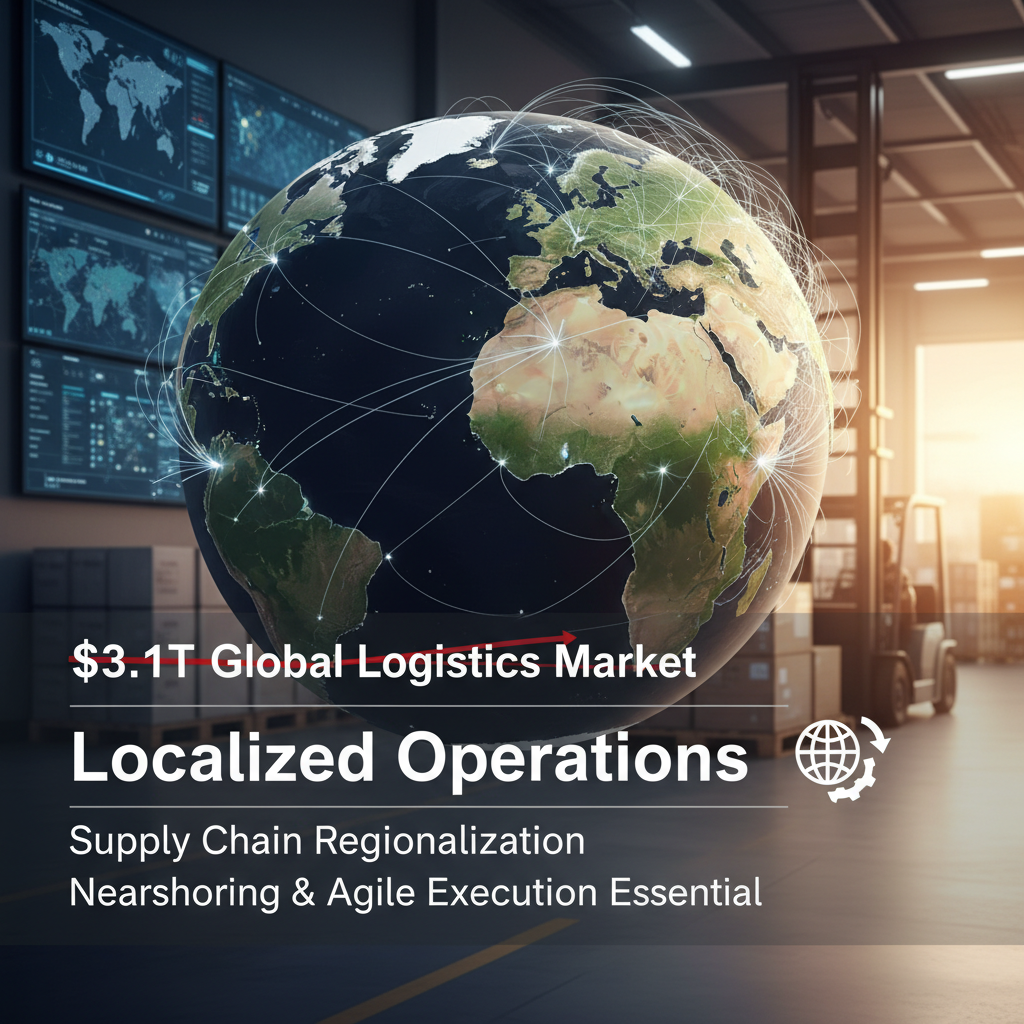
Recent data indicates a permanent shift in how multinational corporations approach procurement and distribution. Geopolitical volatility and strict sustainability mandates are forcing companies to relocate production closer to end consumers. In 2025, the outbound logistics market reached a massive $3.10 trillion, fueled heavily by regionalized manufacturing expansions in hubs like Mexico for North American markets and Eastern Europe for the EU. Analysts project this sector will accelerate to $3.32 trillion in 2026.
Industry leaders are aggressively investing in regional clusters to mitigate risk and reduce transit times. This shift mandates upgraded strategies for freight forwarders and logistics providers:
- Automated Local Execution: Nearshored facilities demand advanced robotics and digital control towers to offset regional labor costs.
- Customized End-to-End Solutions: Regional agent integration is overtaking raw freight rate competition as a crucial competitive advantage.
- Decarbonization Compliance: Shorter transport routes help carriers meet strict 2026 emission reduction targets.
To capitalize on Supply Chain Regionalization, shipping enterprises must prioritize practical, on-the-ground agent execution over mere global network boundaries. Forwarders adapting their capacity to these condensed trade lanes will capture unprecedented yield in 2026 and beyond.
References
The Martec Group (2026). How Supply Chain Diversification Is Evolving into Regional Resilience. JCtrans (2026). Leverage your global international reach to build logistics solutions. RSM US (2026). How future-focused manufacturing is rewriting supply chain networks. The Martec Group (2026). Nearshoring to Mexico and Canada. Future Market Insights (2026). Outbound Logistics Market Global Market Analysis Report. FMI (2026). Outbound Logistics Market Size.