
Understanding the Impact of Tariff-Driven Shipment Front-Loading
As global trade tensions escalated through 2025 and 2026, supply chain leaders rapidly adopted a new playbook to mitigate risk. Tariff-driven shipment front-loading became the primary defense against volatile duty increases, with companies accelerating import timelines to secure inventory. According to a July 2026 survey of 500 enterprise shippers, 85.6% frontloaded inventory in response to tariff uncertainty. This massive influx of goods created an early peak shipping season, highlighted by a 14.3% year-over-year increase in June import volumes and a record 1 million TEUs processed at the Port of Los Angeles.
The Hidden Costs of Tariff-Driven Shipment Front-Loading
While the initial goal of front-loading was duty avoidance, the reality has proven vastly more complex. Bringing inventory forward shielded many shippers from higher tariffs and improved product availability. However, logistics experts note that tariff-driven shipment front-loading creates significant downstream challenges testing supply chain resilience.
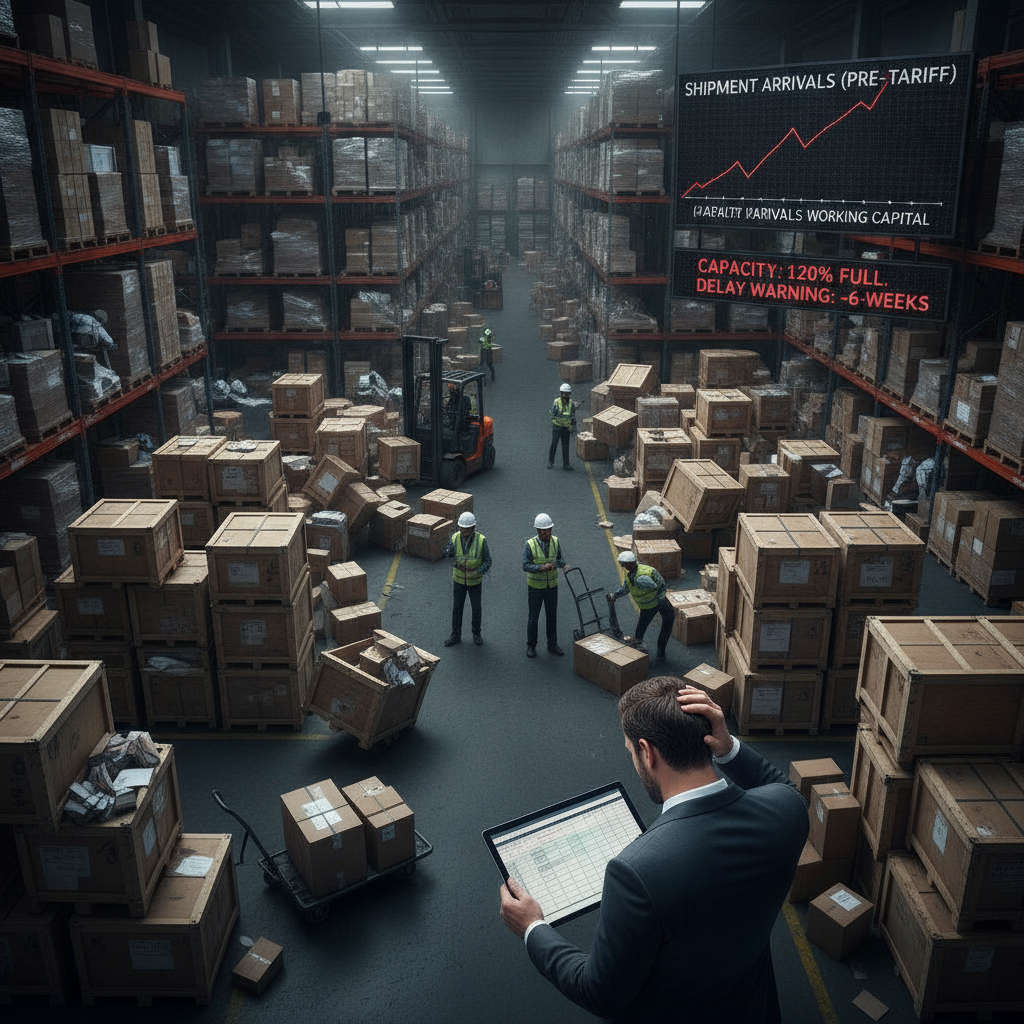
- Storage Strain: 42% of enterprise shippers reported severe increases in warehousing costs.
- Capital Constraints: Moving procurement forward strained working capital for 44% of organizations.
- Demand Mismatches: Over 25% of shippers experienced prolonged ‘quiet periods’ with limited replenishment flexibility.
Optimizing Tariff-Driven Shipment Front-Loading Strategies
To navigate ongoing trade volatility, modern networks must look beyond merely pulling cargo forward. Leaders are now pairing tariff-driven shipment front-loading with strategic transloading near destination ports. By shifting freight from ocean to rail or routing directly to regional distribution centers, cargo owners avoid costly detention fees while deferring duties. Ultimately, long-term success requires balancing duty savings against capital fluidity.