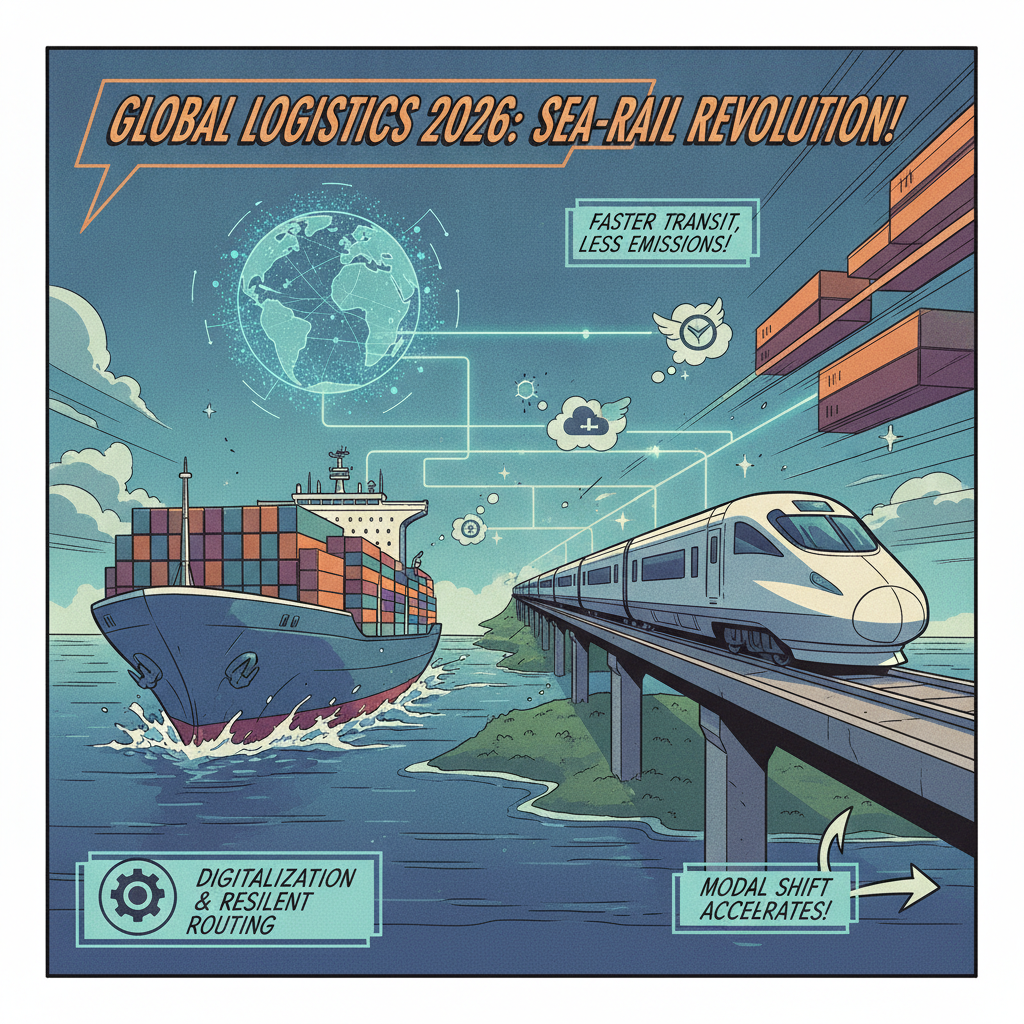
The global supply chain is undergoing a critical transformation in 2026, driven by a rapid Sea-rail multimodal transport expansion. Logistics experts are increasingly prioritizing intermodal networks to counter geopolitical disruptions, fluctuating tariffs, and environmental concerns. By seamlessly combining maritime shipping and railway networks, operators are achieving unprecedented efficiency.
Key Drivers of Sea-Rail Multimodal Transport Expansion
Recent developments in Eurasian corridors highlight the dramatic impact of this modal shift. The introduction of optimized intermodal routes has slashed transit times considerably. For instance, new sea-rail links between Asia and Europe have reduced delivery windows from 55-60 days to under 20 days. Similarly, the Shijiazhuang International Dry Port recorded a 52.8% year-on-year surge in 2025, handling 1,282 intermodal train trips.
- Speed and Efficiency: Integrated corridors bypass traditional chokepoints and reduce end-to-end transit times.
- Decarbonization: Shifting freight from road to rail and sea heavily cuts carbon emissions, aligning with 2026 regulatory mandates.
- Supply Chain Resilience: Diversified transport modes protect against localized disruptions and capacity constraints.
Digitalizing Sea-Rail Multimodal Transport Expansion
The current Sea-rail multimodal transport expansion relies heavily on digital integration. Leading integrated logistics providers are deploying unified order-handling platforms that connect booking, execution, and financials across multiple carriers. Projections indicate global spending on logistics digital transformation will reach 3.9 trillion USD by 2027.
As the industry moves forward, seamless data exchange and predictive analytics will be vital. Companies that leverage machine learning for predictive routing and real-time visibility will dominate the next phase of intermodal logistics. Multimodal logistics is no longer just an alternative; it is the baseline for resilient global trade.