
Is the India-China Supply Chain Truce Reshaping Global Logistics?
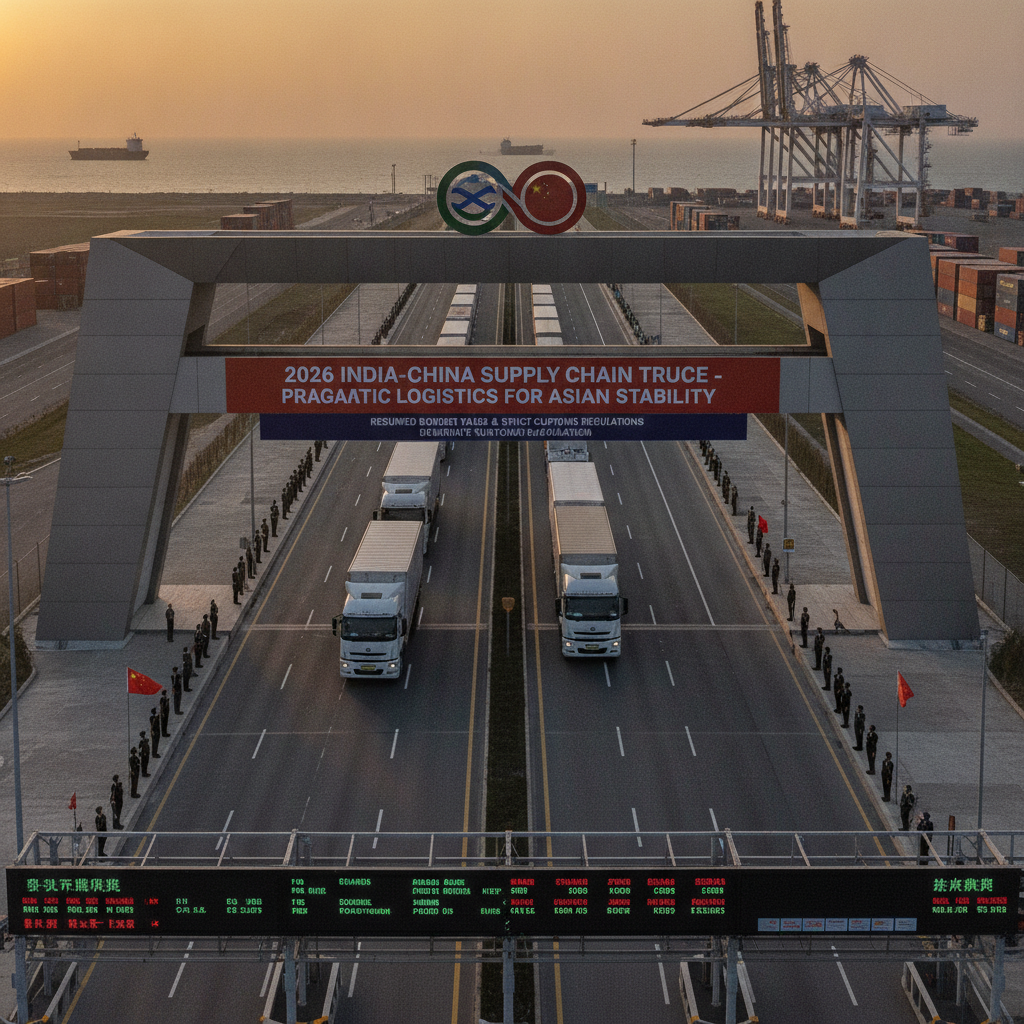
In mid-2026, the logistics sector is witnessing a pragmatic shift as an India-China supply chain truce emerges, prioritizing manufacturing realities over geopolitical friction. After a six-year hiatus following the 2020 border skirmishes, the two nations have resumed cross-border trade through strategic Himalayan routes like Nathu La and Shipki La. This thaw is fundamentally driven by economic interdependence, as India’s booming manufacturing sector continues to rely heavily on Chinese machinery, components, and raw materials.
The Drivers Behind the India-China Supply Chain Truce
Despite previous attempts to decouple, bilateral trade hit a record $155 billion in 2025, with India importing over $130 billion in goods from China. This reality has forced a supply chain truce, reflecting a strategy of managed interdependence rather than a complete strategic reset. Indian policymakers now acknowledge that scaling domestic production under the Make in India initiative paradoxically deepens near-term reliance on Chinese industrial inputs.
For logistics professionals and freight forwarders, this India-China supply chain truce brings significant operational shifts:
- Resumption of land border trade provides new localized logistics corridors, reducing maritime chokepoint vulnerabilities.
- Sea freight remains dominant with over 85 percent volume, though stricter Indian customs compliance now requires meticulous HS coding and BIS certification.
- Air cargo capacity is expanding rapidly to handle high-value and urgent intermediate goods.
Future Outlook for Global Freight Forwarding
During recent talks in Manila, Indian officials emphasized the need for predictable, stable supply chains and fair market access to address the historic $112 billion trade deficit. While this truce stabilizes immediate shipping operations, logistics experts must remain agile. The relationship remains heavily regulated, with strict customs enforcement aiming to phase out grey-market shipping channels. Ultimately, this fragile truce offers a critical window for supply chain managers to optimize cross-border freight strategies while navigating the complex realities of Asian trade dynamics.