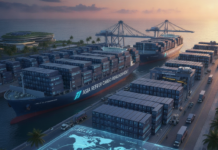


The logistics sector is currently grappling with severe China-South America Ocean Rate Surges, transforming the trans-Pacific trade lane into a highly volatile seller’s market in mid-2026.
Several intersecting factors have fundamentally shifted the pricing dynamics on this crucial trade corridor. E-commerce brands and retailers have aggressively front-loaded their peak-season inventory build-ups. This early demand rush collided with structural capacity cuts, as ocean carriers actively managed vessel supply through blank sailings, such as CMA CGM suspending its M2X service to the West Coast of South America. Furthermore, geopolitical tensions and ongoing Red Sea diversions have tightened global vessel availability, increasing insurance and operational costs.
To capitalize on the capacity squeeze, major ocean lines have aggressively implemented rate hikes and surcharges. In June 2026, Maersk enforced a Peak Season Surcharge (PSS) of $1,000 per 20-foot container and $2,000 per 40-foot container on routes from the Far East to the East Coast of South America. The benchmark spot rates reflect this dramatic pricing shift:
- East Coast South America (ECSA): Freight rates to destinations like Brazil and Argentina have climbed to between $4,100 and $4,400 per 40-foot high cube (40′ HQ).
- West Coast South America (WCSA): Rates to Chile, Peru, and Mexico are averaging $3,200 to $3,600 per 40′ HQ, with spot space selling out almost instantly.
Handling these China-South America Ocean Rate Surges requires agile procurement strategies. With space shortages forcing shippers to secure vessel allocations weeks in advance, logistics experts must build extended delivery buffers and closely monitor blank sailing schedules to protect supply chain margins.
References
- YQN Logistics: China Sea Freight Increase 2026: Up To $1,000 Shipping Price
- YQN Operation Team: Freight Market Update: China to Latin America Shipping Rates in 2026