
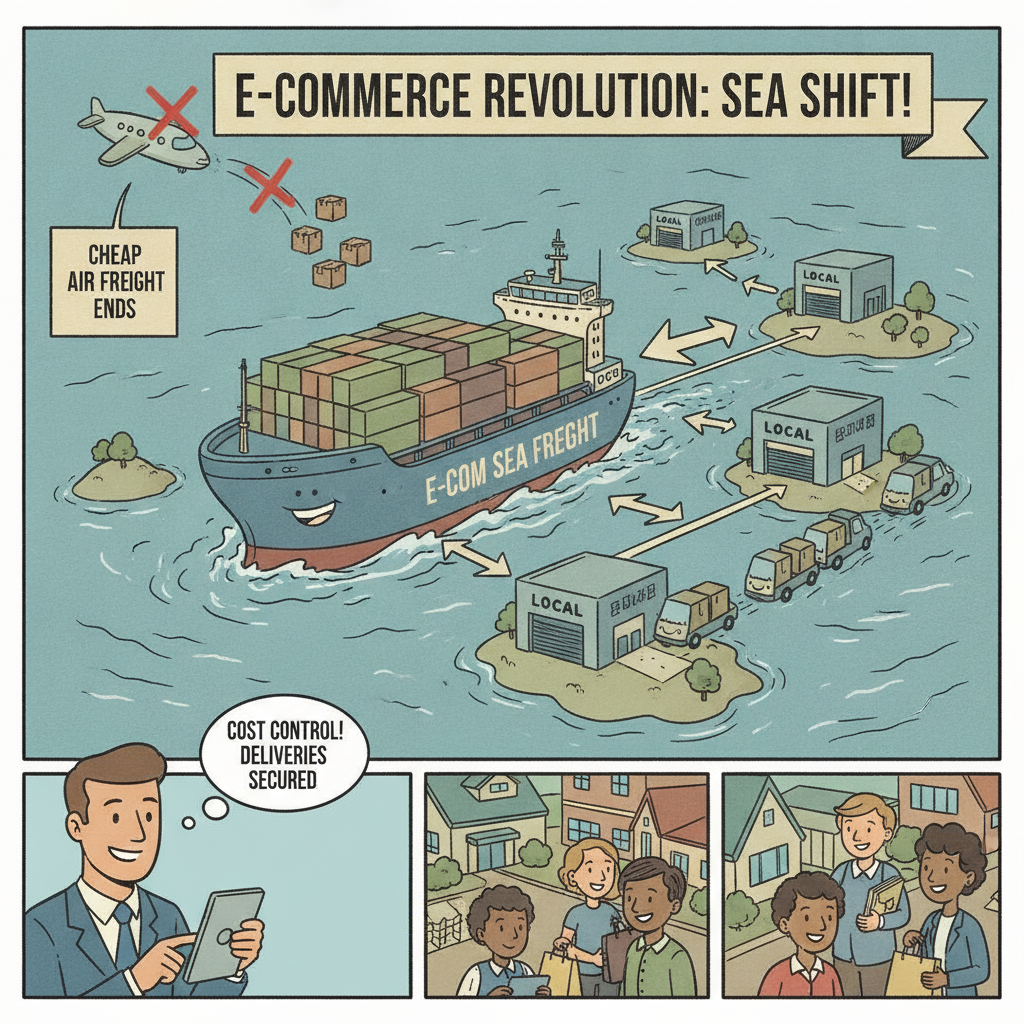
The global logistics sector is undergoing a profound transformation in 2026. For years, the direct-to-consumer model relied heavily on air cargo and de minimis duty exemptions to deliver low-cost goods directly from China to Western markets. However, the elimination of the $800 U.S. de minimis threshold in 2025 and the European Union’s rollout of new fixed duties in mid-2026 have upended this strategy. Facing skyrocketing customs costs and capacity shortages, the industry is seeing major Cross-Border E-Commerce Sea Freight Shifts.
To preserve profit margins and ensure compliance, retail platforms are pivoting to a semi-managed model. This approach relies on bulk sea freight shipments to strategically located regional fulfillment centers. Key indicators of these Cross-Border E-Commerce Sea Freight Shifts include:
- Cost Efficiency: Ocean freight pricing has stabilized in the $1,200-$2,800 per TEU range, offering massive cost savings over heavily tariffed air parcels.
- Market Expansion: Sea freight now commands 52.1% of shipment movements by volume in the e-commerce logistics market.
- Local Fulfillment: Brands are utilizing multi-carrier platforms and localized warehouses to manage ocean-imported inventory, ensuring rapid last-mile delivery.
This structural pivot demands agility from logistics experts. With the sell-then-ship air model becoming commercially unviable for low-value goods, success hinges on robust sea freight consolidation and advanced regional warehousing. Stakeholders must adapt to tightening environmental regulations, such as the EU’s Emissions Trading System for maritime transport, while optimizing ocean routes to maintain supply chain resilience.
References: BoxIt4me, Portless, Tradlinx, Tech in Asia, Market Research 2034, Shipink, Transportation Market Update, Codot Logistics.