The Strait of Hormuz has long stood as one of the most consequential waterways in global commerce. Connecting the Persian Gulf to the Gulf of Oman and the wider Indian Ocean, this narrow channel measures roughly 21 miles across at its tightest point, with shipping lanes just two miles wide in each direction. Through this slim corridor flows a volume of energy trade that few other chokepoints can rival. For cargo owners managing global supply chains, understanding the current tensions in this region is no longer optional—it is essential to protecting the value of goods, meeting customer commitments, and controlling costs.
Why the Strait of Hormuz Matters to Global Trade
The strategic weight of the Strait of Hormuz rests on its role as the world’s most important oil transit chokepoint. According to the U.S. Energy Information Administration, roughly 20 million barrels of oil per day passed through the strait in 2024, representing about one-fifth of global petroleum liquids consumption. A significant share of the world’s liquefied natural gas trade also moves through this route, much of it originating from Qatar.
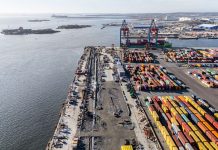
The waterway serves as the maritime gateway for oil exports from Saudi Arabia, Iraq, Kuwait, the United Arab Emirates, and Iran. Its importance extends well beyond energy. The strait sits adjacent to Jebel Ali in Dubai, the ninth-largest container port in the world, which handled 15.54 million TEU in 2024 according to the World Shipping Council. Container traffic serving the Gulf region, along with the bunkering and transshipment activity concentrated around these hubs, depends on unobstructed passage through this corridor.
The Nature of the Current Crisis
Tensions surrounding the Strait of Hormuz stem from a combination of geopolitical friction, the risk of vessel interference, and periodic threats to close the waterway entirely. Understanding each element helps cargo owners assess their exposure with greater precision.
Geopolitical Tensions
The strait lies at the center of long-standing regional rivalries. Iran controls the northern shore, and its officials have repeatedly signaled the possibility of restricting or closing the waterway during periods of heightened conflict. While a full closure has never actually occurred, the recurring threat alone is enough to move insurance markets and prompt carriers to reassess risk. Periods of direct military exchange in the wider Middle East have sharpened these concerns, keeping the region on edge.
Vessel Seizures and Interference
The Strait of Hormuz has a documented history of vessel seizures and detentions. Iranian forces have on multiple occasions seized or detained commercial vessels transiting the area, including tankers, citing maritime disputes or alleged violations. These incidents disrupt individual voyages and raise the perceived risk for every operator using the route. For cargo owners, even a single seizure can mean delayed shipments, contested cargo, and difficult conversations with downstream customers.
Rerouting Challenges
Here the Strait of Hormuz presents a distinct challenge. Unlike the Red Sea and the Suez Canal, where vessels can divert around the Cape of Good Hope at the cost of added time and fuel, the Strait of Hormuz has no practical maritime alternative. It is the only sea route in and out of the Persian Gulf. Any cargo destined for or originating from Gulf ports must transit this passage. This absence of an alternative sea lane is precisely what makes the chokepoint so critical and why disruption carries such weight.
Land-based alternatives exist but offer limited relief. Pipelines operated by Saudi Arabia and the United Arab Emirates can bypass the strait for a portion of regional oil exports, yet their combined capacity falls well short of the volume that normally moves by sea. For container and general cargo, the options are narrower still.
The Impact on Freight Rates, Timelines, and Cargo Security
The consequences of instability in the Strait of Hormuz reach directly into the metrics that matter most to cargo owners: cost, reliability, and security.
Freight and insurance costs. When risk in the region climbs, war risk insurance premiums for vessels transiting the strait rise in response. These additional costs are frequently passed along to shippers through surcharges. Bunkering and vessel operating expenses can also increase as carriers factor in the elevated risk environment. For cost-sensitive shippers operating on tight margins, these surcharges can materially affect landed costs.
Delivery timelines. Heightened tension tends to slow transit as vessels adjust routing, reduce speed in contested waters, or wait for safer transit windows. Detentions and inspections add further unpredictability. For businesses managing just-in-time inventory or firm delivery commitments, this variability complicates planning and threatens on-time performance.
Cargo security. The risk of seizure or detention introduces a direct threat to the goods themselves. Cargo caught up in a vessel detention may face extended delays, legal complications, or, in severe cases, loss. Protecting the value of goods in transit becomes considerably harder when the route itself carries elevated political risk.
What Shippers Should Do to Protect Their Supply Chains
Cargo owners cannot control geopolitics, but they can strengthen their resilience against the disruptions that follow. A disciplined, proactive approach positions businesses to absorb shocks and maintain their customer commitments.
- Prioritize real-time visibility. Invest in shipment tracking and monitoring tools that provide continuous insight into vessel position and status. Early awareness of a delay or diversion allows for faster, better-informed decisions.
- Diversify sourcing and routing where possible. For goods that can be sourced outside the Gulf region, developing alternative suppliers reduces dependence on a single vulnerable corridor. Where Gulf sourcing is unavoidable, building buffer inventory can cushion against transit interruptions.
- Review insurance coverage carefully. Confirm that cargo insurance reflects current regional risk, including war risk and related exposures. Understanding exactly what is and is not covered prevents unwelcome surprises after an incident.
- Build flexibility into delivery commitments. Where contracts allow, incorporate realistic contingency into delivery timelines during periods of heightened tension. Transparent communication with customers protects relationships during disruptions.
- Work closely with carriers and forwarders. Maintain open dialogue with logistics partners about their contingency plans, routing decisions, and risk assessments for the region. Their operational insight is a valuable complement to independent monitoring.
- Stay continuously informed. Perhaps the single most cost-effective safeguard is staying ahead of the news. Conditions in the Strait of Hormuz can shift rapidly, and timely information is the foundation of every sound decision. Regularly consulting www.shippingazette.com keeps cargo owners current on the developments that shape their supply chains.
Turning Awareness Into Advantage
The Strait of Hormuz will remain a defining feature of the global trade landscape—a narrow channel carrying a fifth of the world’s oil and serving as the sole maritime access point to the Persian Gulf. For cargo owners, the lesson is clear. Resilience is built not through reaction but through preparation: visibility into shipments, flexibility in planning, sound insurance, strong carrier relationships, and, above all, a steady flow of reliable information.
This is not simply a matter of monitoring one waterway. It is about establishing the habits of awareness that safeguard cargo, control costs, and protect customer commitments across every route and every market.