
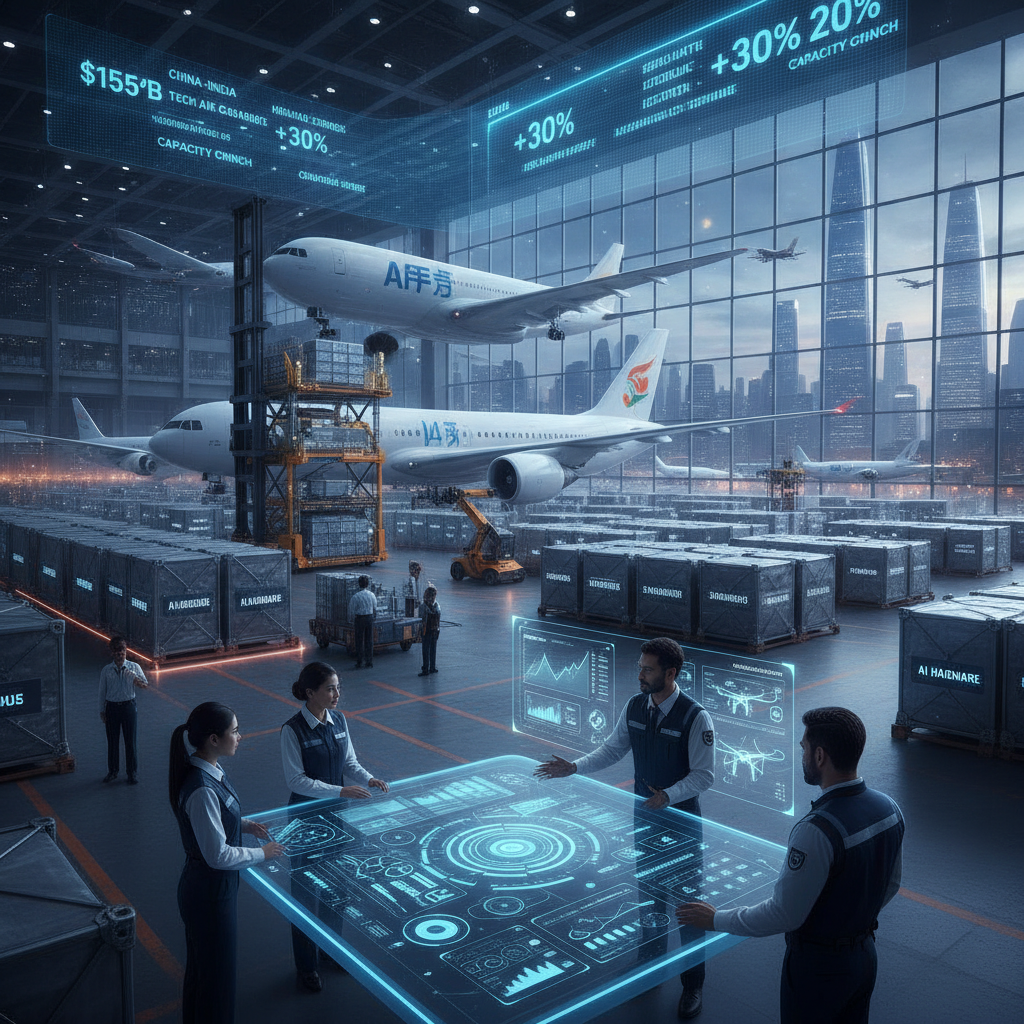
As global supply chains brace for volatility, the China-India Tech Air Cargo sector has emerged as a resilient powerhouse. Bilateral trade between the two manufacturing giants surpassed a staggering USD 155 billion in 2025, driven heavily by Chinese exports of electronics, semiconductors, and AI hardware. For logistics and shipping experts, managing this lucrative but complex trade lane requires navigating tight capacity and shifting regulatory frameworks.
The Indian air cargo market reached 3.6 million tons in 2025 and is projected to grow at an 11.38% CAGR through 2034. While global e-commerce air freight saw cooling demand, the surge in AI infrastructure shipments has successfully propped up the market. However, logistics providers face structural capacity constraints. China’s CAAC regulations limit foreign carriers without specific certifications to a mere 10 cargo charter flights annually, creating severe space shortages during peak seasons. Consequently, securing reliable air freight head haul space is increasingly difficult.
To overcome unpredictable freight rates and booking rejections, industry leaders are adapting fast. Key strategies for 2026 include:
- Partnering with specialized headhaul capacity managers to guarantee cargo space.
- Focusing on data analytics to bypass congested hubs and utilize secondary airports.
- Booking 3 to 8-day transit spaces well in advance to avoid peak-season offloading.
Ultimately, the China-India Tech Air Cargo corridor remains highly profitable for forwarders who can lock in reliable capacity. As AI and high-tech supply chains mature, mastering this specific route will separate leading logistics firms from the rest.
References
1. EIN Presswire (2026): Five Reputable China to India Airport-to-Airport Air Freight Providers. 2. JTUO Logistics Reports (2026). 3. The Loadstar (2026): AI cargo props up air cargo market.