The recent Strait of Hormuz Shipping Disruptions have created the most severe supply chain bottleneck in modern history, fundamentally altering global logistics. Following geopolitical escalations in early 2026, daily commercial transits through this critical chokepoint plummeted from roughly 40 vessels to near zero within days. For logistics professionals, the immediate priority is navigating a landscape where 20% of the world’s daily oil supply and significant container volumes are effectively blocked.
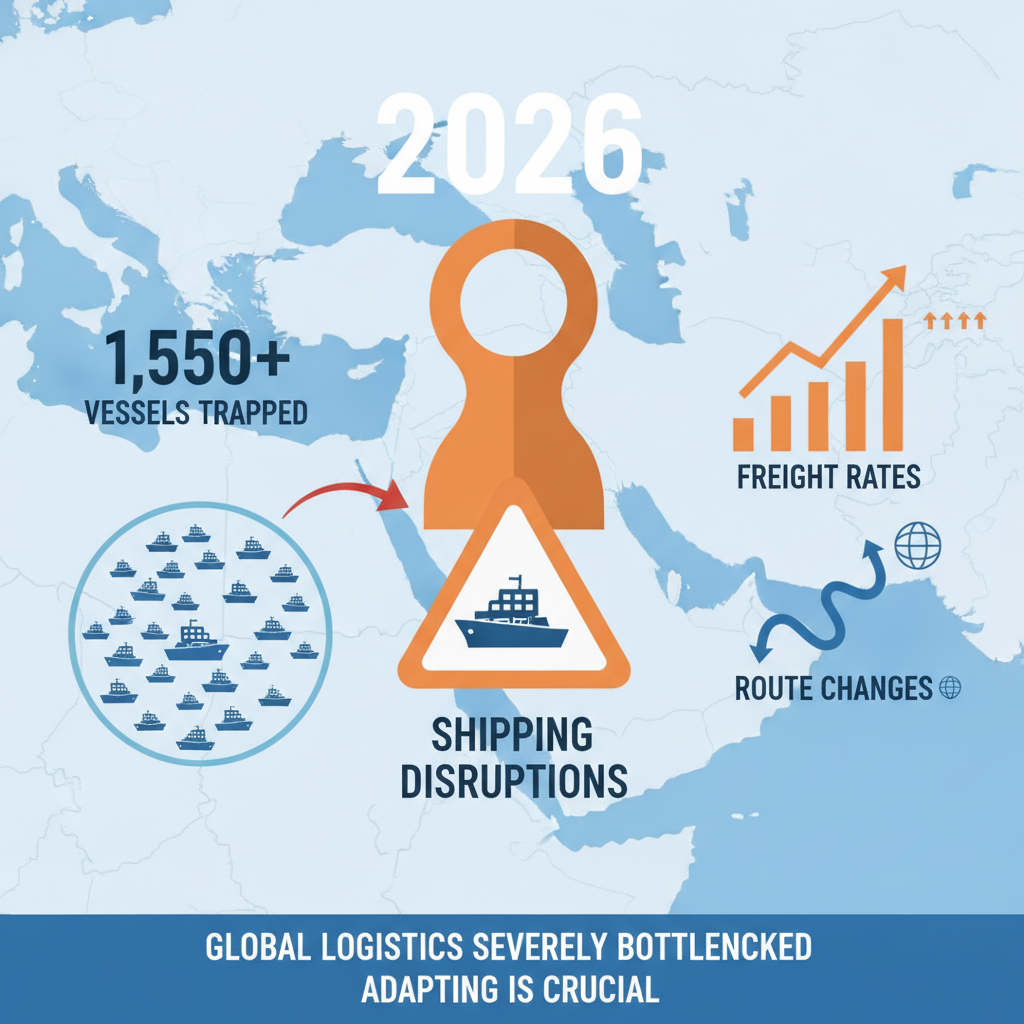
The statistical fallout from the Strait of Hormuz Shipping Disruptions paints a stark picture for international trade. Recent data reveals that over 1,550 commercial vessels and 22,500 mariners became trapped in the region by May 2026. Furthermore, traffic levels operated at a mere 5% of pre-war averages throughout April, forcing massive rerouting efforts and strict capacity constraints.
- Freight Rate Surges: Shippers face extreme cost pressures, with baseline freight rates spiking up to 50% for critical routes.
- Insurance Premiums: War-risk insurance premiums have exploded by 500% to 600%, adding millions in operational costs per voyage.
- Inventory Imbalances: The stranding of container vessels has disrupted Asian and European trade flows, creating severe empty container deficits.
As the industry adapts, operators must pivot toward resilient forecasting and alternative multimodal routes. Building agile contingency plans remains essential to surviving this turbulent freight environment.
References
- Strait of Hormuz Closure 2026: Supply Chain Impact.
- The Cost of Closing the Strait of Hormuz – Kiel Institute.
- What container data tells us about the Hormuz crisis – Kpler.
- Navigating Strait of Hormuz: Global Trade Impact – FreightAmigo.