
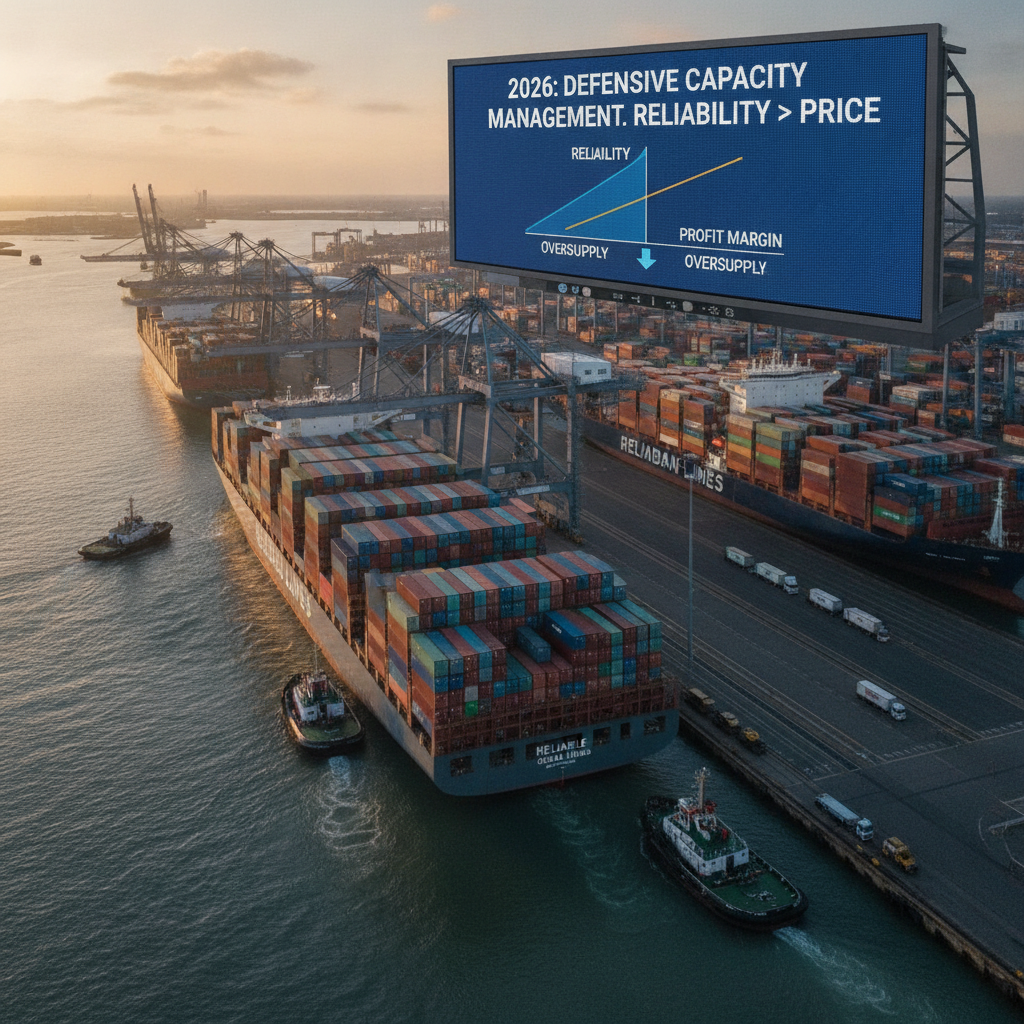
As global supply chains face an unprecedented influx of new vessel deliveries, ocean carriers are pushing back to protect their profit margins. Instead of allowing oversupply to crash freight rates, major shipping lines are heavily relying on Defensive Carrier Capacity Management. This strategic approach focuses on artificially tightening effective capacity to maintain pricing power amid volatile global demand and geopolitical tensions.
Defensive capacity management is transforming how beneficial cargo owners (BCOs) approach procurement in 2026. Carriers are deploying several aggressive tactics to restrict available space and control the market:
- Blank Sailings and Schedule Adjustments: Carriers are proactively canceling scheduled voyages to offset periods of softer demand and prevent a complete rate collapse.
- Dynamic Vessel Deployment: Fleets are being rerouted to longer transits, which absorbs excess global tonnage and reduces effective capacity.
- Alliance Restructuring: The dissolution of legacy partnerships has led to new capacity allocation strategies designed to optimize yield over sheer volume.
These defensive maneuvers mean that global freight markets will remain tighter than raw fleet growth numbers suggest. Analysts forecast that while spot prices will fluctuate, structural resilience driven by active capacity management will stabilize rates well above previous downturn minimums. Consequently, enterprise shippers are pivoting away from purely rate-driven negotiations. Moving forward, securing protected space and ensuring schedule reliability has become the ultimate priority for mitigating operational risk.
References
- FreightGraph: Ocean Freight Rates Surge 2026 as Capacity Tightens
- Bertling Group: Ocean Freight Market Report – Dec 2025 & Jan 2026
- Noatum Logistics: Why Container Shipping Will Stay Resilient in 2026
- Service Reliability Takes Center Stage in 2026 Ocean Freight Market
- GoFreight: Freight Forwarding Industry Outlook & Predictions for 2026