
Supply chain executives are facing unprecedented pressure to enhance visibility and agility in 2026. At the forefront of this transformation is the rapid adoption of Logistics Operational Digital Twins. These dynamic virtual replicas have evolved into essential command centers for predictive analytics and real-time fleet tracking.
Recent market data highlights a massive shift in technology investments. The digital twin in logistics market is projected to surge from $1.9 billion in 2025 to $18.7 billion by 2035. Furthermore, industry evaluations estimate the market will scale at a compound annual growth rate of over 13% through the next decade. This phenomenal growth illustrates how heavily global freight operators are investing in cloud-based digital infrastructure.
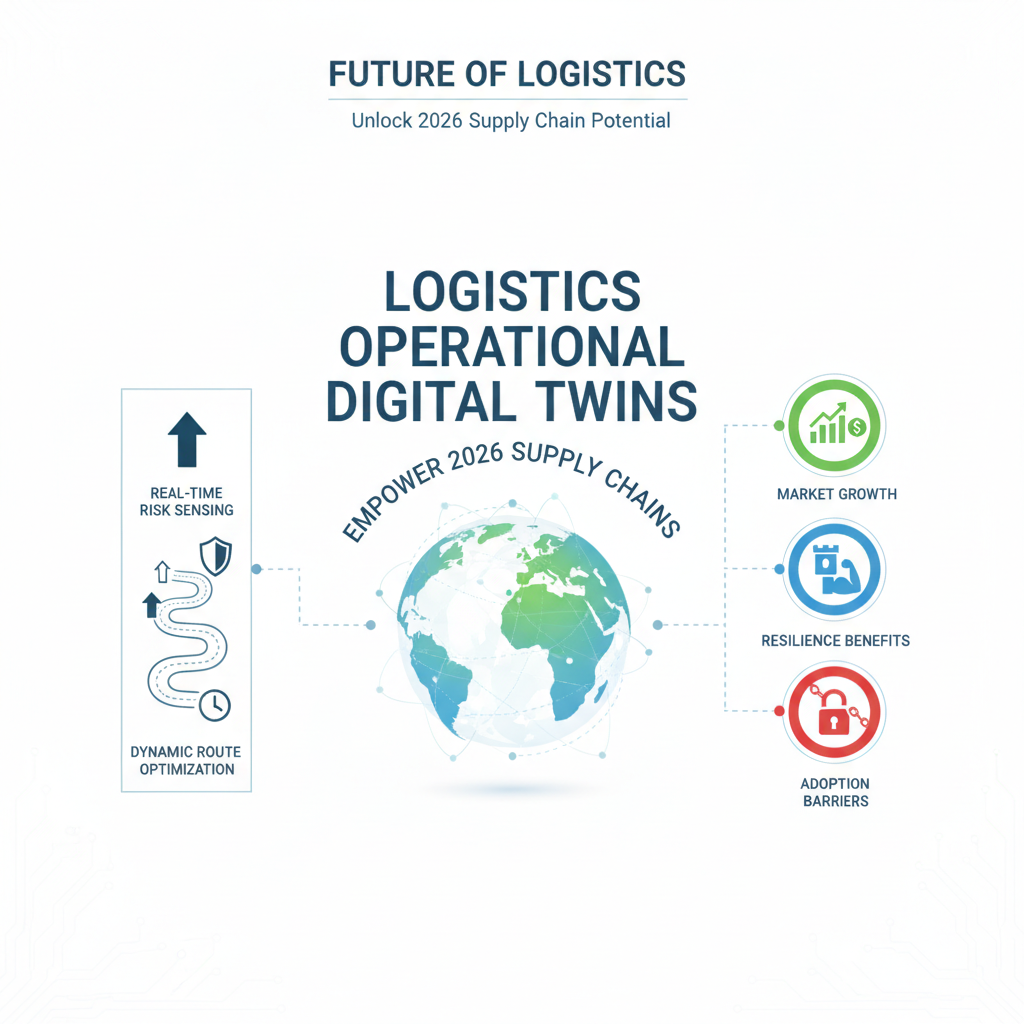
In an era marked by frequent disruptions, static logistics planning is entirely obsolete. Modern Logistics Operational Digital Twins integrate deeply with IoT sensors and artificial intelligence to deliver continuous operational monitoring. A 2026 systematic review reveals that these systems provide critical capabilities across all disruption stages. The primary operational benefits include:
- Real-Time Risk Sensing: Advanced scenario testing allows managers to simulate disruptions before they impact physical operations.
- Dynamic Route Optimization: Fleets can instantly pivot around bottlenecks, minimizing transit delays and curbing excess fuel consumption.
- Post-Disruption Rebound: Network redesign functions help businesses rebuild logistics capacity intelligently following major shocks.
Despite the clear advantages, implementing these sophisticated architectures requires robust data governance. Recent 2026 analyses indicate that data quality limitations, high implementation costs, and a shortage of specialized talent remain significant barriers. However, companies that seamlessly integrate machine learning into their digital twin platforms are successfully unlocking unprecedented operational efficiencies.
References
Digital Twin In Logistics Market Global Analysis 2035. Can Digital Twin Technology Enhance Supply-Chain Resilience? A Systematic Literature Review (MDPI, 2026). Market Research Future: Market Size Report 2035. Precedence Research: Digital Twin As-a-Service Market 2025 to 2034.