
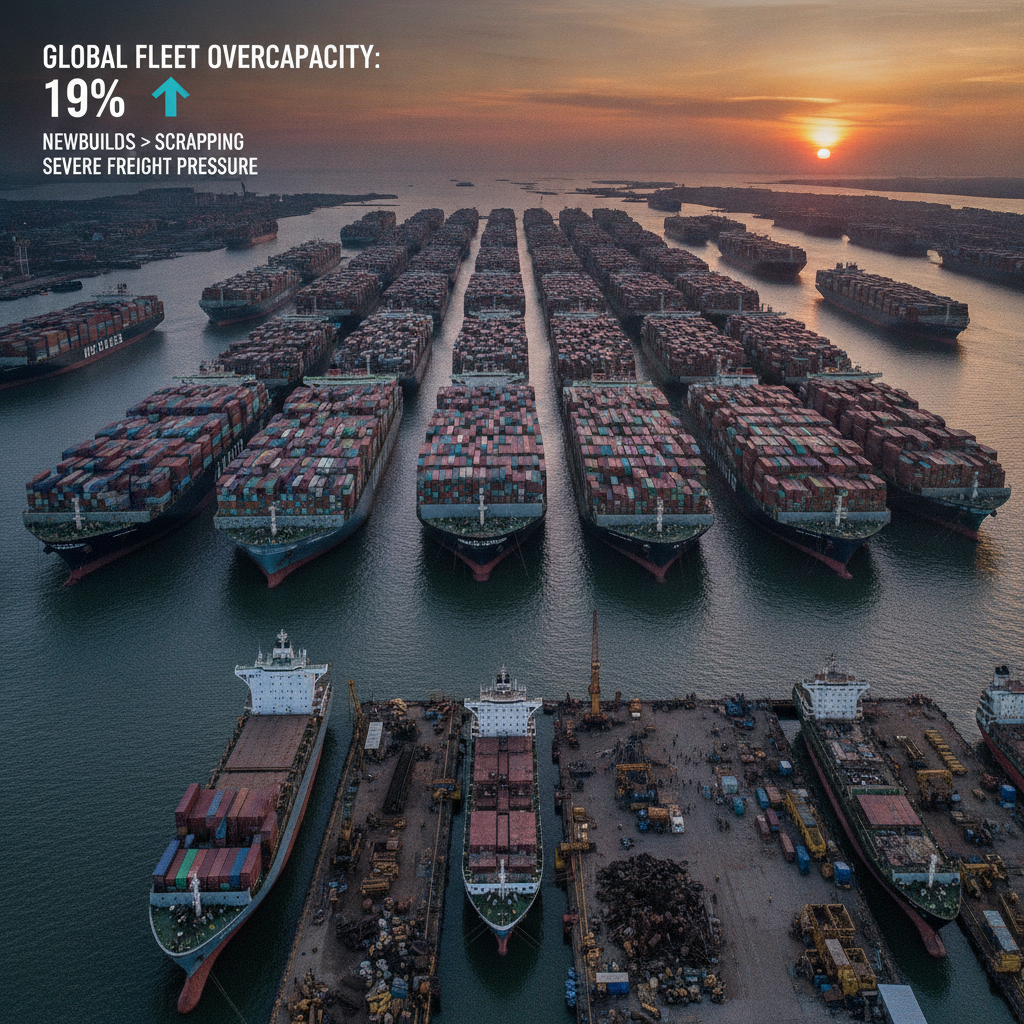
The maritime logistics sector is facing a historic supply glut as ultra-large container vessel deliveries accelerate through 2025 and 2026. Driven by aggressive shipyard orders to lock in capacity, the global active commercial container fleet is absorbing a massive influx of mega-ships, significantly skewing the supply-demand balance.
In 2025, an astonishing 1.7 million TEU of new capacity entered the market, dwarfing the mere 8,000 TEU that was scrapped. This stark imbalance has created a recycling overhang, pushing fleet overcapacity from 18% in 2025 to a projected 19% in 2026. Shipyard order books in early 2026 remain heavily backlogged, showing 412 container vessels on order with an aggregate capacity exceeding 4.5 million TEUs. Currently, the oversupply is artificially masked by longer Cape of Good Hope routings due to Red Sea disruptions. However, any normalization of Suez Canal transits threatens to release this pent-up capacity instantaneously, risking a severe collapse in freight and charter rates.
To mitigate the impact of these ultra-large container vessel deliveries, carriers are increasingly relying on aggressive capacity management tactics such as strategic blank sailings and slow steaming. Furthermore, industry investment is pivoting. Recognizing the operational constraints of first-generation mega-ships, new orders are shifting toward mid-sized, alternative-fuel, and dual-fuel vessels to future-proof fleets against tightening environmental regulations.
References
- Dataintelo: Container Twistlock Market Research Report 2034
- Container Ship Market Size and Share Analysis
- Global Container Shipping Mixed Outlook for H1 2026
- Shipping Intelligence Hub: Container Fleet Faces Historic Supply Glut