
The Ripple Effects of Tariff-Driven Cargo Frontloading
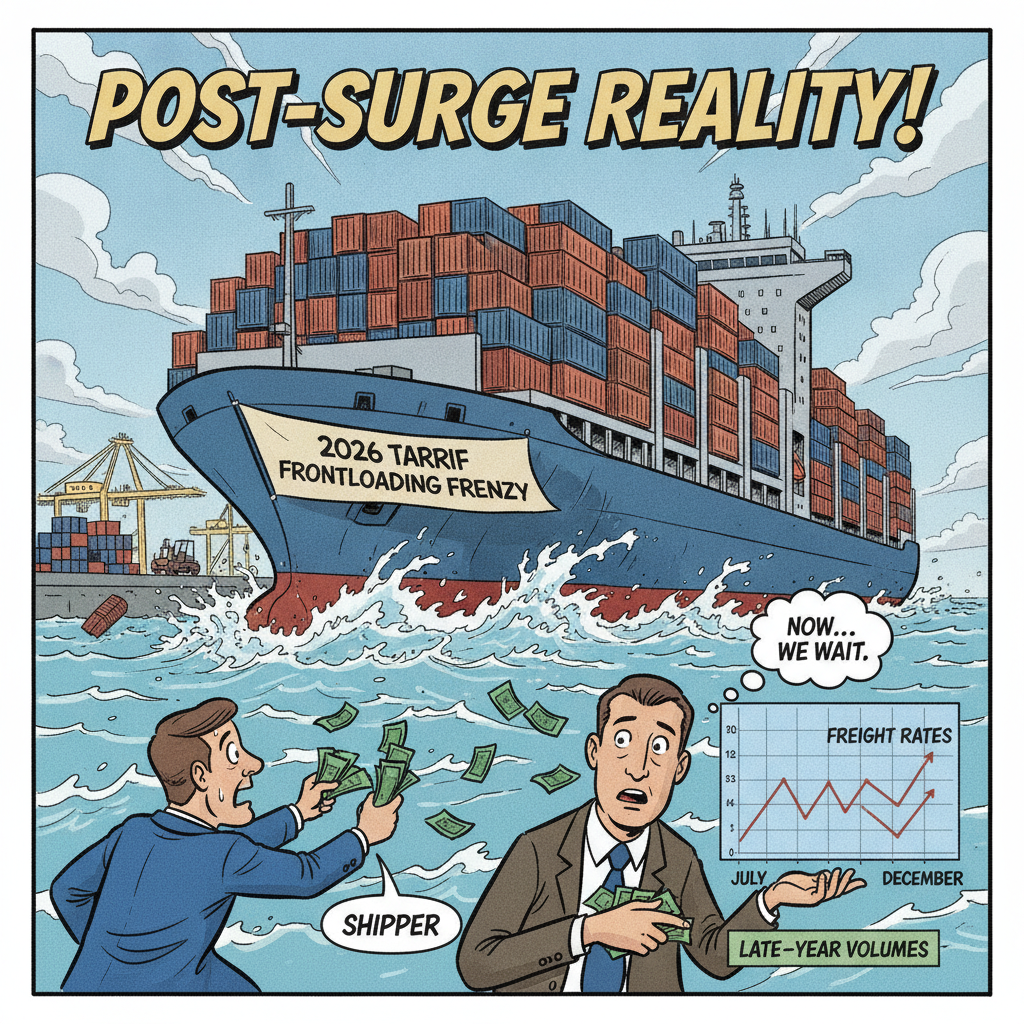
As the shipping industry navigated the turbulent waters of mid-2026, tariff-driven cargo frontloading emerged as the primary catalyst for an unprecedented early peak season. Ahead of the U.S. Section 301 tariffs, which imposed 10% to 12.5% duties on dozens of economies effective July 24, 2026, retailers and major beneficial cargo owners aggressively accelerated their import timelines. This mass urgency fundamentally disrupted standard shipping cycles.
Capacity Strains from Tariff-Driven Cargo Frontloading
The sudden influx of volume strained both ocean and inland networks. The Drewry World Container Index soared to four-year highs, with rates from Shanghai to New York climbing to $7,902 per FEU in early July 2026. Inland logistics mirrored this strain; U.S. truckload spot rates set an all-time record of $3.83 per mile in June 2026, pushing tender rejections past 17.5%. Key drivers included:
- BCOs executing rapid tariff-driven cargo frontloading to protect margins.
- Lingering geopolitical disruptions around the Strait of Hormuz prolonging transit.
- Airfreight spillover, where July 2026 global air cargo demand grew 7% year-over-year.
Post-Surge Logistics Market Outlook
While this strategic acceleration allowed many enterprise shippers to mitigate initial duty impacts, it has left the late-2026 forecast notably subdued. U.S. container imports topped 2.23 million TEUs in June, but analysts expect import volumes to decline significantly for the remainder of 2026 as warehouses remain fully stocked. Logistics experts must now pivot from securing capacity to optimizing bloated inventories.
References
splash247.com/container-spot-rates-hit-four-year-highs/ | marketscale.com/truckload-spot-rates-hit-all-time-record | bertling.com/air-freight-market-outlook-july-2026 | gcaptain.com/u-s-container-import-peak-winds-down | stgusa.com/frontloading-cargo-ahead-of-tariffs | tradecomplianceresourcehub.com/trump-2-0-tariff-tracker