
The European Union has initiated a massive overhaul of its cross-border trade framework. For logistics experts, adapting to the latest EU E-Commerce Customs Reforms is no longer optional. Driven by 4.6 billion low-value parcels entering the EU annually, this shift fundamentally alters processing for international e-tailers.
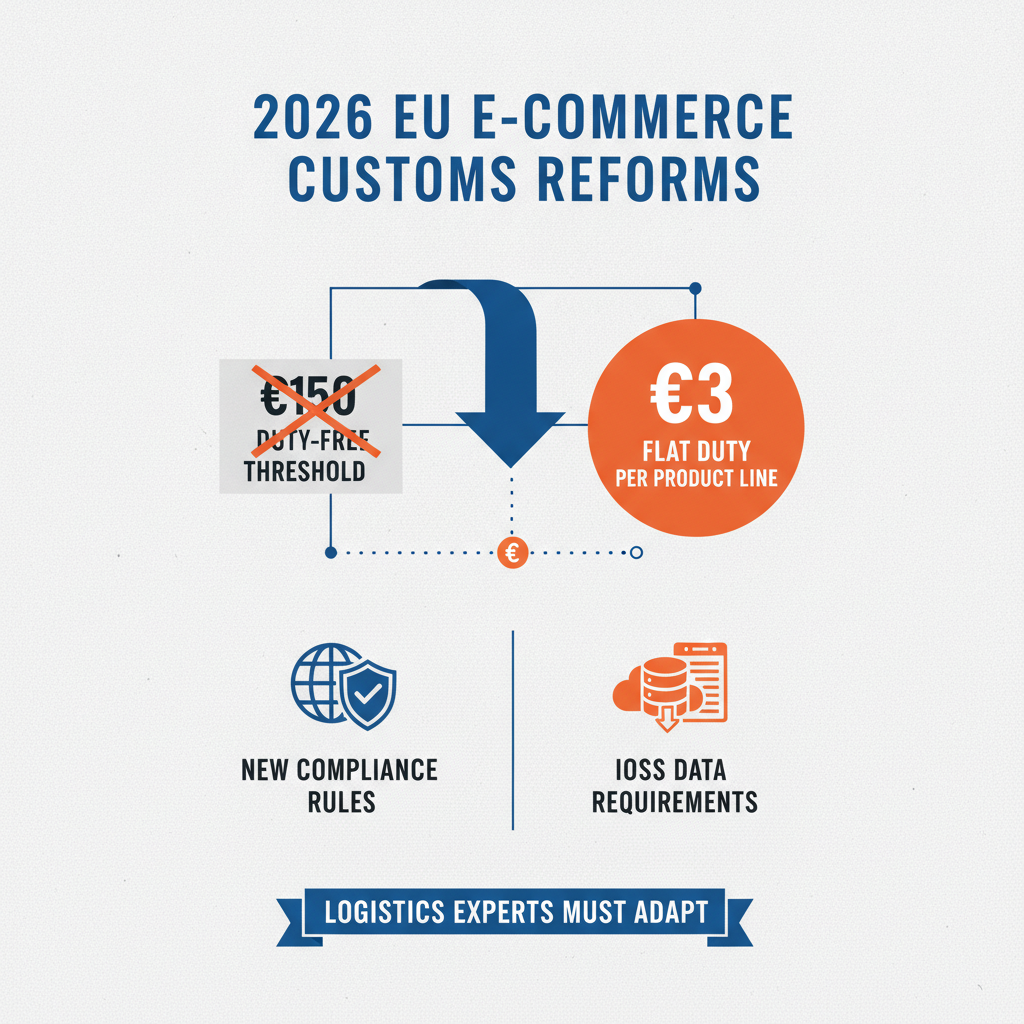
The most disruptive element of the EU E-Commerce Customs Reforms is the abolition of the €150 duty-free threshold, which took effect on July 1, 2026. Previously, small parcels entered Europe duty-free. Now, every business-to-consumer shipment faces mandatory duties, requiring immediate adjustments to checkout and shipping logic.
To manage the transition before the EU Customs Data Hub launches in 2028, authorities introduced immediate measures. Shipping professionals must prepare for:
- A flat €3 customs duty per product line item on low-value parcels as of July 2026.
- An anticipated €2 per-item handling fee starting November 2026.
- Shifting compliance responsibility onto online marketplaces as deemed importers.
Forwarders must urgently integrate Import One-Stop Shop (IOSS) systems to handle multi-item orders, as different products in one order incur multiple flat charges. Navigating the EU E-Commerce Customs Reforms requires utilizing bulk import gateways to maintain supply chain efficiency.
References
- XICTRON, EU Customs Reform 2026
- Landmark Global, New €3 Import Duty
- EU Commission Trade News, EU Ends €150 Customs Exemption
- Oakhill Financial, What Non-EU Sellers Must Know