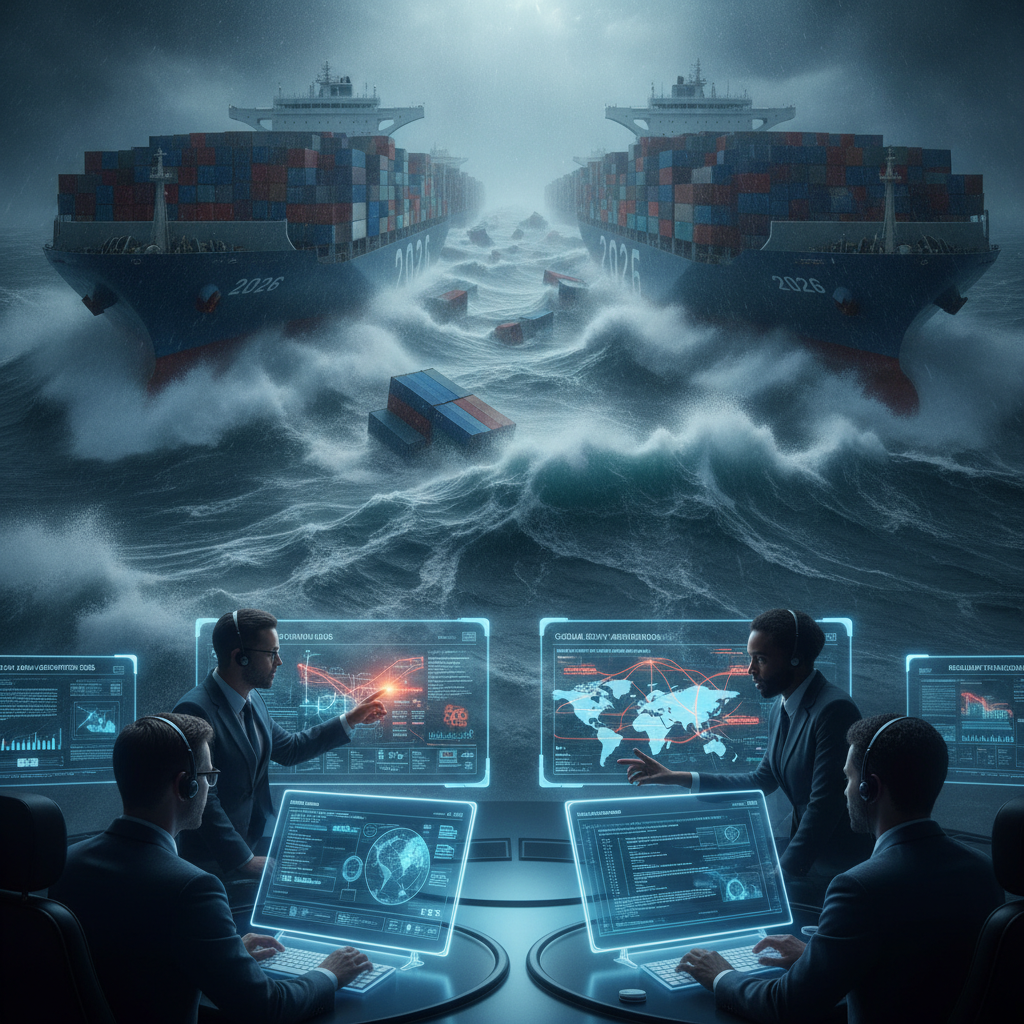
Historically, logistics managers viewed environmental delays as isolated incidents. Today, climate-driven systemic shocks are the new normal. According to the World Economic Forum’s Global Risks Report, extreme weather ranks as the second most likely cause of global crises. For logistics experts, Extreme Weather Maritime Disruptions have become a daily operational variable rather than a rare anomaly.
Simultaneous climate events are paralyzing global trade routes. During recent mid-summer 2026 heatwaves, water levels at the Rhine River’s critical Kaub chokepoint plummeted to 53cm, forcing freight barges to operate at a mere 20% of their total capacity. Concurrently, catastrophic flooding and intense storms, such as Typhoon Bavi, severely disrupted cargo handling at major Asian hubs like Shanghai. The financial toll is staggering, with a 2025 estimate indicating that extreme weather caused $2 trillion in economic losses over the past decade, yet only a fraction was insured.
Supply chain resilience is no longer optional. To combat these compounding threats, industry leaders must implement robust adaptation strategies:
- Adopt predictive port visibility tools and AI-driven meteorological analytics to anticipate bottlenecks.
- Invest in comprehensive cargo insurance programs to mitigate financial exposure to unexpected delays.
- Diversify shipping routes to avoid over-reliance on vulnerable transit corridors.
By treating Extreme Weather Maritime Disruptions as standard planning variables, shipping professionals can safeguard inventory. References: ‘From Deluges to Dry Beds’, 2026; Bruegel, ‘Climate Risks to Global Supply Chains’, 2025; Xeneta, ‘Biggest Global Supply Chain Risks’, 2025.