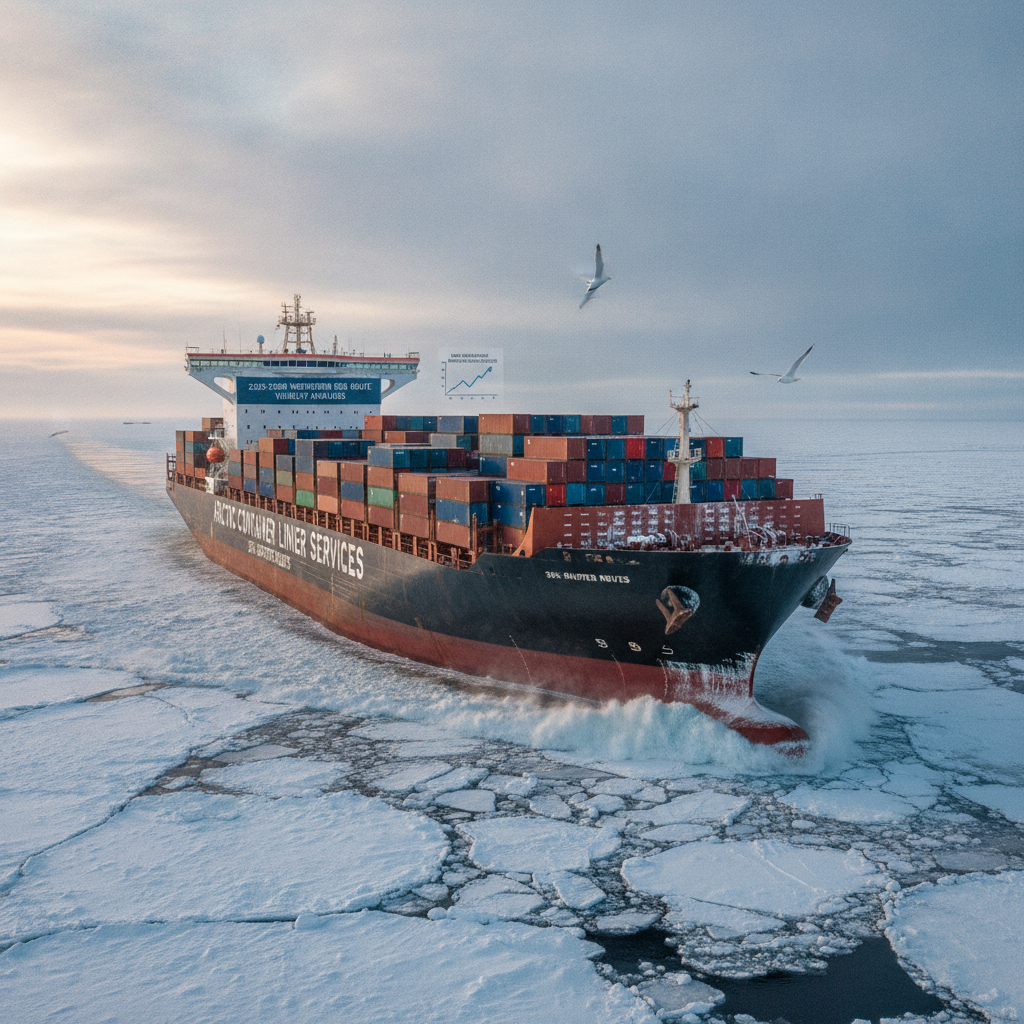
As global supply chains grapple with persistent disruptions, Arctic Container Liner Services are emerging as a compelling, albeit complex, alternative. By navigating the Northern Sea Route (NSR), vessels can slash the Yokohama-to-Rotterdam voyage to just 7,300 nautical miles—a 35% reduction compared to the Suez Canal. However, recent 2025 and 2026 data reveals a nuanced reality for maritime logistics experts evaluating this northern corridor.
While the allure of shorter transit times is strong, actual container traffic remains nascent. According to the Centre for High North Logistics, the 2025 navigation season recorded 103 transit voyages carrying 3.2 million tons of cargo. Of these, container ships accounted for merely 15 passages. Furthermore, overall NSR cargo volumes dipped to 37.02 million metric tons in 2025, missing earlier governmental targets.
Distance does not automatically equate to cost savings. Logistics planners must weigh several factors before integrating these services into their networks:
- Ice-Class Premiums: Vessels require specialized, costly hull reinforcements.
- Narrow Operational Windows: The open-water season lasted roughly four and a half months in 2025.
- Hidden Fees: High insurance premiums, mandatory Russian transit fees, and geopolitical complexities deter mainstream fleet operators.
Despite these hurdles, niche applications are growing. Chinese container vessels have successfully completed the crossing in under three weeks. As environmental regulations tighten, Arctic Container Liner Services will remain a highly scrutinized frontier for specialized shipments, even if they cannot immediately replace traditional southern routes.
References
Centre for High North Logistics: Main Results of NSR Transit Navigation in 2025
Fairway ETA: NSR Shipping in 2026
Russia’s Northern Sea Route Cargo Volumes Fall for Second Straight Year
International Finance: Arctic Shipping Route Promises A Lot, But Delivers Far Less