
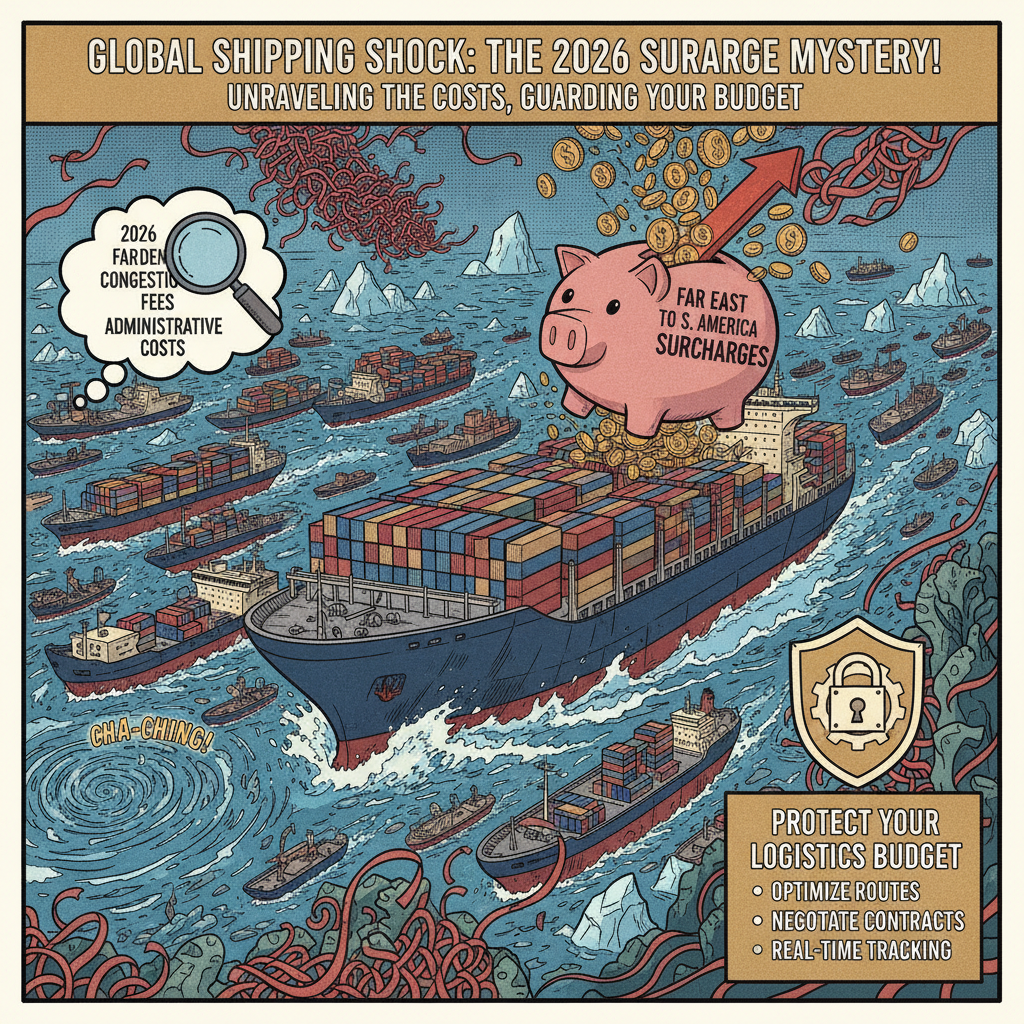
As global supply chains continue to face significant strain in 2026, shippers are experiencing unprecedented volatility in Far East to South America freight surcharges. Strong cargo demand, early peak shipping seasons, and severe port congestion have given carriers the leverage to implement aggressive rate hikes and mandatory fees.
Logistics professionals must closely monitor several hidden and variable costs that severely impact the total net ocean container freight cost. According to recent 2026 maritime analysis, standard quotes frequently exclude critical regional fees. Shippers face several mounting expenses:
- Congestion Surcharges: Key Brazilian hubs like Santos and Paranaguá are levying $200 to $450 per container during peak seasons.
- Administrative Fees: Departure terminals in China and destination terminals in South America are charging separate container data and document processing fees ranging from $80 to $150 per container.
- Heavy Load Surcharges (HWS): Major carriers have revised heavy load triggers for Latin American imports when verified gross mass exceeds regional thresholds.
Industry leaders recommend adopting tiered budgeting mechanisms to absorb these variable Far East to South America freight surcharges. With carriers adding extra loaders to handle volume highs, organizations must factor in Peak Season Surcharges (PSS) and General Rate Increases (GRI) directly into their quarterly forecasts. Staying resilient requires continuous tracking of liner carrier policies and shifting away from relying purely on base Freight All Kinds (FAK) rates.
References
JCtrans, Hidden port surcharges and terminal handling fees (June 2026)
Maersk, Revision of Heavy Load Surcharge (June 2026)
Journal of Commerce, Asia-South America rates surge (June 2026)
Drewry, World Container Index (June 2026)