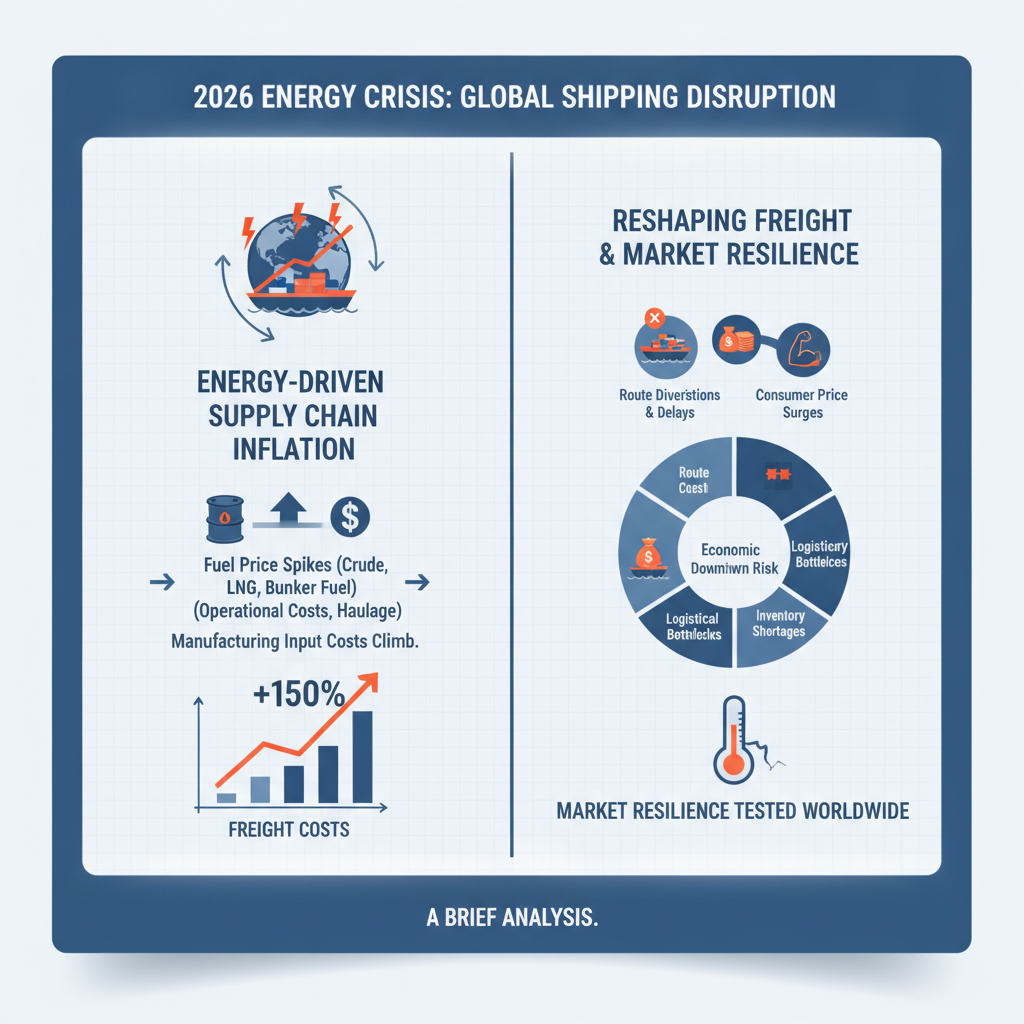
The global shipping sector is currently grappling with unprecedented volatility. As geopolitical tensions slowly ease, energy-driven supply chain inflation continues to heavily dictate market dynamics and international transportation costs.
Recent conflicts in the Middle East, particularly disruptions around the Strait of Hormuz, have created severe logistical backlogs that are taking months to untangle. According to the ITS Logistics June 2026 Supply Chain Report, the U.S. inflation rate reached 4.2% year-over-year in May 2026. Notably, the core CPI remained at just 2.9%, clearly illustrating that fuel and energy prices are the primary catalysts for current inflationary pressures.
These macroeconomic shifts are hitting freight markets exceptionally hard. The Logistics Managers’ Index (LMI) for Transportation Prices surged to an unprecedented record high of 96.0 in May 2026. Major indicators of this ongoing systemic strain include:
- Ocean freight rates spiking by nearly 40% compared to pre-conflict baseline averages.
- Global air freight costs climbing by 17% due to restricted route capacities.
- Persistent tight trucking capacity and highly elevated dry van rates despite subdued overall consumer demand.
Financial institutions anticipate prolonged challenges. The European Central Bank expects these inflated energy prices to push broader inflation above target well into the first half of 2027. Although a recent diplomatic breakthrough between the US and Iran offers hope for stabilized crude oil supplies, the complex logistical reality of rerouting massive tanker fleets prevents an immediate market correction.
Logistics professionals and enterprise shippers must prepare for a prolonged transitional phase of supply normalization. Understanding and forecasting energy-driven supply chain inflation is no longer just a macroeconomic exercise; it has become an essential survival strategy for modern freight management.
References
KuCoin: Oil Prices Unlikely to Return to $70 Soon After US-Iran Deal. Oxford Economics: Falling oil prices will ease supply-chain stress in the US. ITS Logistics June 2026 Supply Chain Report. European Central Bank: Economic Bulletin, Issue 4 / 2026.