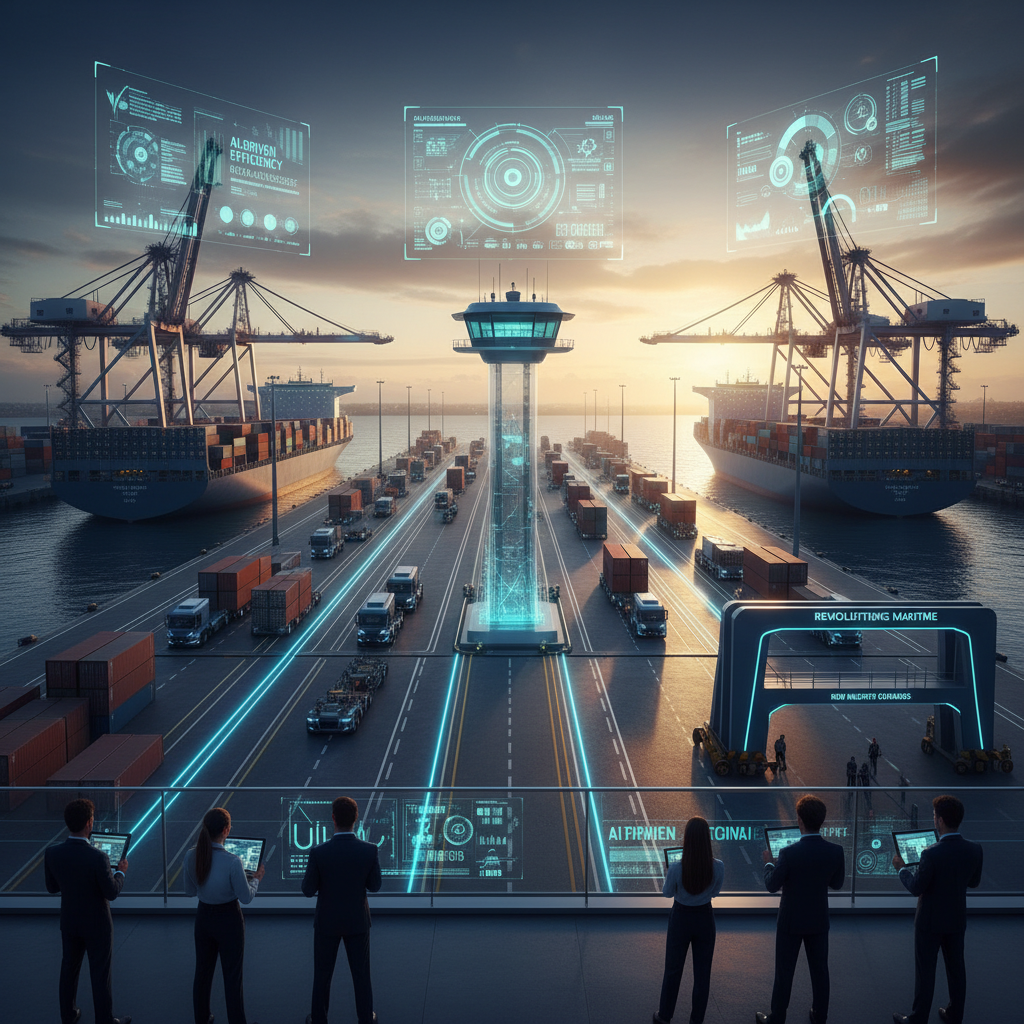
The global maritime industry stands at a decisive crossroads in 2026. Amid growing demands for supply chain resilience, AI-Driven Port Development has transitioned from experimental pilots to a large-scale operational necessity.
Integrated data ecosystems are systematically dismantling traditional silos across the logistics chain. A 2025 report reveals staggering adoption rates among the top 20 global container ports.
- Intelligent Scheduling: 90% of top-tier ports now utilize AI-powered systems.
- Network Connectivity: 78% have implemented 5G private networks to support real-time data flows.
- Operational Gains: The deployment of autonomous trucks and automated cranes has doubled since 2023, yielding a 25-30% efficiency increase.
These autonomous interventions have facilitated a 25% reduction in vessel turnaround times. Furthermore, industry leaders project that automation will cut port operating expenses by 25-55% while boosting productivity by up to 35%.
As smart port architectures mature, the focus is shifting toward AI governance. The European Union AI Act, with high-risk rules taking full effect in 2026, mandates rigorous operator training and transparent AI decision-making protocols in terminal operating systems. Logistics experts must balance efficiency optimization with strict data protection, fairness, and security rules.
Ultimately, AI-Driven Port Development is no longer just about deploying robotic arms. It is about predicting vessel arrivals down to the minute, forecasting equipment maintenance, and aligning stowage with yard planning. Ports successfully integrating these AI capabilities will dictate the future pace of global trade.
References
1. IUMI (2025). Smart Ports: A technology-driven transformation. https://iumi.com/news/newsletter/smart-ports-a-technology-driven-transformation
2. Maersk (2025). Smart Ports. https://www.maersk.com/insights/resilience/smart-ports
3. Port Strategy (2024). EU AI Act 2026: AI Deployment in Ports. https://www.port-strategy.com/eu-ai-act-2026