
The acceleration of Chinese Urban Delivery Fleet Electrification is setting unprecedented benchmarks for global logistics. Driven by aggressive zero-emission targets, one in four new trucks sold in China during 2025 was electric, propelling the nation to dominate the global commercial EV sector. In fact, China’s total electrified vehicle sales surpassed 13 million units in 2025, accounting for over 70% of the worldwide market.
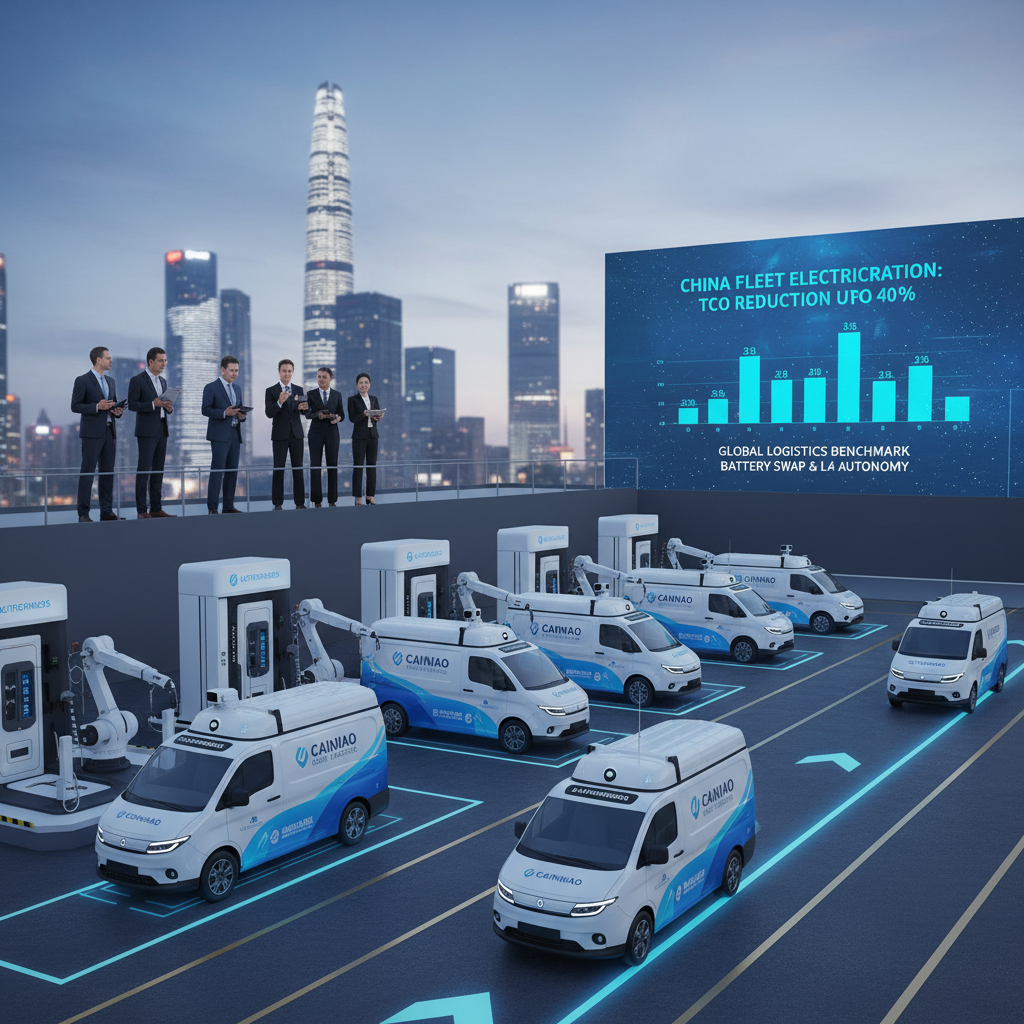
Major operators are radically optimizing fleet efficiency through innovative infrastructure. JD Logistics became the first to deploy battery-swapping commercial delivery vans on a massive scale. Parallel to this, autonomous technology is moving beyond the testing phase. Key developments include:
- Energy storage utilization increased by 25% via commercial battery-swapping networks.
- Overall vehicle deployment reduced by 20% due to heightened operational efficiency.
- L4 unmanned logistics vehicles, like the MINIEYE Bamboo T5 Pro Robovan, deployed across 18 cities for mapless cargo transport.
For international shipping experts, Chinese Urban Delivery Fleet Electrification provides a compelling blueprint for reducing Total Cost of Ownership (TCO). By leveraging massive economies of scale in LFP battery production and fully domestic supply chains, Chinese manufacturers are delivering highly equipped, cost-effective commercial vans. As China’s annual parcel volume hits a staggering 180 billion, this synergized approach of fleet electrification and AI-driven automation represents the definitive future of sustainable urban logistics.
References
- IEA Global EV Outlook 2026.
- MarkLines BEV Sales Report 2026.
- CleanTechnica Autonomous Logistics.
- BAS World Electric Vans.
- IEA EV TCP China Report.
- Express Delivery Industry Report 2026.