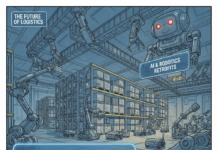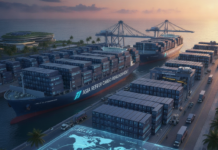


The era of rigid supply chain planning has officially ended. As global trade volatility increases, AI-driven elastic logistics has emerged as a transformative solution, allowing shipping networks to dynamically scale infrastructure and operations up or down based on real-time demand. By 2026, this technology has transitioned from experimental pilots to an absolute operational necessity for global fleets.
The transition toward elastic models is heavily reliant on advanced digital infrastructure. In 2025, global cloud Infrastructure-as-a-Service (IaaS) spending reached a staggering $211 billion, providing the real-time processing power required for intelligent logistics networks. This computing power enables decision-support systems and AI co-pilots to analyze traffic, weather, and port congestion to execute real-time shipment rerouting. Consequently, emerging markets are seeing massive growth; for instance, the Southeast Asian cross-border e-commerce logistics sector is projected to reach $15.39 billion by 2030, growing at an 11.14% CAGR.
- Predictive Analytics: AI models process vast datasets to optimize routes and manage inventory dynamically. Industry forecasts suggest that 70% of large-scale organizations will adopt AI-based forecasting by 2030.
- Omnichannel Execution: Distributed order management systems coordinate inventory across traditional warehouses, retail locations, and dark stores to ensure optimal fulfillment efficiency.
- Cloud Infrastructure: Heavy reliance on major cloud providers enables the instant scaling required to manage peak seasons and mitigate sudden disruptions.
For logistics and shipping experts, AI-driven elastic logistics provides the ultimate competitive advantage: agility. Modern supply networks that reward intelligent coordination and data-driven discipline are vastly outperforming those relying purely on speed. As global supply chains navigate a fragmented geopolitical landscape, intelligent elasticity guarantees long-term operational resilience.
References
- Alibaba Seller Blog (2026): Fast Delivery Options for Southeast Asia Sensors Procurement.
- Business Model Canvas Templates (2026): Porter’s Five Forces of Flash Express.
- DHL ID (2026): 5 Logistics Trends Reshaping Asia in 2026.
- Transvirtual (2025): Supply Chain Trends to Watch Out For in 2026.
- ISCN Academy (2026): Supply Chains in a World That Refuses to Stabilise.
- Spherical Insights (2024): Elastic Logistics Market Analysis and Forecast To 2033.