Unveiling the Chesapeake Bay Express Route Expansion
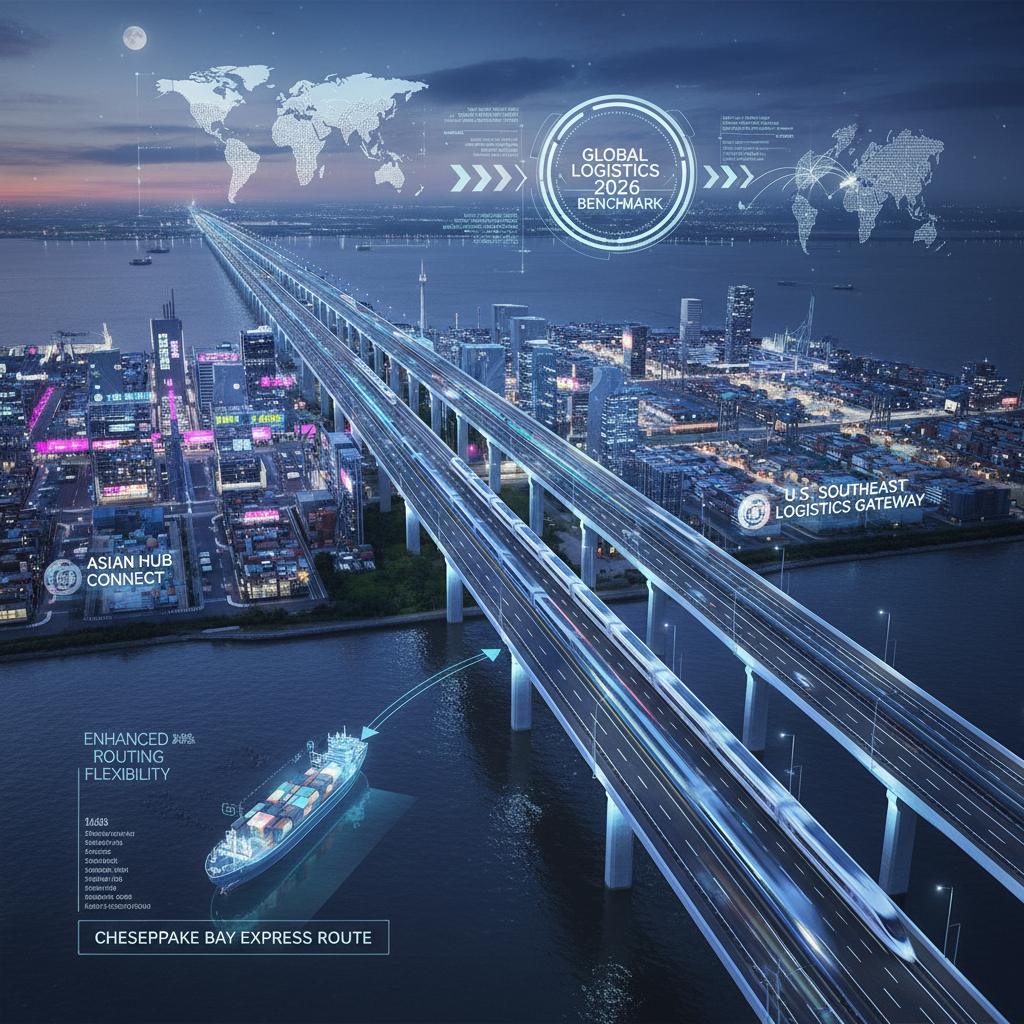
The global maritime shipping industry is witnessing a strategic shift with the recent expansion of the Chesapeake Bay Express Route (CBX). Operated by the Ocean Alliance—comprising CMA CGM, COSCO Shipping, Evergreen Marine, and OOCL—this weekly container service is establishing critical new links between major Asian manufacturing hubs and the U.S. Southeast. With supply chain resilience taking center stage in 2026, logistics professionals are closely monitoring how this direct service enhances transit time reliability and routing flexibility for both imports and exports.
The newly updated rotation for the Chesapeake Bay Express Route designates the Jacksonville Port Authority (JAXPORT) as its final U.S. port of call, with the inaugural vessel arriving in June 2026. The route begins in Vung Tau, Vietnam—a port that handled roughly 152 million metric tonnes of cargo in 2024—before passing through Yantian, Shanghai, Busan, and Kobe. After transiting the Panama Canal, vessels call at Norfolk, Charleston, Savannah, and finally Jacksonville. At JAXPORT’s Blount Island Marine Terminal, SSA Marine conducts stevedoring operations leveraging a 47-foot deepwater channel.
For shipping experts, the Chesapeake Bay Express Route offers several distinct operational advantages:
- Enhanced Equipment Repositioning: Operating as the final U.S. port of call allows shippers to optimize empty container repositioning and expedite U.S. export cargo transit.
- Upgraded Terminal Capacity: JAXPORT is advancing a $120 million project to increase the air draft clearance at Blount Island to 205 feet by the end of 2026, accommodating next-generation ultra-large vessels.
- Diversified Market Access: The route bypasses traditional congestion bottlenecks, linking deepwater Asian ports directly to 98 million U.S. consumers within a same-day drive.
As global alliances restructure their networks, the Chesapeake Bay Express Route stands out as a vital conduit for trans-Pacific trade. This strategic gateway not only reinforces the U.S. East Coast’s competitive positioning but also delivers the end-to-end reliability that modern global supply chains demand.