
Navigating the Impending Capacity Glut
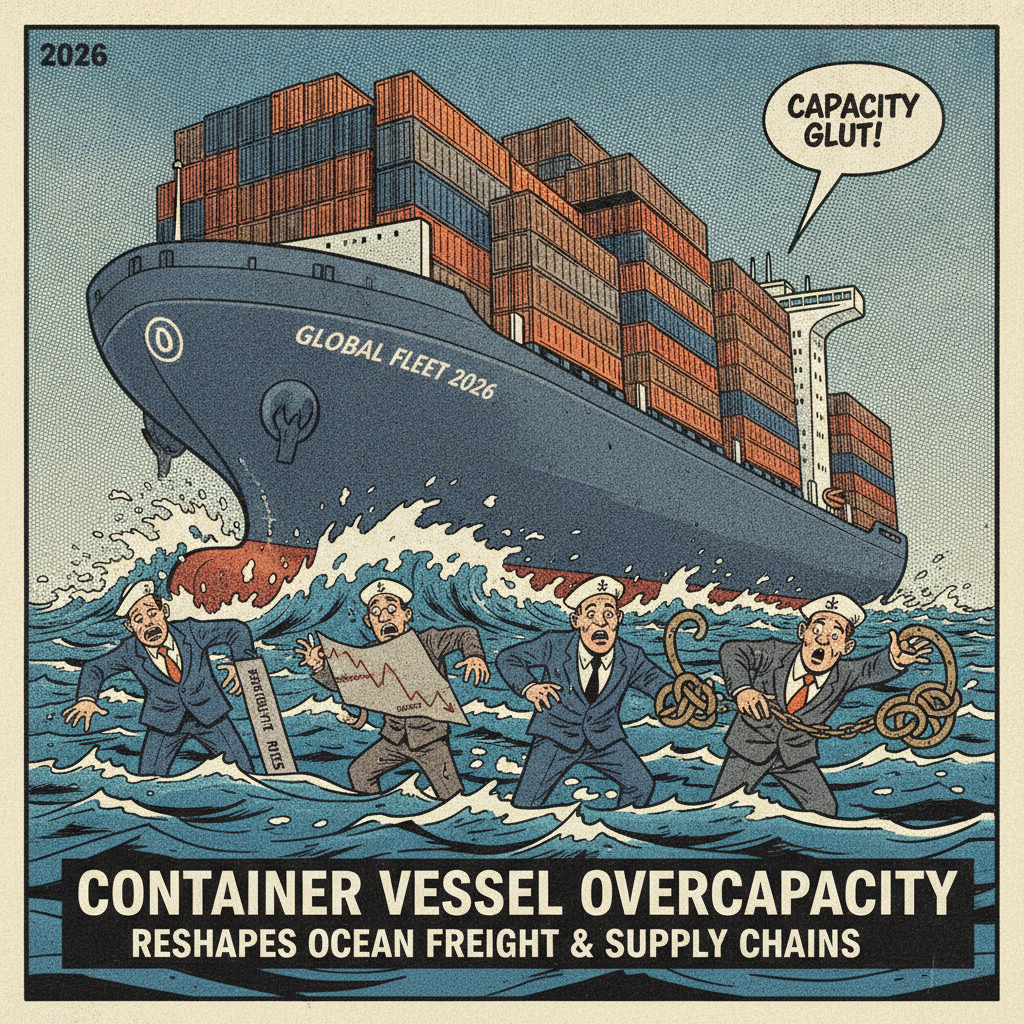
As the logistics industry moves deeper into 2026, the specter of Container Vessel Overcapacity has become a dominant structural challenge for global trade. Major forecasting bodies, including BIMCO and Sea-Intelligence, are sounding the alarm over an unprecedented wave of new vessel deliveries that threatens to outstrip demand and pressure freight rates globally.
Supply Outpaces Demand
Despite temporary capacity absorption caused by ongoing Cape of Good Hope rerouting, the foundational metrics point to a massive supply glut. Driven by pandemic-era profits, leading carriers launched aggressive newbuilding and second-hand buying sprees. By early 2026, the global container fleet exceeded 7,000 vessels. According to BIMCO’s recent shipping outlook, container supply growth is projected to outpace demand significantly, fundamentally weakening the supply-demand balance. Sea-Intelligence further warns that if geopolitical bottlenecks resolve by mid-to-late 2026, the sudden release of absorbed tonnage could trigger structural overcapacity and price wars rivaling the 2016 market crash.
Market Ramifications and Strategic Shifts
The looming Container Vessel Overcapacity forces logistics experts to re-evaluate their long-term strategies. Major carriers, such as Maersk, have already flagged softer 2026 earnings due to shifting market dynamics and normalized trade route scenarios. While companies hold onto older vessels as insurance against unpredictable geopolitical disruptions, elevated scrapping rates are anticipated as environmental regulations tighten. For shippers and third-party logistics providers, this downcycle presents opportunities for more favorable long-term contract rates, though short-term spot market volatility remains an acute risk.
References
Global shipping disruption report 2026
Maersk 2026 Earnings & Overcapacity Forecast
Sea-Intelligence warns of shipping overcapacity
Global Container Fleet overcapacity warning
BIMCO Container Shipping Market Overview 2026