
Analyzing the Late 2026 Surge in Trans-Pacific Freight Rates
In late 2026, the logistics sector is witnessing unprecedented volatility as Trans-Pacific Freight Rates continue to soar. Recent data from the Drewry World Container Index reveals a staggering reality for shippers: as of September 2026, rates from Shanghai to New York surged to approximately $9,587 per 40-foot container, nearly tripling the figures from the previous year. Similarly, rates to Los Angeles jumped to $7,185, underscoring a ferocious late peak season demand. Procurement teams and supply chain experts must now navigate an increasingly hostile pricing environment.
Key Drivers Behind Elevated Trans-Pacific Freight Rates
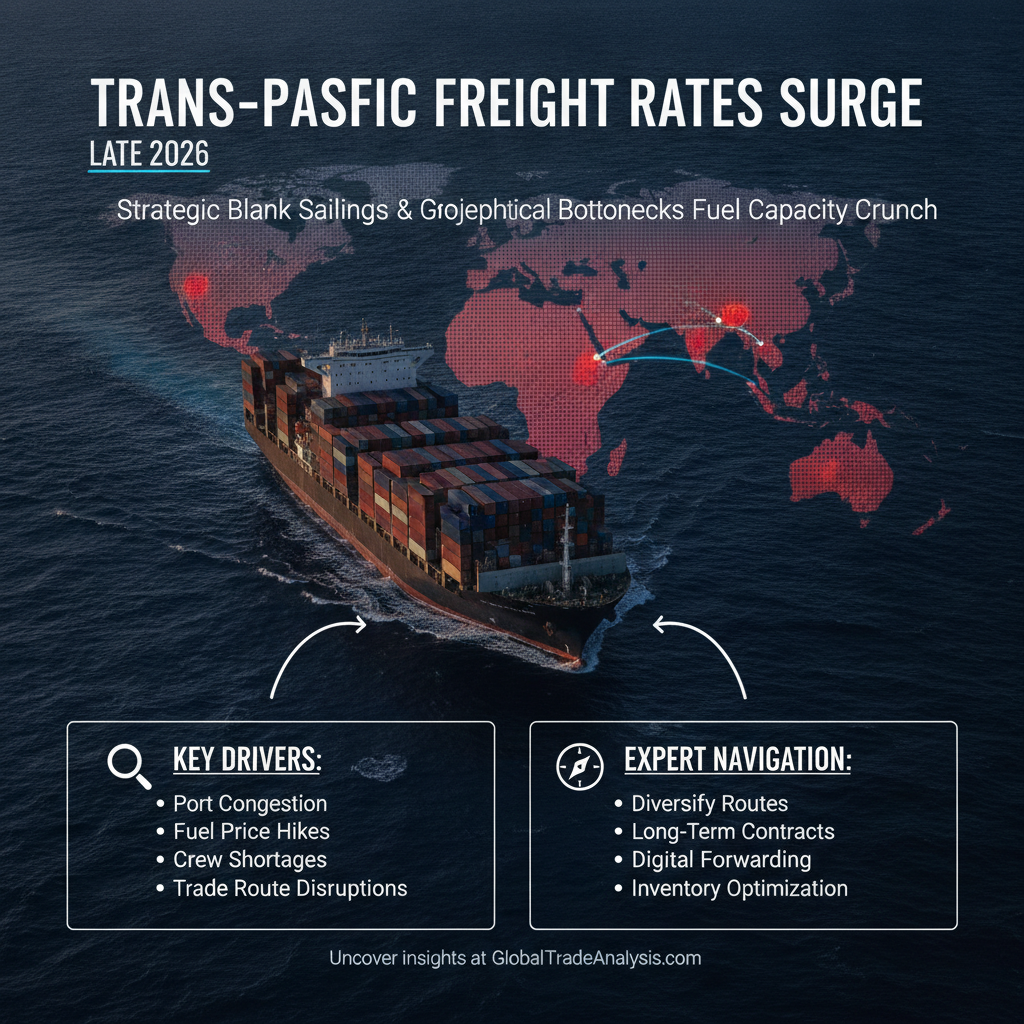
Unlike previous surges, the current escalation is driven by a convergence of deliberate carrier strategies and geopolitical friction. While global vessel surplus remains a reality, ocean carriers have aggressively maintained pricing power through targeted capacity withdrawals. Several structural factors are fueling these rate hikes:
- Blank Sailings and Capacity Management: Ocean carriers are deliberately executing blank sailings to restrict available vessel space, artificially tightening supply on major routes.
- Geopolitical and Environmental Chokepoints: Ongoing Red Sea diversions and stringent Panama Canal draft restrictions have forced costly rerouting, significantly increasing transit times and operational overhead.
- Soaring Fuel Costs: Escalating oil prices have led to emergency bunker surcharges, which now account for 15% to 28% of total shipping bills in 2026.
Navigating Trans-Pacific Freight Rates: Outlook for Shippers
With East Coast services facing particular constraints and capacity tightening across the board, experts warn that the rollover risk for booked shipments remains critically high. Shippers can no longer rely on traditional peak-season timelines. Industry analysts recommend adopting flexible routing strategies, factoring in additional lead times, and proactively exploring alternative inland transport modes. Though some spot rates briefly plateaued in late August, the structural constraints dictating Trans-Pacific Freight Rates suggest that elevated pricing and unpredictable supply-demand balances will persist well into 2027.
References
- Carra Globe: Trans-Pacific Freight Rates May 2026
- BusinessAnalytiq: Container Shipping Price Index
- Facebook: FreightWaves Market Update June 2026
- The Loadstar: Late peak demand sees container spot rates to the US surge
- Metro Global: Transpacific capacity tightens as Panama restrictions reshape the market