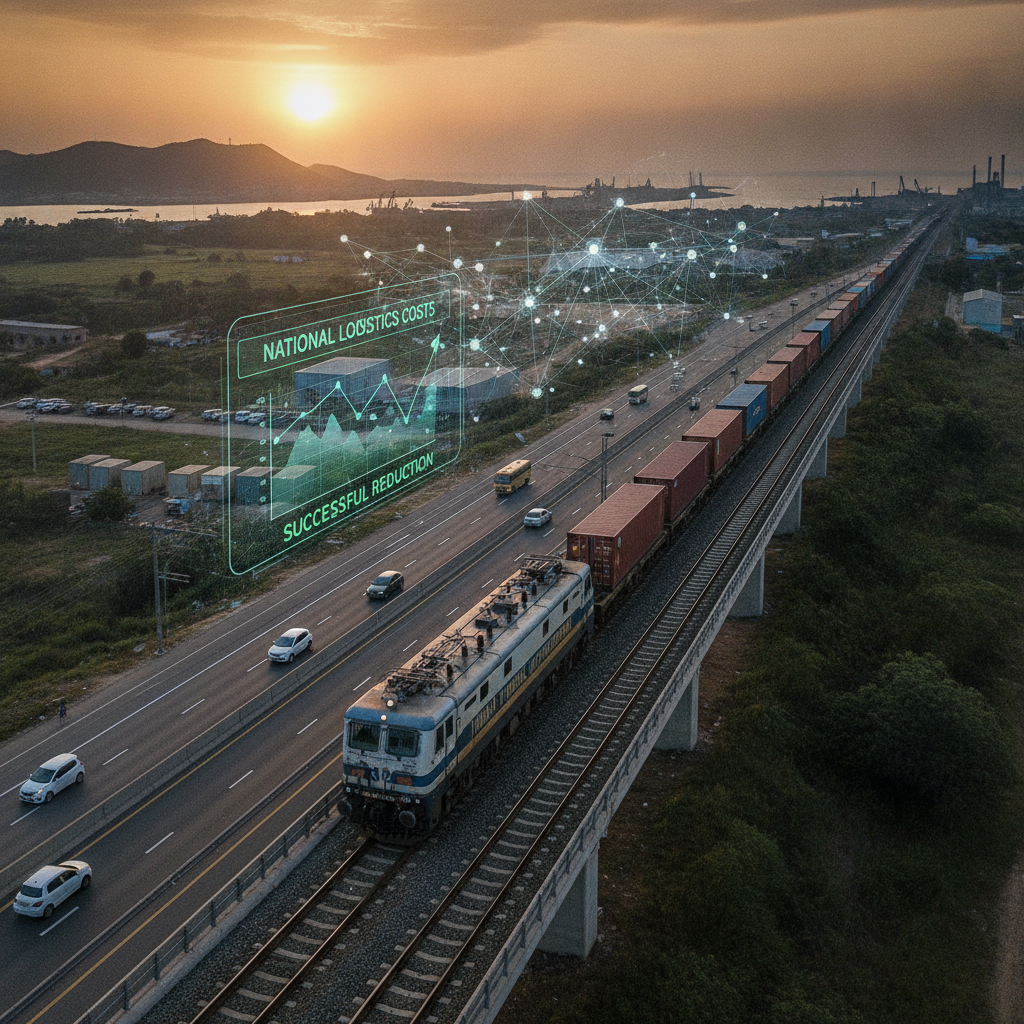
India’s supply chain ecosystem is undergoing a historic transformation driven by Indian Freight Modal Optimization. Historically, the nation’s freight landscape has been skewed toward road transport, carrying nearly 70% of cargo despite higher costs. However, current data from 2025 and 2026 reveals a strategic rebalancing toward rail and multimodal networks under the National Logistics Policy.
Indian Railways achieved a record-breaking milestone in FY26 by moving over 1,670 million tonnes of freight. This successful modal shift is actively supported by several critical infrastructure upgrades:
- Dedicated Freight Corridors (DFCs): Newly operationalized DFCs have reduced transit times by 30-40% for containerized freight.
- Multi-Modal Cargo Terminals: The government has approved 306 Gati Shakti terminals, attracting over INR 8,600 crore in private investments.
- Commodity Containerization: July 2026 reforms mandated the containerization of non-traditional goods like fly ash and fertilizers to lower handling expenses.
Technological integration remains central to this ongoing optimization strategy. By August 2025, the Unified Logistics Interface Platform (ULIP) surpassed 160 crore transactions, offering real-time visibility across 101 Inland Container Depots. These synergistic efforts have driven India’s overall logistics costs down to an estimated 7.97% of GDP. For global logistics experts, this operational recalibration signifies unprecedented efficiency.
References
KPMG International: Rail versus roads: Rebalancing India’s freight mix. India National Logistics Policy 2026 Analysis. The Policy Edge: Indian Railways Pushes New Freight Reforms. PIB: India Marks Three Years of National Logistics Policy. ASCELA: India’s Logistics Investability 2026.