

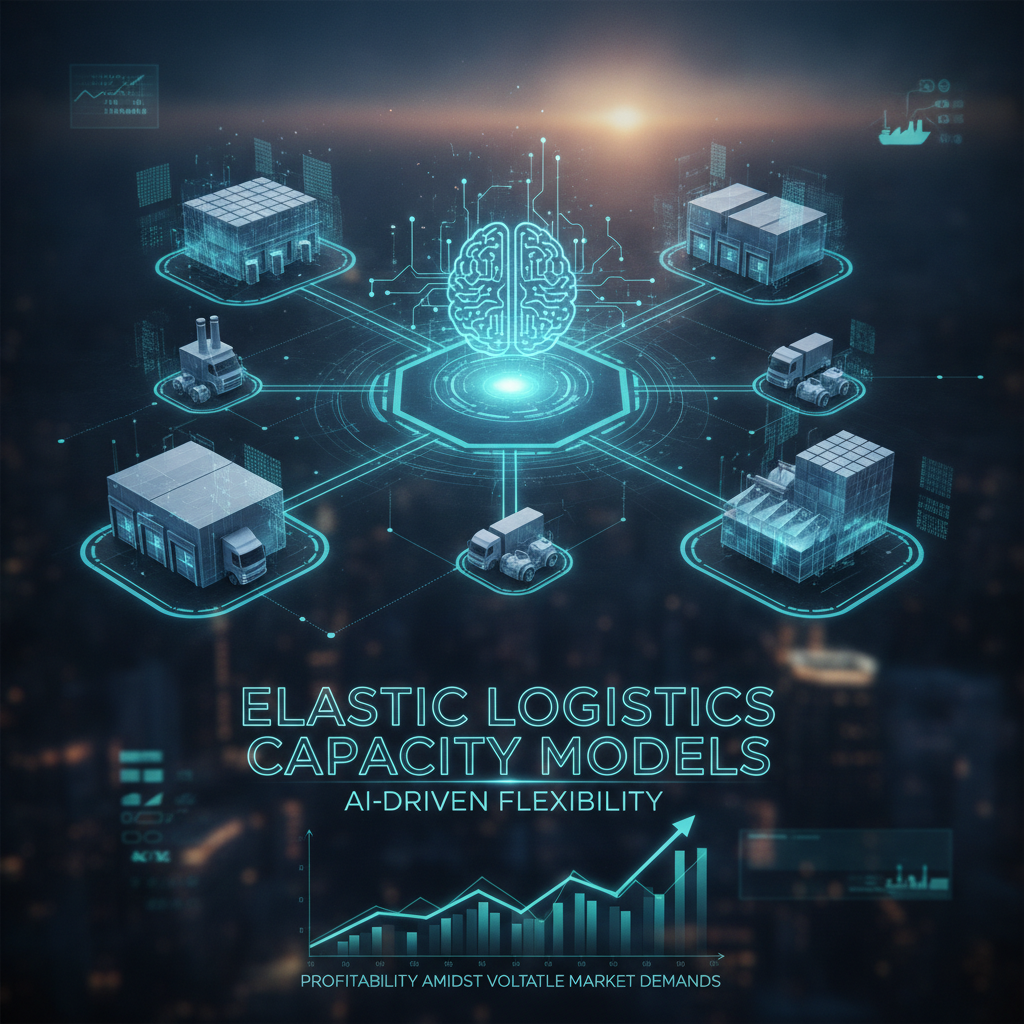
In 2026, global supply chains are increasingly abandoning rigid infrastructure in favor of Elastic Logistics Capacity Models. By transforming fixed overhead into variable, pay-as-you-go costs, this framework allows enterprises to dynamically expand or contract operations based on real-time market demand. The elastic logistics market segment is currently projected to expand at a robust 9.4% compound annual growth rate (CAGR), reflecting a strategic pivot away from static warehousing and proprietary fleets.
The operational foundation of Elastic Logistics Capacity Models relies heavily on predictive analytics, artificial intelligence, and open APIs. Recent data indicates that advanced algorithms now automate inventory planning for 70% of large organizations, enabling touchless forecasting that mitigates the risks of sudden demand swings. Key components include:
- Predictive Planning: Dashboards anticipate surges weeks in advance, optimizing stock and staffing allocations.
- Asset Sharing: Collaborative carrier networks eliminate the financial burden of idle, underutilized infrastructure.
With U.S. delivery costs having grown 12% between 2024 and 2025, logistics providers require new levers to protect profit margins. Elastic Logistics Capacity Models provide this agility, ensuring that idle capacity remains a cost businesses no longer have to absorb. As e-commerce volatility continues to disrupt traditional trading patterns, elasticity has evolved from a theoretical advantage into a structural necessity for maintaining highly resilient supply chain performance.
References
MBE Franchise: What is Elastic Logistics (vertexaisearch.cloud.google.com) | Transport and Logistics in 2026 (vertexaisearch.cloud.google.com) | Why Elastic Logistics is Reshaping Global Supply Chains in 2026 (vertexaisearch.cloud.google.com)