
As global logistics face mounting pressures from geopolitical shifts and volatile consumer demands, Supply Chain Artificial Intelligence Integration has transitioned from a theoretical concept to an operational necessity. In 2025 and 2026, forward-thinking logistics leaders are aggressively adopting machine learning and automated analytics to build resilient, hyper-efficient networks.
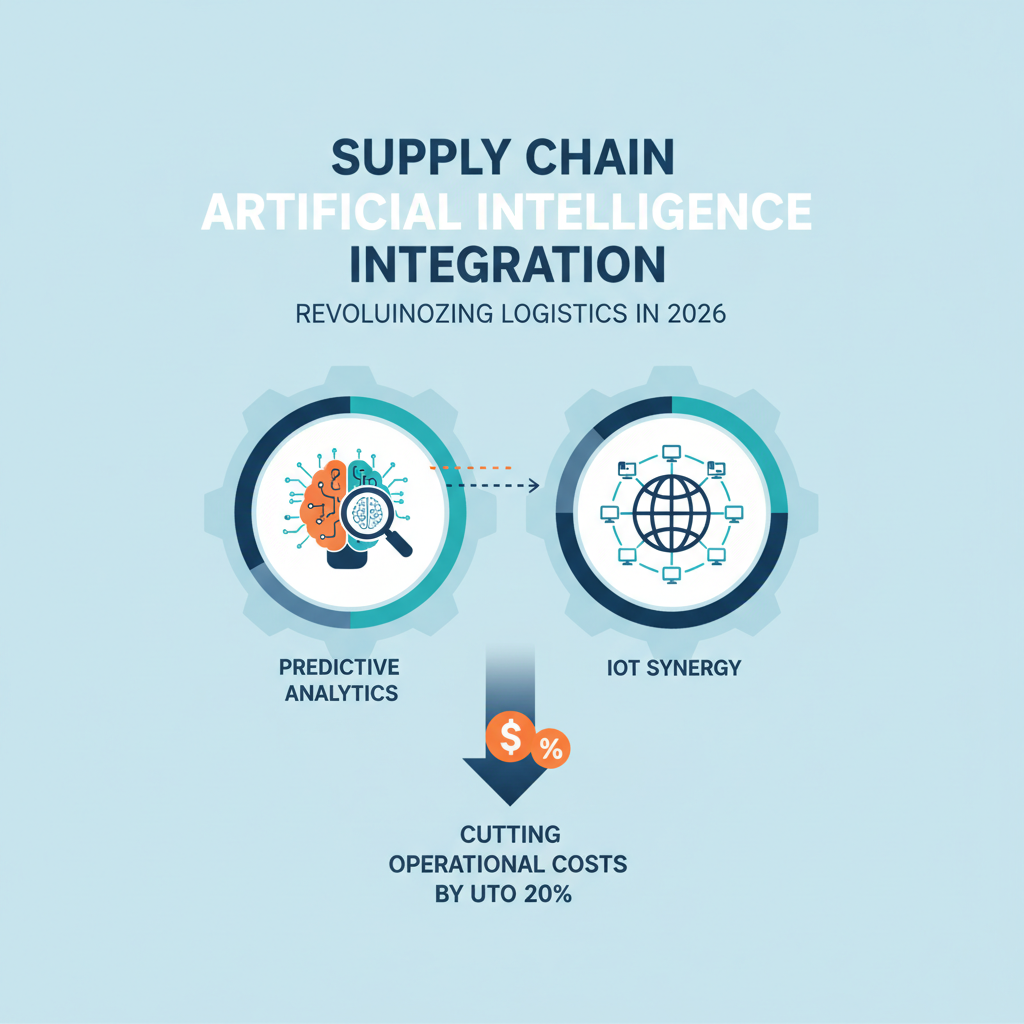
Recent data underscores the massive financial benefits of this digital transformation. According to McKinsey research, embedding AI into supply chain operations can reduce overall logistics costs by 5% to 20%. Furthermore, industry reports indicate that comprehensive AI deployment can boost overall supply chain efficiency by up to 40% through enhanced trend forecasting and task automation. These metrics prove that AI is not just a technological upgrade, but a core driver of margin improvement.
Successful execution relies on several overlapping technological pillars:
- Predictive Analytics: AI models analyze historical data to anticipate market fluctuations, effectively minimizing the bullwhip effect and optimizing inventory.
- IoT Synergy: The combination of AI and the Internet of Things provides unparalleled real-time shipment visibility, allowing companies to instantly monitor potential route delays.
- Risk Management: Advanced algorithms scan global data to foresee disruptions, allowing leaders to shift supply networks proactively.
Organizations failing to embrace these models risk obsolescence in an increasingly automated sector.
References
Frontiers – Digital transformation in supply chains (https://www.frontiersin.org/articles/10.3389/fbloc.2024.1481177/full) | Supply Chain Trends for 2025 (https://engineeringonline.ncsu.edu) | How Technology Drives Supply Chains in 2025 (https://www.inboundlogistics.com)