
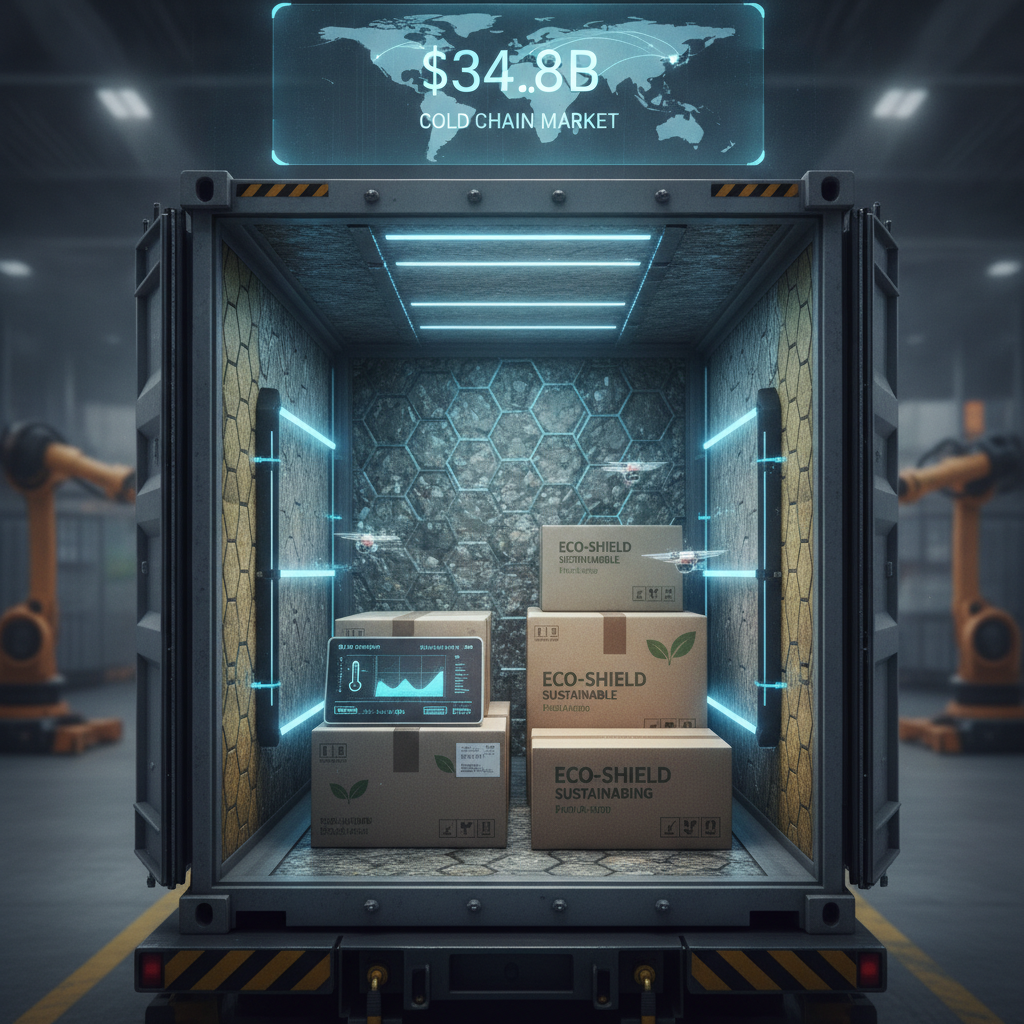
The global logistics landscape is undergoing a critical transformation. Driven by the stringent demands of pharmaceutical distribution and global food supply, the cold chain packaging market was valued at a robust USD 34.8 billion in 2025 and is projected to reach USD 103.7 billion by 2035. For shipping experts, leveraging the latest Cold Chain Packaging Innovations is no longer optional; it is a regulatory and operational necessity.
Today’s temperature-controlled logistics rely heavily on advanced material science. A major shift involves replacing conventional expanded polystyrene (EPS) with sustainable alternatives like phase change materials (PCMs), vacuum insulated panels (VIP), and bio-based biopolymers. These Cold Chain Packaging Innovations significantly reduce the industry’s carbon footprint while maintaining vital thermal integrity during transit. Furthermore, reusable pallet shippers are emerging as cost-effective solutions for high-volume lanes, directly addressing both environmental concerns and capital expenditure reductions.
Another frontier in Cold Chain Packaging Innovations is the integration of Internet of Things (IoT) sensors and Artificial Intelligence (AI). Advanced smart packaging now offers real-time temperature monitoring and predictive analytics. These IoT-enabled tracking systems ensure products remain within precise compliance thresholds, such as Good Distribution Practice (GDP) guidelines, mitigating the risk of multi-billion dollar spoilage losses. As regulatory scrutiny intensifies, logistics providers must adopt these transparent, data-driven frameworks.
References
- Tempk: Cold Chain Packaging Systems Trends 2025
- Cold Chain Package: 2025 Guide to Safe Shipping
- Cold Chain Packaging Market Size Forecast Report 2035
- ResearchGate: Toward Sustainable Cold Chain Packaging