
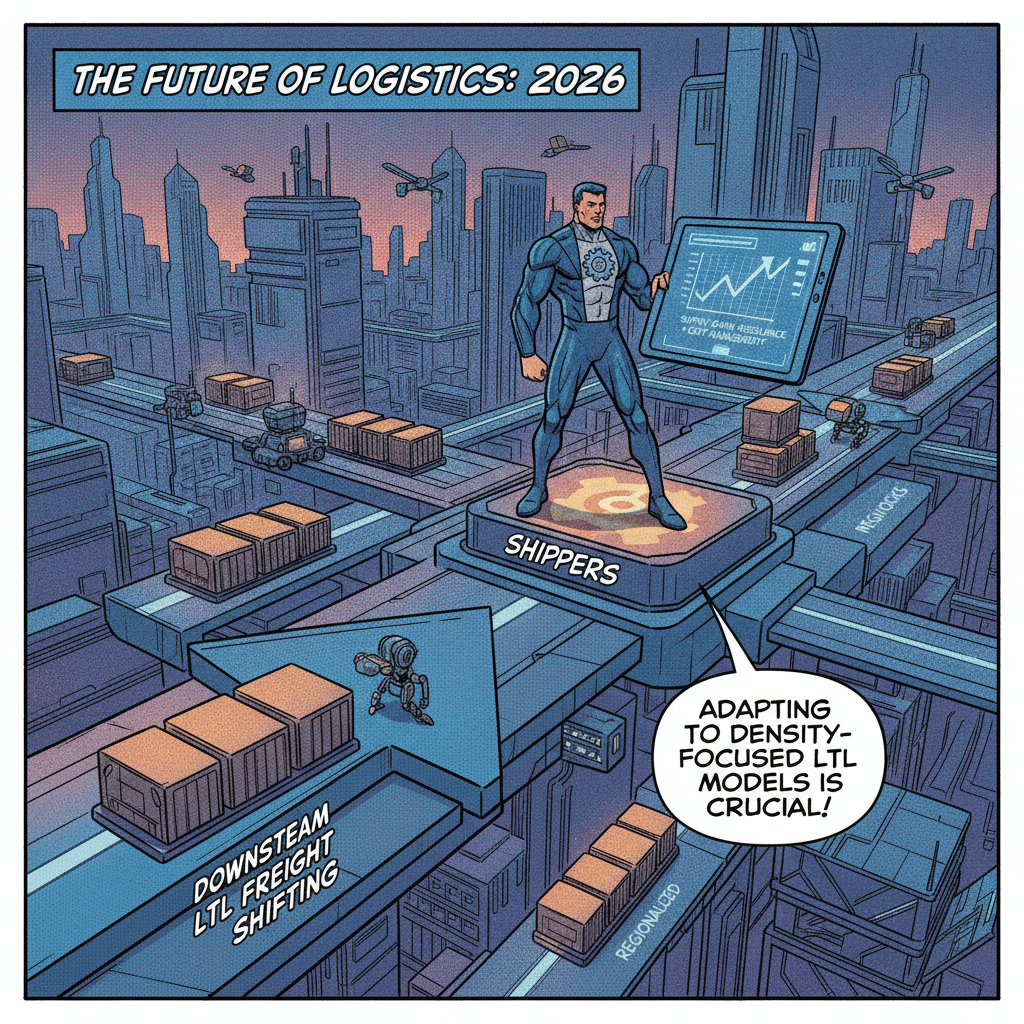
In 2026, the logistics landscape is transforming as downstream LTL freight shifting becomes a dominant strategy. As truckload capacity tightens, shippers are breaking down full truckloads into less-than-truckload (LTL) shipments. This migration closer to the consumer allows businesses to maintain leaner safety stocks while responding rapidly to local demand.
Several forces are accelerating this change. E-commerce and nearshoring have reshaped distribution, forcing freight closer to final delivery points.
- Weight Increases: Average LTL shipment weights jumped by 11% in early 2026 as shippers split truckloads.
- Mode Migration: Freight weighing 5,000 to 20,000 pounds is drifting into LTL channels due to truckload volatility.
- Regional Networks: Carriers are expanding terminals in metro clusters for faster transit.
Navigating this environment requires structural changes in routing and cost management. Relying on legacy infrastructure is insufficient for modern accelerated freight cycles.
- Shippers must adopt API-enabled execution layers to dynamically route shipments.
- Teams need contingency routes planned before supply chain shocks occur.
- Carriers must prioritize network alignment over raw volume for profitability.
Mastering downstream LTL freight shifting is a critical resilience lever. Adapting to these density-focused networks separates industry leaders from those with fragile supply chains.
References
LTL Freight in 2026: Trends, Rates, and Market Outlook. Top Priorities for 2026 | Warp White Paper. STG LTL Next Phase. No Straight Line – STG LTL. Less-Than-Truckload Market Size Growth Report – Fortune Business Insights. US LTL Market Forecasts – Mordor Intelligence.