
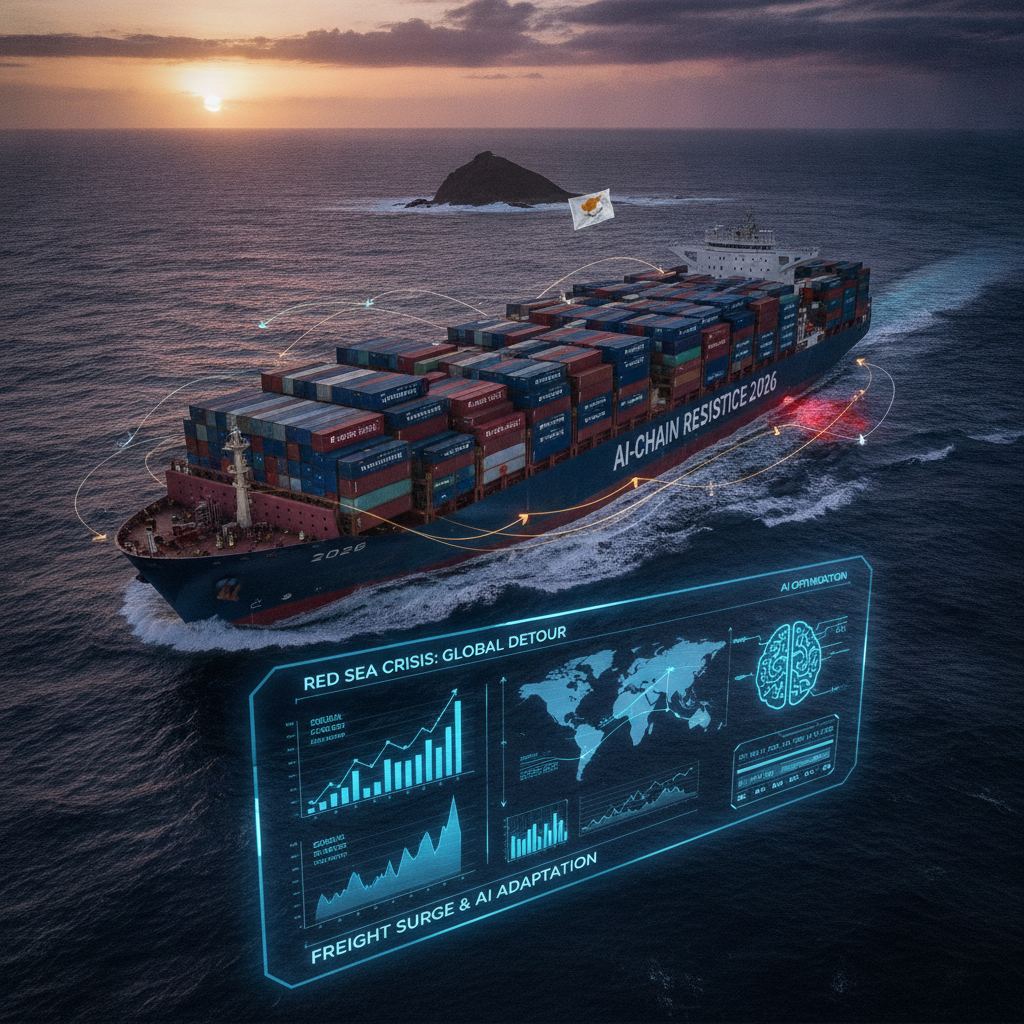
As we navigate through the midpoint of 2026, the Red Sea shipping crisis continues to fundamentally reshape global maritime logistics. What initially manifested as a localized security threat has solidified into a systemic supply chain constraint, forcing the industry to normalize extended transit routes and elevated freight costs.
Despite diplomatic efforts and shifting geopolitical dynamics, major shipping lines overwhelmingly continue to bypass the Suez Canal in favor of the Cape of Good Hope. This structural rerouting adds approximately 4,000 nautical miles to standard Asia-Europe voyages, translating to 10 to 14 additional days of transit. The enduring nature of this detour has functionally absorbed excess global vessel capacity, straining operational flexibility across key trade lanes.
The financial impact of the Red Sea shipping crisis remains severe for global shippers. By mid-2026, spot market dynamics reflect sustained upward pressure. For instance, recent data from May 2026 indicates that freight rates from Shanghai to the US West Coast surged beyond $5,000 per forty-foot equivalent unit (FEU), marking significant week-over-week increases. These compounded transport costs and heightened insurance premiums are disproportionately affecting margin-sensitive sectors such as fast fashion, automotive manufacturing, and consumer electronics.
To mitigate these ongoing vulnerabilities, industry leaders are rapidly abandoning conventional just-in-time inventory models. Current strategies emphasize:
- Integration of AI-driven visibility platforms for real-time vessel tracking.
- Diversification of supplier bases through nearshoring and friendshoring initiatives.
- Adoption of multimodal transport contingencies to bypass critical maritime chokepoints.
Ultimately, the Red Sea shipping crisis has demonstrated that agile, data-empowered supply chains are no longer optional—they are the baseline for operational survival in 2026.
References
- UN Cargo & Logistics. Beyond the Strait: Navigating Red Sea Shipping Risks and Building Resilient Supply Chains in 2026.
- DocShipper. Red Sea Crisis Update: Route Alternatives & Cost Impacts on Global Shipping.
- The Cooperative. How Red Sea shipping crisis is affecting ocean freight forwarders.
- Analysis of maritime geopolitics on early 2026: The Red Sea Factor.
- Gerudo Logistics. Why Are Shipping Costs Increasing in 2025?
- MacMillan SCG. Supply Chain Disruption 2025: Red Sea, Panama & Tariff Risks.