
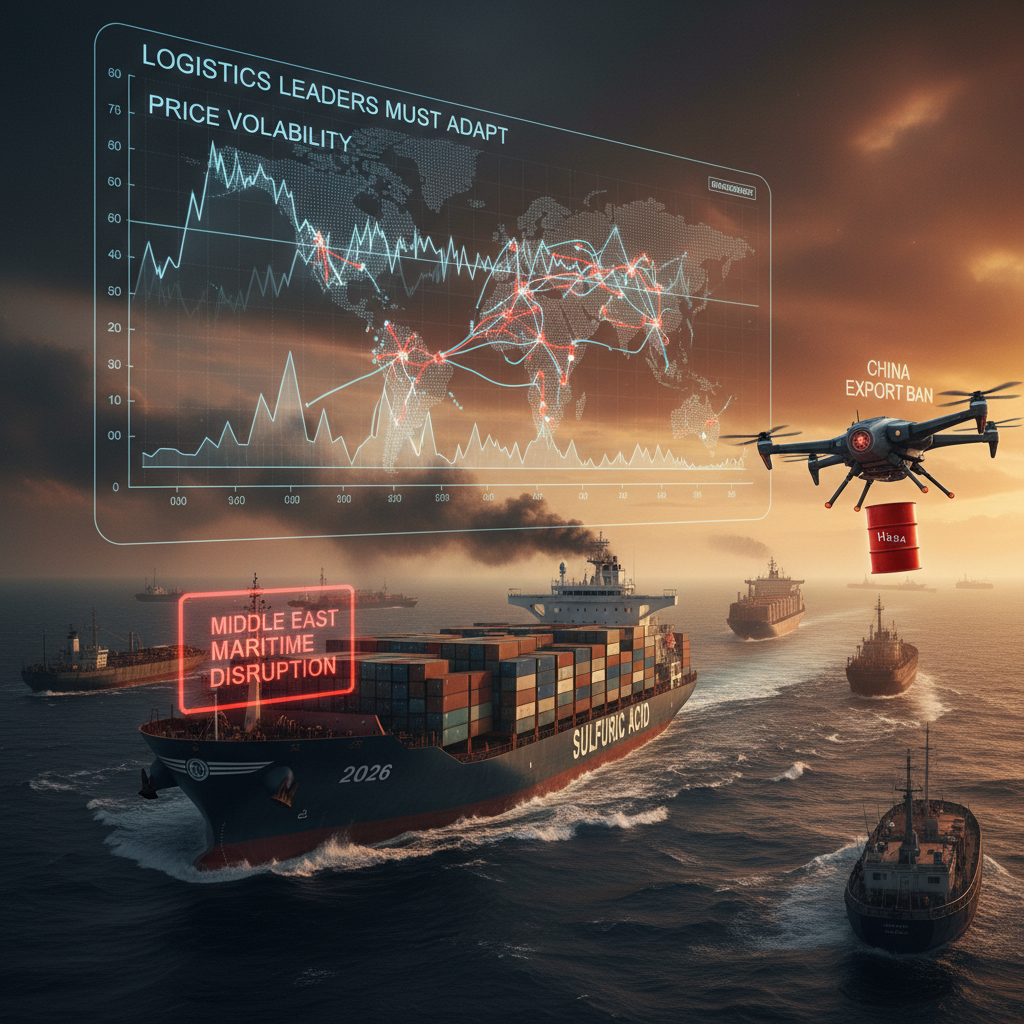
The global shipping and logistics sector is currently navigating a severe sulfuric acid supply chain constraint, fundamentally altering freight dynamics for critical industrial chemicals. As of early 2026, the sulfuric acid market is experiencing profound disruption driven by a convergence of geopolitical tensions and restrictive trade policies. China, which accounted for approximately 15% of the global seaborne supply, announced a comprehensive suspension of by-product sulfuric acid exports starting in May 2026. This sudden withdrawal is expected to remove roughly 4.6 million tons of annual supply from global markets.
This constraint is exacerbated by several unprecedented logistical bottlenecks:
- Strait of Hormuz Disruptions: Maritime conflicts have blocked routes that normally handle 50% of the world’s seaborne sulfur trade, choking off upstream feedstocks.
- Export Restrictions: China’s policy shifts aim to protect domestic fertilizer production, removing massive volumes from international trade lanes.
- Price Volatility: The supply shock drove intra-EU sulfuric acid prices to 126 euros per tonne in early 2026, up significantly from previous baselines.
This sulfuric acid supply chain constraint is a structural barrier affecting global downstream manufacturing. Agricultural economies like India and copper-mining hubs like Chile and Zambia are heavily exposed. For logistics providers, the fracture of the traditional Middle East to China to global market route requires immediate realignment of shipping strategies. With the global market projected to reach 54.39 billion USD by 2032, shipping leaders must rapidly adapt to localized shortages and highly volatile freight costs.
References
- maximizemarketresearch.com: Global Sulfuric Acid Market Report
- echemi.com: China Suspends Sulfuric Acid Exports
- breakthroughgroup.com: Sulphuric Acid Shock
- mexicobusiness.news: China Sulfuric Acid Ban Tightens Supply
- pricepedia.it: Sulphuric acid scarcity and cost increases
- logisticsviewpoints.com: Sulfuric Acid Emerging as a Supply Chain Constraint