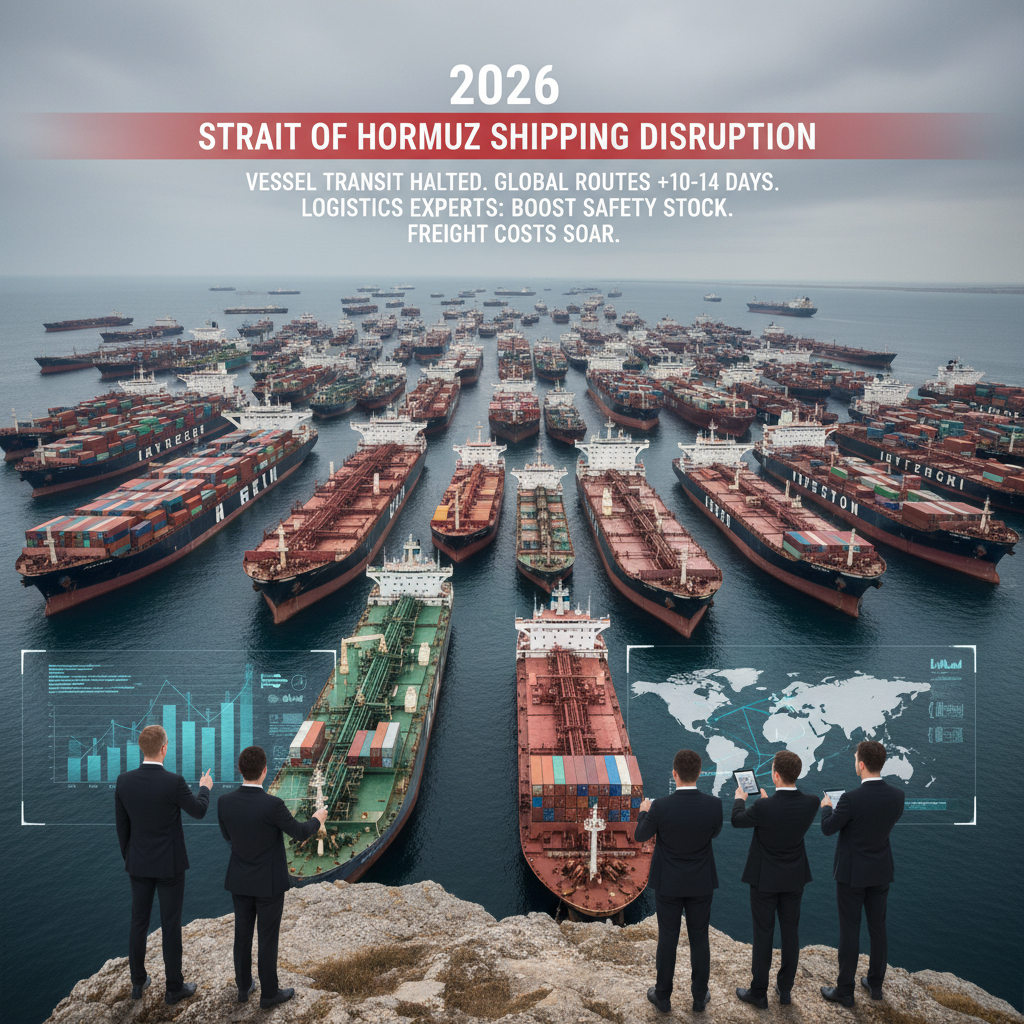
The global logistics sector is facing an unprecedented structural shock as the Strait of Hormuz shipping disruption continues to paralyze maritime trade. Following severe military escalations in late February 2026, commercial transits through this critical chokepoint have been effectively halted, stranding over 147 vessels and slashing shipping volumes by up to 60% during the initial phase. Despite recent ceasefire headlines in April 2026, container lines continue to avoid the region due to volatile security risks and soaring insurance premiums.
The immediate fallout of the Strait of Hormuz shipping disruption has forced major carriers to mandate extensive rerouting, fundamentally reshaping freight economics and supply chain predictability. The diversion around the Cape of Good Hope adds an estimated 10 to 14 days per shipment, severely straining global vessel capacity and escalating bunker fuel consumption.
- Capacity Constraints: The detour has tightened global vessel availability, propelling freight rate surcharges across major lanes.
- Feedstock Shortages: Asian petrochemical supply chains are facing critical material deficits, with several producers declaring force majeure due to delayed naphtha deliveries.
- Energy Market Vulnerability: With 21 to 22 million barrels of crude oil typically passing through daily, the disruption heavily impacts global energy pricing.
Industry experts warn that the Strait of Hormuz shipping disruption represents a persistent recalibration of international trade routes rather than a temporary anomaly. Logistics professionals must adapt by establishing 60 to 90 days of safety stock and diversifying carrier networks to mitigate ongoing market volatility. While mid-tier carriers have reported stronger profits amid the capacity squeeze, cargo owners are absorbing the brunt of widened supply chain costs.
References
easyship.com
chemanalyst.com
globalmaritimehub.com
discoveryalert.com.au
tfgglobal.com.au