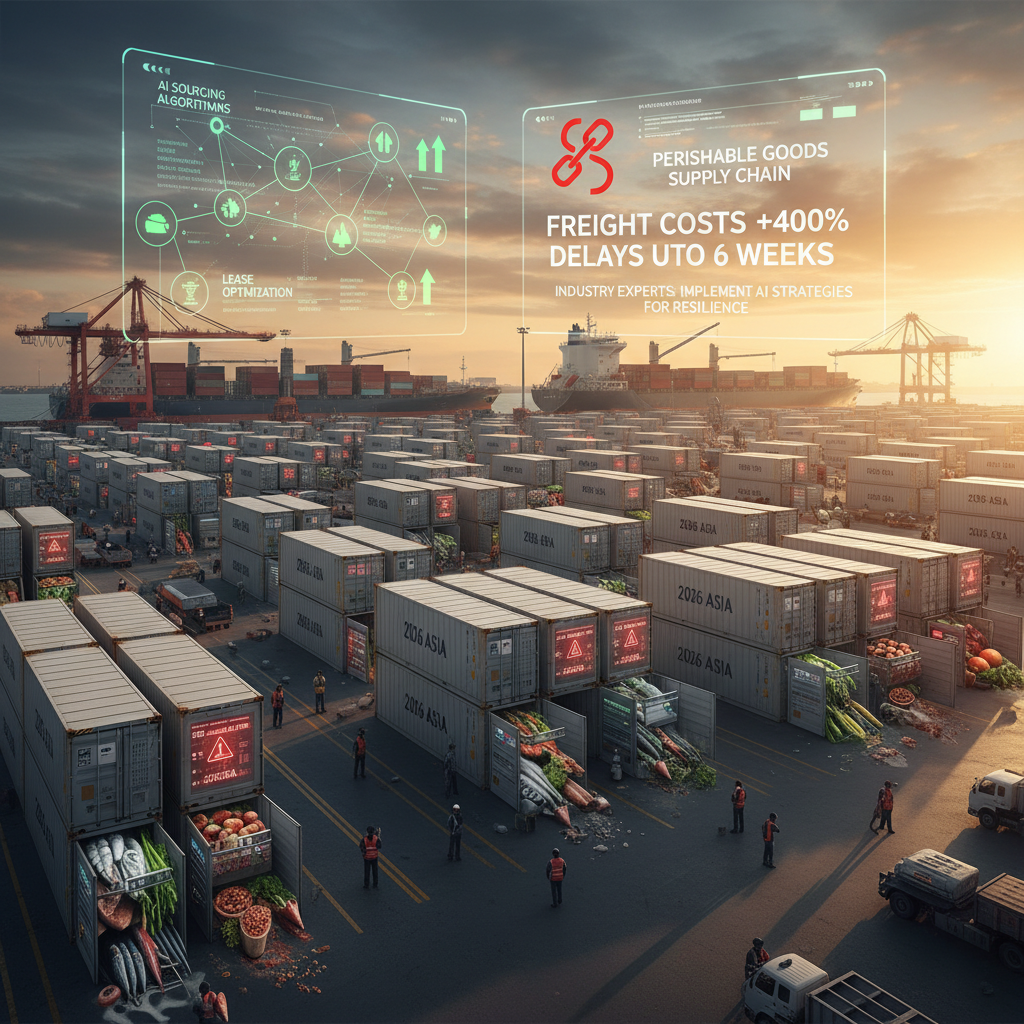
The global logistics sector is currently grappling with a severe Asia reefer equipment shortage, disrupting supply chains for perishable goods. While standard dry van fleets reached record volumes by early 2026, specialized refrigerated units remain scarce across major Asian export hubs.
Several compounding factors are driving this critical deficit. The ongoing Red Sea crisis has forced vessels to reroute via the Cape of Good Hope, drastically extending transit times and trapping specialized equipment at sea. Furthermore, imbalanced global trade flows have created severe positioning bottlenecks. Although empty reefers arrive in Asian ports, repositioning them outward remains sluggish due to vessel space limitations and network delays. Surging seasonal demand for perishables further tightens available capacity.
The financial and operational impacts are substantial. Freight rates have surged, with industry data revealing that reefer rates from Asia to the U.S. jumped 25-30% starting in mid-2024 and remaining elevated into 2026. Shippers moving freight from China report container costs between $3,600 and $4,000, alongside worsening service reliability. Meanwhile, Vietnamese food exporters face inconsistent container supply, resulting in staging delays of 2-5 days for temperature-sensitive cargo.
To build resilience against the ongoing Asia reefer equipment shortage, industry leaders are adopting innovative strategies. Key solutions include:
- Utilizing AI-driven predictive sourcing to forecast specialized equipment needs.
- Deploying IoT and telematics for smart tracking to minimize container downtime.
- Shifting from carrier-owned equipment to leased units for greater flexibility.
Until the market fully stabilizes, forwarders must secure bookings early and leverage digital platforms for real-time visibility.
References
yescontainers.com | dhl.com | maritimefairtrade.org | freshplaza.com