
How the China-Laos-Thailand railway corridor Reshapes Asian Logistics
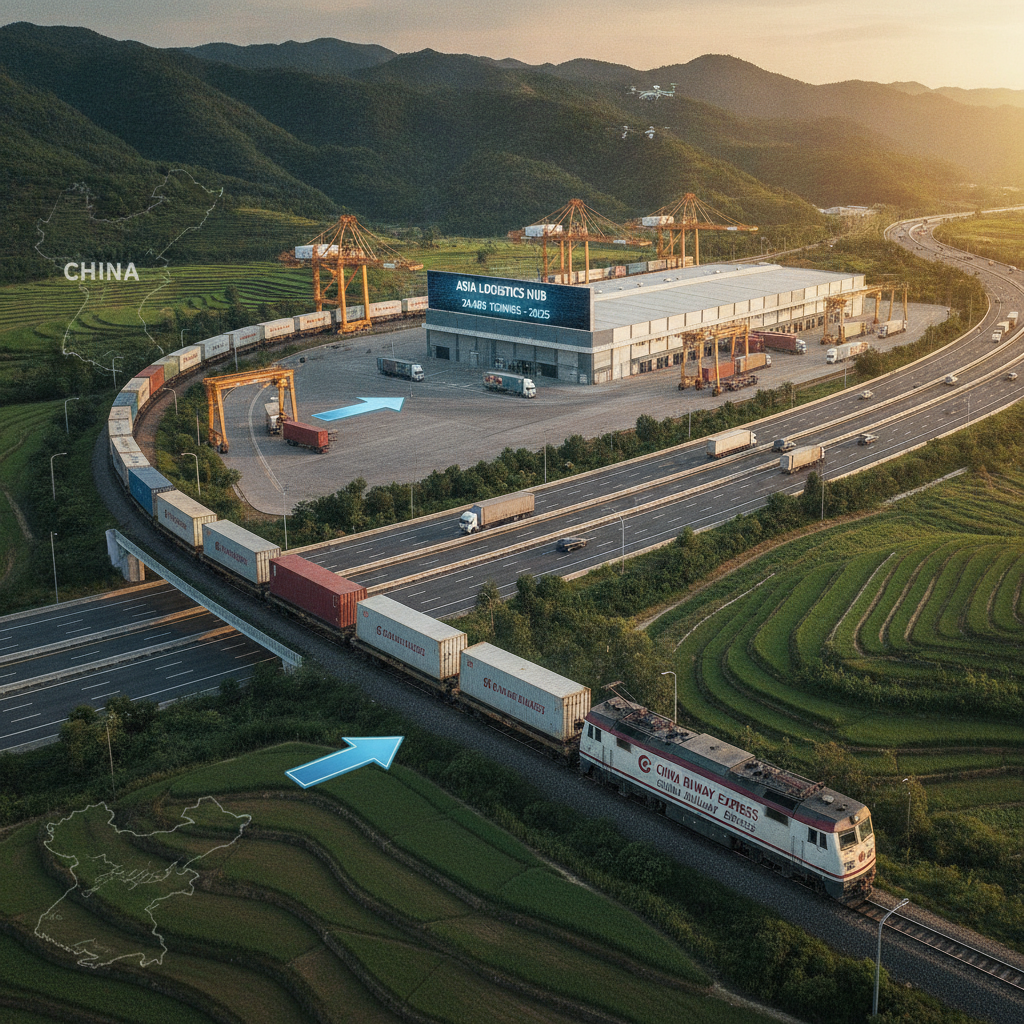
The China-Laos-Thailand railway corridor is rapidly transforming the logistics landscape across Southeast Asia, emerging as a critical artery for multimodal freight and cross-border trade. Recent developments in 2026 indicate a massive shift from maritime routes to overland rail, driven by transit time reductions and enhanced supply chain resilience.
Unprecedented Freight Volume Growth
According to official data in August 2026, annual cargo volume along the core section nearly doubled from 12.47 million tonnes in 2022 to an impressive 24.48 million tonnes in 2025. In the first half of 2026 alone, it transported over 600,000 tonnes of cross-border freight. This surge is supported by accelerated infrastructure development, including Thai and Lao authorities collaborating on a new railway-dedicated bridge across the Mekong River to seamlessly link Thailand’s advancing high-speed rail network at Nong Khai.
Cold Chain Innovations on the China-Laos-Thailand railway corridor
Industry experts emphasize that the China-Laos-Thailand railway corridor offers a highly competitive alternative for time-sensitive cargo. Notable trends include:
- Cold Chain Expansion: Logistics providers are heavily investing in temperature-controlled transport. In April 2026, fleets of smart refrigerated containers were deployed specifically for the corridor to maintain strict temperature tolerances for fresh produce.
- Multimodal Flexibility: Global integrators note that integrated road-and-rail solutions along this route are helping manufacturers diversify transport for automotive components, electronics, and agricultural commodities.
- Market Access: Exporters can now penetrate inland Chinese cities that were previously uneconomical via maritime shipping, capturing higher yields.
Strategic Outlook for the China-Laos-Thailand railway corridor
As multimodal integration advances, this corridor mitigates regional supply chain disruptions. With the impending extension to Malaysia and Singapore, the China-Laos-Thailand railway corridor will solidify its position as the central axis of the Trans-Asian Railway Network. Logistics professionals must pivot capacity planning to leverage these high-yield overland lanes.
References
- Asia News Network (August 2026): Laos-China railway gets closer to regional link.
- Maersk (August 2026): Asia Pacific Market Update.
- Mordor Intelligence (2026): Thailand Road Freight Transport Market.
- Hawei Supply Chain Group (April 2026): Railway Cold Chain Corridor.