
Is LCL Freight Surcharge Transparency Achievable?
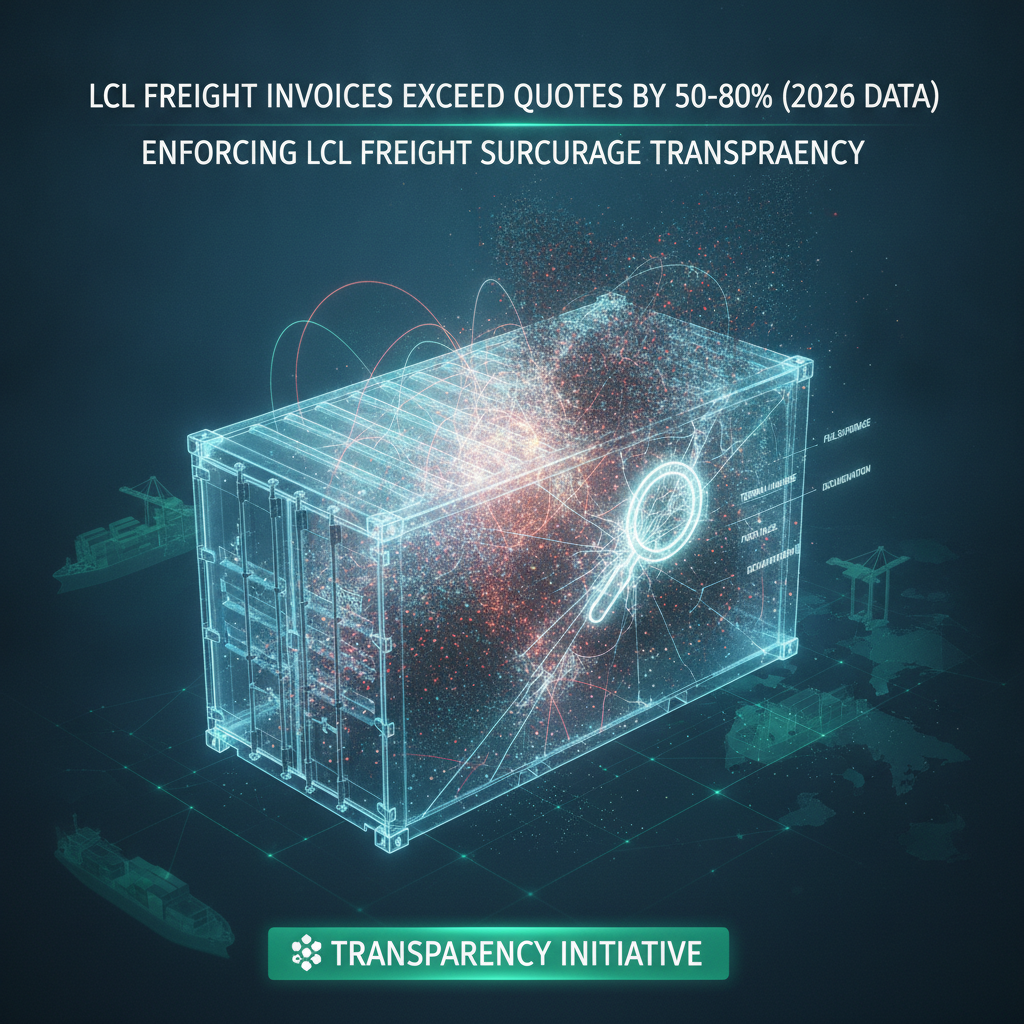
The logistics sector is facing an urgent crisis over LCL Freight Surcharge Transparency as unpredictable billing continues to plague shippers. Despite industry digitalization efforts, recent data reveals that Less-than-Container Load (LCL) final invoices frequently land 50% to 80% higher than initial ocean freight quotes. A typical baseline quote in 2026 only accounts for 50-60% of the total landed cost, leaving importers vulnerable to severe budget overruns.
Why LCL Freight Surcharge Transparency is Elusive
A closer look at current billing practices reveals why LCL Freight Surcharge Transparency remains a challenge. Forwarders often quote the base ocean freight per cubic meter (CBM) while omitting crucial accessorials until cargo is in transit. To protect supply chains in 2026, shippers must demand complete visibility into the following charges:
- Bunker Adjustment Factor (BAF): Volatile fuel surcharges driven by ongoing Red Sea routing disruptions.
- Destination Handling Charges: Terminal fees (THC) that can unexpectedly range from $150 to $400 depending on the port.
- CFS Fees: Heavy Container Freight Station consolidation and deconsolidation costs that skew final pricing.
Driving LCL Freight Surcharge Transparency in 2026
Logistics professionals must actively audit their LCL invoices to uncover inflated fees and enforce true cost clarity. The breakeven point between LCL and FCL currently sits around 15 CBM, making accurate cost projection critical for capacity planning. Forward-thinking businesses are securing pre-negotiated volume contracts and requiring line-by-line surcharge breakdowns before cargo handover to avoid hidden margin traps.