
Ocean Carrier Blank Sailings: A Structural Market Shift
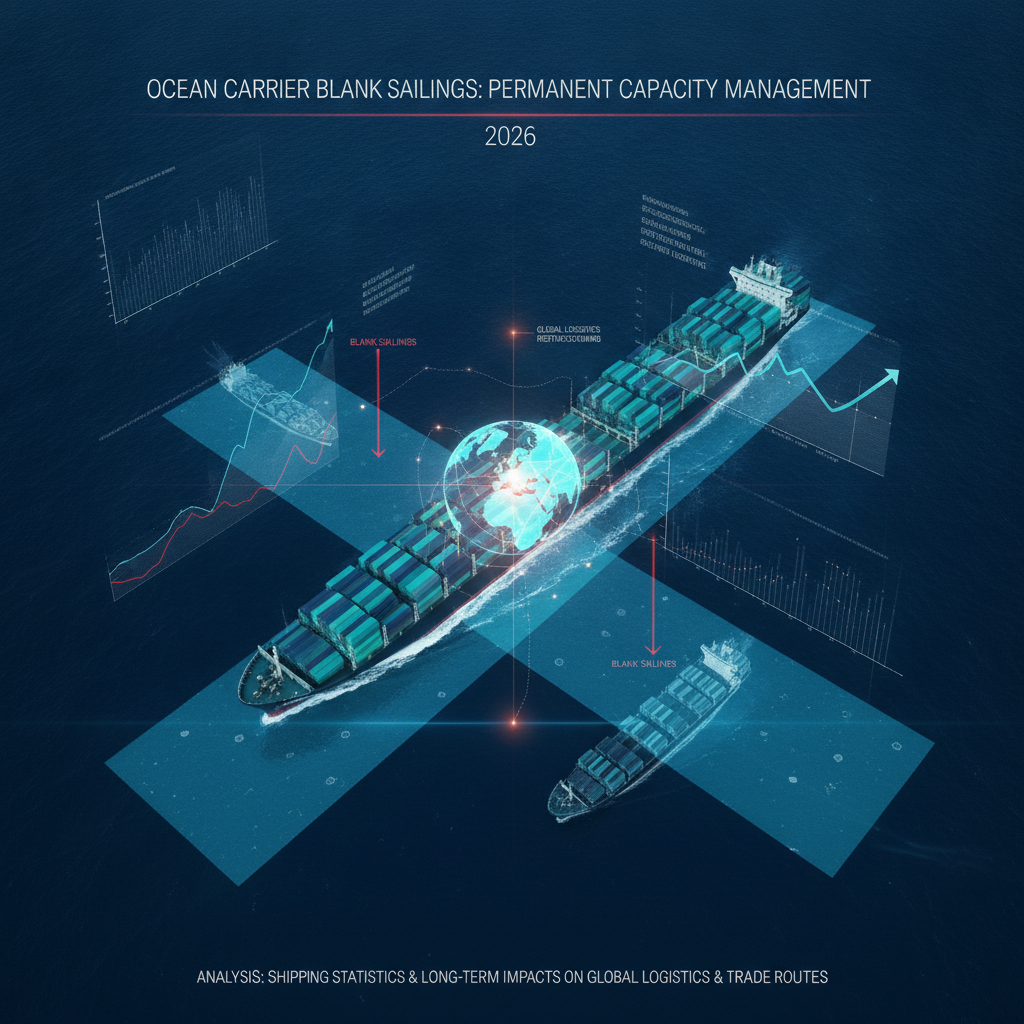
In 2026, the global shipping industry has witnessed a fundamental transformation in capacity management. Ocean Carrier Blank Sailings are no longer merely reactive measures to weak demand; they have become a permanent structural tool for ocean alliances to prop up spot rates and balance vessel supply. As pandemic-era vessel orders flood the market, carriers are intentionally withdrawing capacity to prevent a collapse in freight pricing.
2026 Statistics: Ocean Carrier Blank Sailings Outpace Capacity
Recent data indicates that the volume of canceled voyages is growing significantly faster than overall vessel capacity. According to Sea-Intelligence, during the first half of 2026, scheduled capacity on the Asia-to-U.S. East Coast trade lane increased by 46% compared to 2019, while blanked capacity surged by a staggering 215%. Across major East-West trades, capacity withdrawals now account for 10% to 14% of scheduled space, a sharp increase from the 6% to 8% seen prior to the pandemic.
Key Impacts of Ocean Carrier Blank Sailings
For logistics professionals and supply chain planners, this elevated baseline of capacity withdrawal requires immediate recalibration of allocation strategies. The persistent use of blanked sailings yields several critical industry challenges:
- Reduced Schedule Reliability: Frequent cancellations lead to unpredictable transit times and rolled cargo.
- Sustained Rate Pressure: By artificially tightening supply, carriers are successfully maintaining elevated spot freight rates despite market overcapacity.
- Extended Lead Times: Disruptions force shippers to factor in longer door-to-door transit buffers.
Strategic Mitigation Tactics
In mid-August 2026, Drewry reported 49 expected blank sailings across major East-West routes between weeks 34 and 38. To mitigate these disruptions, forwarders must leverage advanced AI demand forecasting and diversify their carrier allocations. Agility remains the definitive competitive advantage in a market where tightly controlled capacity is the new standard.