
The Logistics Revolution of Fast fashion air freight capacity
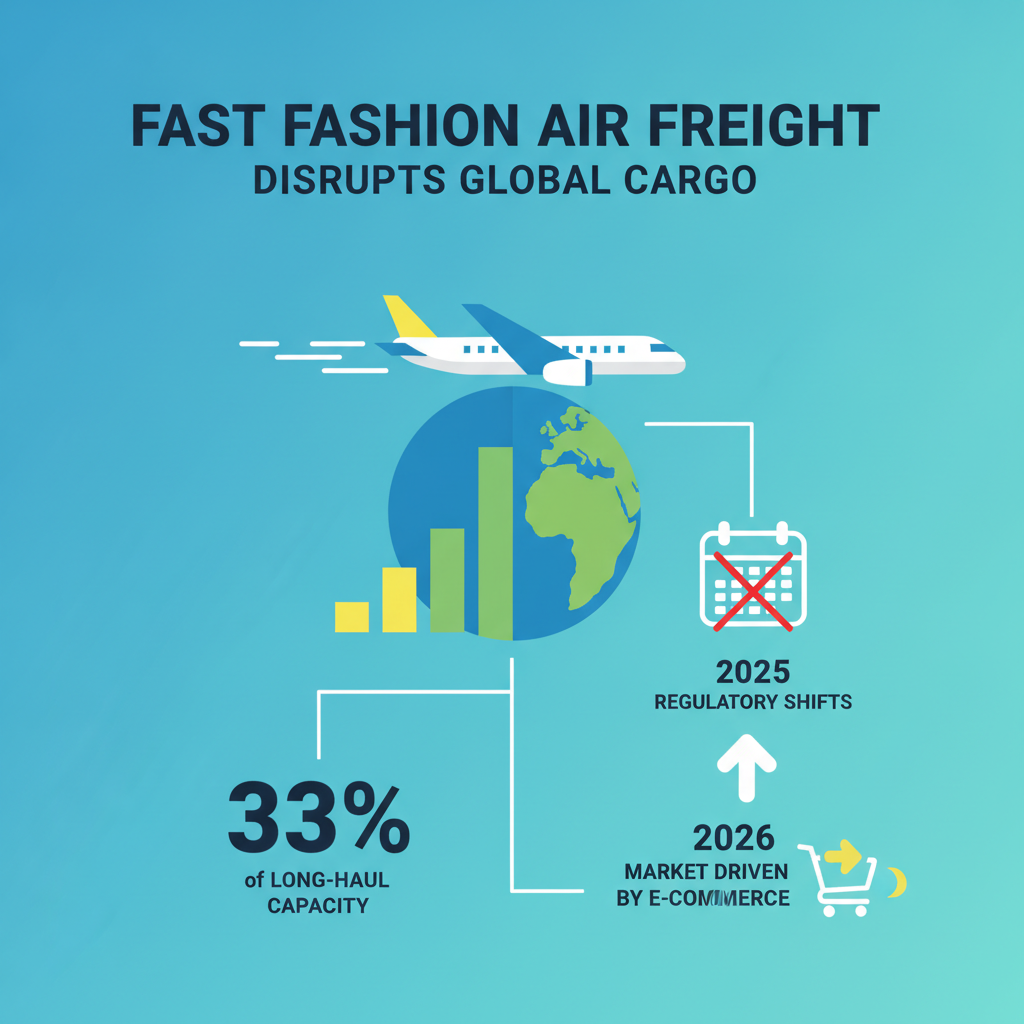
The explosive rise of ultra-fast fashion has permanently transformed the global cargo sector. Historically reliant on high-value goods like pharmaceuticals, the aviation logistics industry is now heavily shaped by platforms such as Shein and Temu. At their peak, these e-commerce giants accounted for nearly one-third of global long-distance cargo aircraft capacity. This intense demand for Fast fashion air freight capacity has created unprecedented competition for space and elevated costs for traditional forwarders.
How Fast fashion air freight capacity Adapted in 2025
Despite this massive volume, the landscape shifted dramatically in mid-2025. When new U.S. regulations ended specific de minimis import exemptions, the reliance on direct-to-consumer air channels faced extreme pressure. Fast fashion air freight capacity on major transpacific lanes temporarily plummeted by approximately 30% as the operational model became unsustainable under the new tariffs. Consequently, major platforms aggressively adapted by scaling their local warehousing infrastructures in Europe and North America to mitigate inventory risks.
2026 Outlook and Market Realities
Moving into 2026, the structural need for rapid e-commerce transport remains robust. The International Air Transport Association (IATA) projects a 2.6% growth in overall air cargo traffic for the year. To manage ongoing logistics demands, operators are prioritizing several key strategies:
- Expanding dedicated freighter fleets to accommodate e-commerce volume.
- Deploying artificial intelligence for advanced route optimization.
- Enhancing regional hubs to balance local fulfillment with rapid intercontinental resupply.
Ultimately, while legislative hurdles forced strategic realignments, fast fashion platforms still dictate much of the rhythm of global trade, continuously redefining the limits of modern aviation logistics.