The Growing Need for Supply Chain AI Accountability
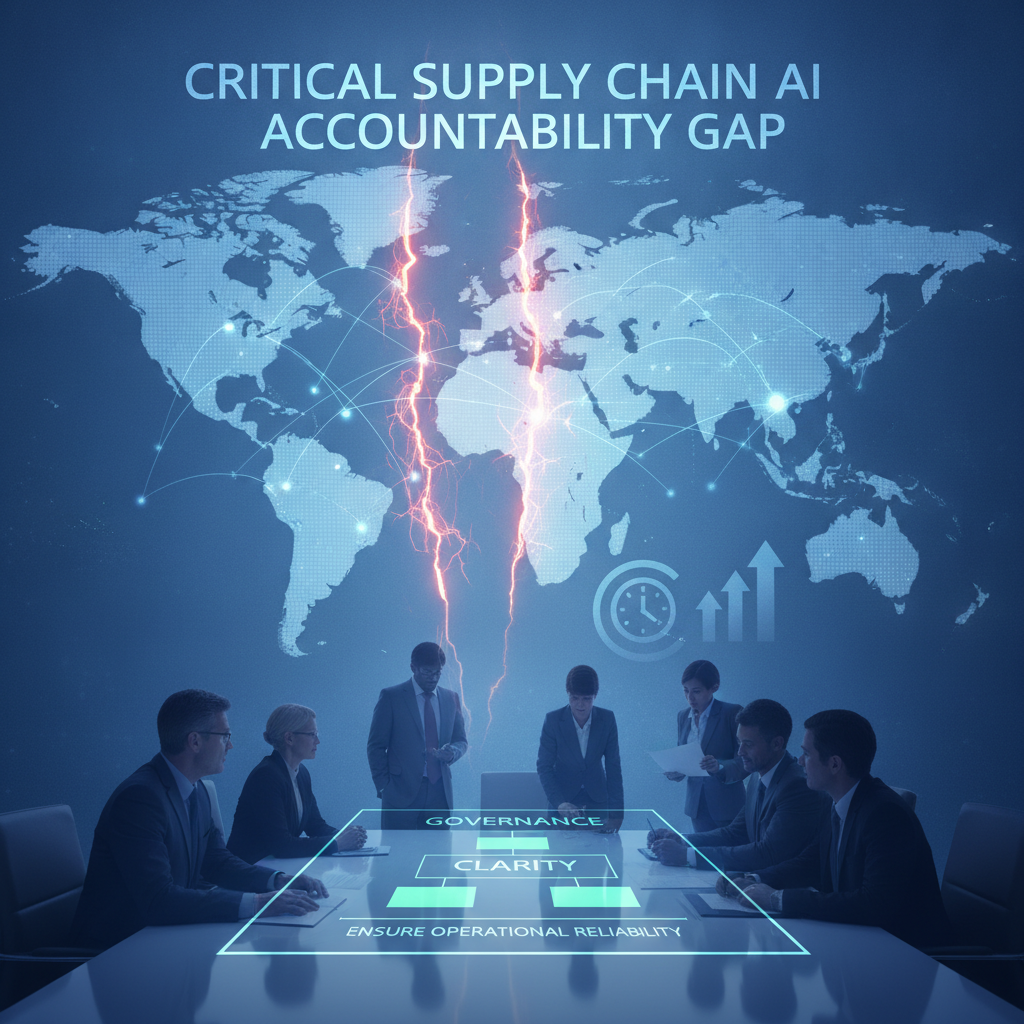
The rapid integration of artificial intelligence in logistics has exposed a critical vulnerability: Supply Chain AI Accountability. As the industry rushes toward autonomous operations, a significant governance gap has emerged between technological ambition and operational maturity. Organizations are rapidly deploying AI for demand forecasting and route optimization, yet many lack the frameworks necessary to manage the associated risks.
The Data Behind the Supply Chain AI Accountability Gap
Recent research highlights the alarming disparity between AI adoption and governance. While technological capabilities advance, the frameworks to hold these systems accountable are lagging significantly behind.
- A 2026 IDC and Kinaxis study reveals that AI reliability remains the top adoption challenge for 55.4% of decision-makers.
- Despite 41% of companies expecting autonomous-at-scale operations within two years, trust and measurable outcomes are severely trailing.
- The World Economic Forum’s 2025 Supply Chain Governance Report found that 78% of logistics companies lack contractual clarity on AI accountability in multi-party operations.
Establishing Robust Supply Chain AI Accountability
To bridge this divide, supply chain leaders must prioritize governance alongside innovation. By 2030, Gartner predicts 60% of enterprises will adopt agentic AI features, up from just 5% in 2025. This shift requires stringent data readiness, continuous compliance monitoring, and clear multi-party agreements to avoid the pitfalls of shadow AI ecosystems. Companies that proactively establish strict Supply Chain AI Accountability frameworks will gain a competitive advantage in both reliability and financial exposure, turning governance into a strategic asset.