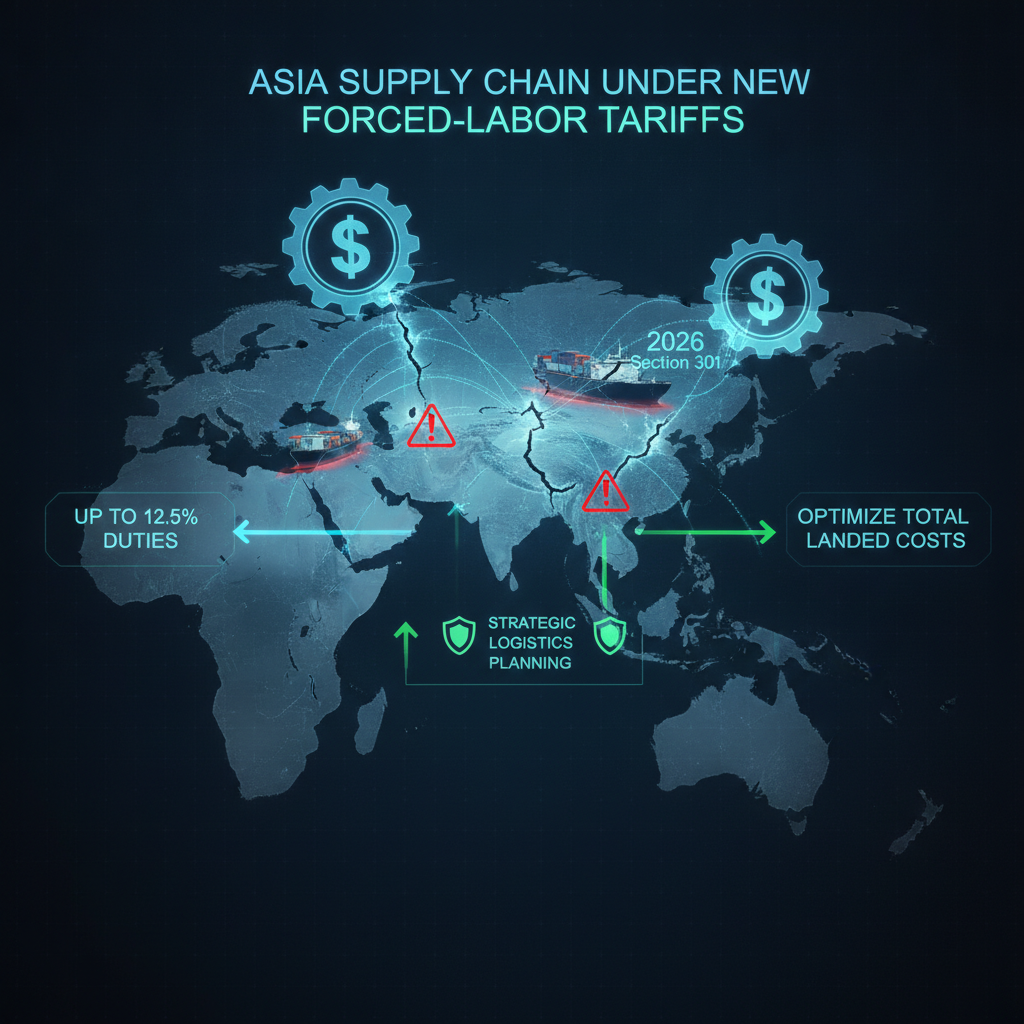
How to Optimize Asia-Origin Section 301 Tariff Planning in 2026?
In July 2026, the global shipping industry faced a monumental shift as new Section 301 forced labor tariffs of 10% or 12.5% took effect against 60 trading economies. This aggressive trade policy, which largely replaces expired Section 122 surcharges, dictates that logistics experts must urgently evaluate their Asia-Origin Section 301 Tariff Planning. With ocean spot rates from Asia to the U.S. East Coast hitting highs of $9,144 per FEU in August 2026, maintaining supply chain profitability requires flawless execution and deep regulatory understanding.
The Real Cost of Sourcing from Asia
The latest tariff enforcement fundamentally changes the economics of Southeast Asian sourcing. Trading partners that have not adequately adopted forced-labor prohibitions face a 12.5% duty, while compliant economies face 10%. A $250,000 shipment now carries up to $31,250 in additional duty exposure before considering standard landed costs. Effectively executing Asia-Origin Section 301 Tariff Planning means acknowledging that simply moving production out of China to countries like Vietnam or Malaysia is no longer an automatic tariff-saving strategy.
Asia-Origin Section 301 Tariff Planning Strategies
To navigate this complex trade environment, supply chain leaders must deploy targeted strategies to mitigate sudden margin erosion.
- Validate Origin Data: Confirm correct Harmonized Tariff Schedule classifications to defend against maximum penalty rates.
- Identify Exemptions: Audit supply chains for raw materials and critical goods that qualify for the 471 newly added exemptions.
- Model Landed Costs: Evaluate cumulative exposure, including elevated freight rates and stacked antidumping duties.
Robust customs data validation and dynamic landed-cost modeling are now baseline requirements for sustainable global logistics.