
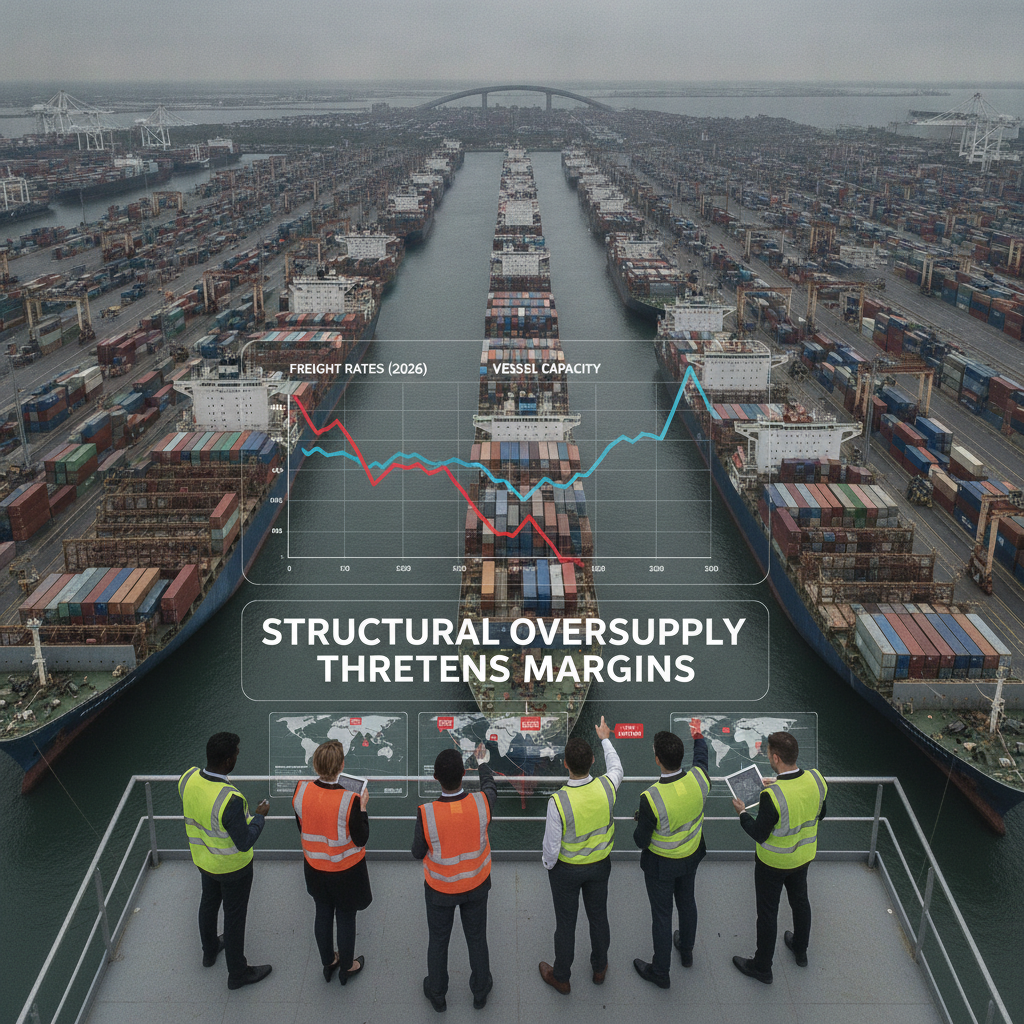
The global shipping sector is grappling with unprecedented vessel overcapacity, a structural shift profoundly reshaping logistics in 2026. Driven by a post-pandemic ordering spree, the global fleet expanded by an astounding 28% between 2021 and 2026. Over 800 new container ships injected more than 7 million TEUs of capacity into the market. The structural imbalance between massive fleet additions and stagnant global trade demand—growing at only 2.5% to 3.5% annually—is now undeniable.
Persistent vessel overcapacity has shifted leverage toward importers, driving price wars among major carriers. The consequences on ocean freight are severe:
- Spot rates plummeted over 70% from pandemic peaks, with Asia-Europe routes hitting $350 for 40-foot containers.
- Capacity utilization on East-West lanes frequently drops below 85%, depressing carrier margins.
- Analysts project overcapacity could hover around 27% through 2028, ensuring long-term shipper advantages.
Managing vessel overcapacity requires agility. While shippers enjoy historic bargaining power, they face higher risks of blank sailings as lines desperately manage capacity. Experts recommend early bookings, diversifying trade lanes, and leveraging the spot market while securing reliable contracts. Understanding these adjustments is a competitive necessity.
References
Maritime Gateway: Container Shipping Forecast 2026.
FreightAmigo: GRI Shipping Increase 2026.
Kavout: Global Freight Rates Collapsing 2026.
2026 Freight Rate Forecast.
Sea Gate Logistics: Key Trends of Container Transportation 2026.
Struggle with Overcapacity and Low Freight Rates.