
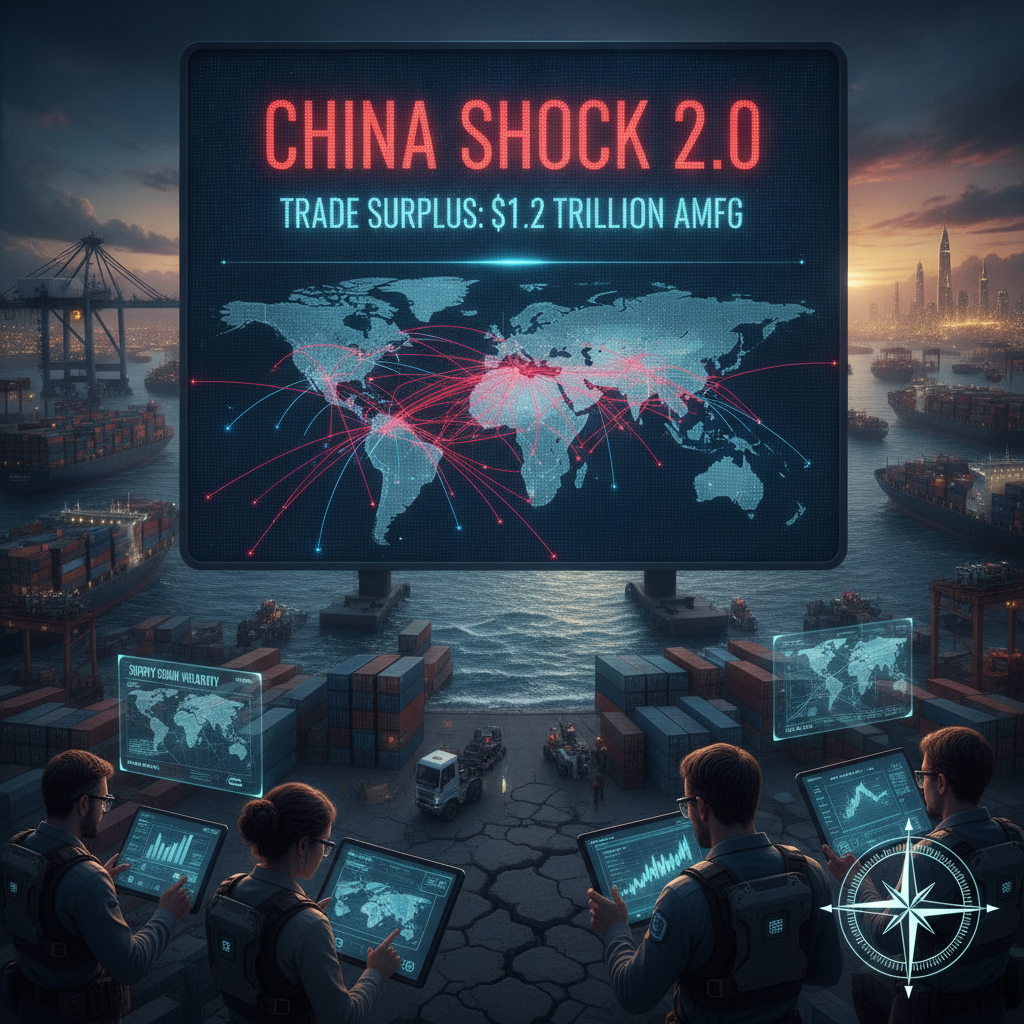
The global shipping and logistics sectors are bracing for what economists and industry leaders call “China Shock 2.0.” Unlike the initial wave in the early 2000s, this new paradigm is defined by a massive surge in advanced manufacturing exports—such as electric vehicles, clean technology, and intermediate components—coupled with stagnant Chinese import demand. In 2025, China’s trade surplus reached a staggering $1.2 trillion, dwarfing historical surpluses of other export-heavy nations and comprising over 1% of the rest of the world’s GDP.
For logistics professionals, the implications are profound. Container shipping networks are experiencing robust but highly asymmetric trade flows. Recent statistics highlight this growing imbalance; for instance, the European Union’s trade deficit with China ballooned to an estimated €1 billion per day by mid-2026. Key drivers of this shock include:
- Intermediate Goods Dominance: China has maintained its status as the world’s leading exporter of intermediate components, locking in global supply chain dependencies.
- State-Backed Logistics: Comprehensive state support for maritime, shipping, and port infrastructure continues to lower export costs and compress global freight competition.
- Tariff-Driven Rerouting: Anticipated trade defenses and tariffs are prompting localized supply chain shifts, forcing logistics providers to navigate increasingly complex routes.
While the volume of Chinese exports bolsters container trade resilience, underlying geopolitical tensions demand strategic agility. Shippers and maritime operators must prepare for prolonged volatility as Western nations implement protective trade measures against this flood of high-tech goods. Surviving China Shock 2.0 requires robust supply chain diversification to weather escalating trade imbalances.
References
Rhodium Group: “China’s Next-Generation Industrial Policy” (May 2026).
Global Times: “GT Voice: Why latest Western hype about ‘China shock’ doesn’t hold water” (April 2026).
The Federal Reserve: “China shock 2.0: How China’s ongoing export surge differs from the early 2000s” (May 2026).
Masaaki Yoshimori: “China Shock 2.0” (June 2026).
The Guardian: “EU trade deficit with China reaches record €1bn a day” (June 2026).