
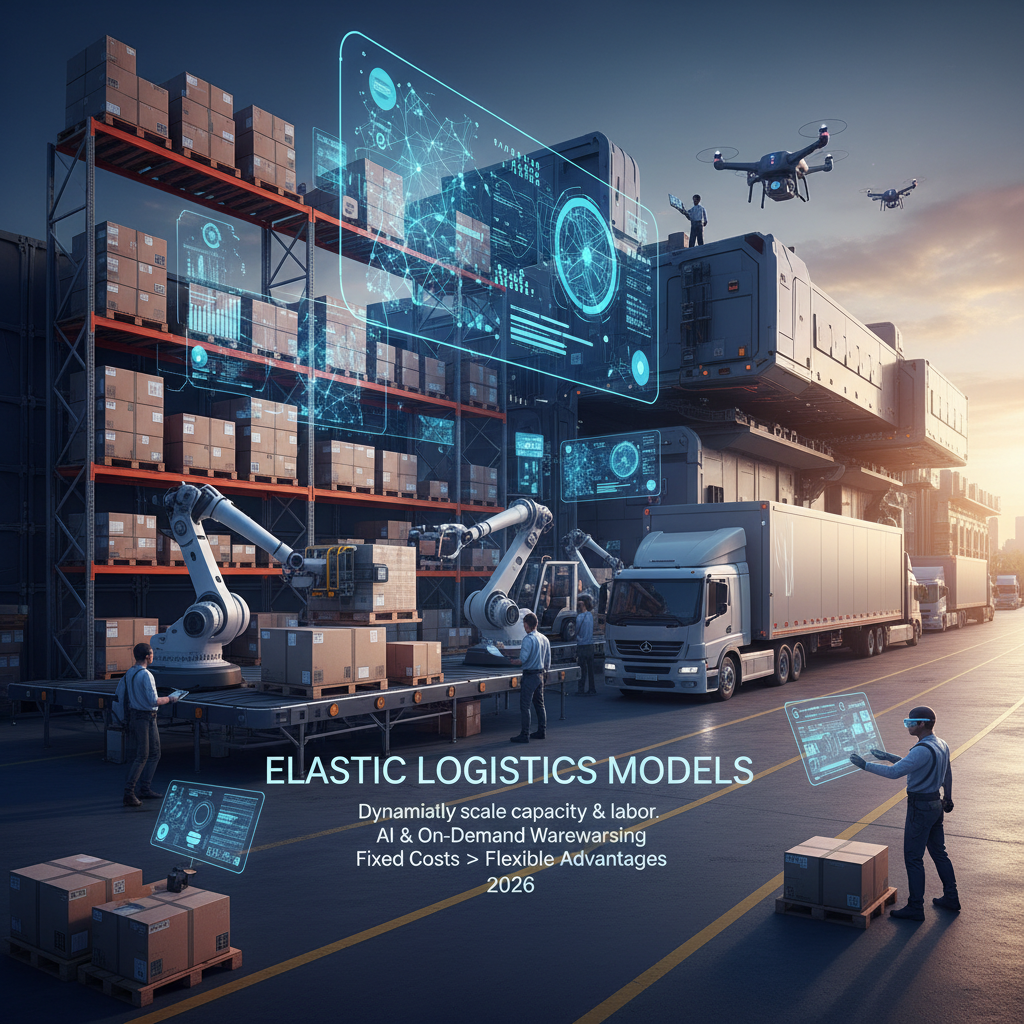
As global supply chains face unprecedented volatility in 2026, industry leaders are rapidly abandoning rigid frameworks in favor of Elastic Logistics Models. This transformative approach allows operators to dynamically scale warehouse capacity, shipping routes, and labor in real-time based on fluctuating market demand. By converting fixed property and labor expenses into variable operating costs, elastic logistics models provide a critical financial buffer against supply chain shocks.
Recent market analytics underscore the urgency of this transition. The Asia-Pacific region, which accounts for 44.6% of the global logistics market share, is increasingly adopting elastic frameworks to manage cross-border complexities. To support this agility, the Warehousing-as-a-Service (WaaS) sector is projected to grow at nearly 20% annually through 2030. Additionally, the artificial intelligence systems powering these real-time logistics decisions are expanding rapidly, with the AI in logistics market expected to see a 42% CAGR from 2025 to 2032.
Implementing Elastic Logistics Models requires a robust technological foundation rather than just excess physical capacity. Key components driving this evolution include:
- On-Demand Warehousing: Utilizing third-party pop-up distribution centers to handle seasonal surges without long-term lease commitments.
- AI-Powered Visibility: Leveraging predictive analytics to reroute shipments instantly based on live traffic, weather, and port congestion.
- Scalable Workforce Management: Integrating temporary labor agencies directly into supply chain workflows to clear order backlogs efficiently.
Moving forward, the ability to seamlessly stretch or shrink operations will separate market leaders from laggards. Elastic Logistics Models are no longer just an experimental strategy; they are a fundamental requirement for maintaining resilience and profitability in modern commerce.
References:
- DHL: 5 Logistics Trends Reshaping Asia in 2026
- SCCG: Supply Chain and Logistics Trends to Watch in 2026
- Transport and Logistics in 2026: What the Industry Should Expect
- Q Couriers: Third-Party Logistics UK Supply Chain